





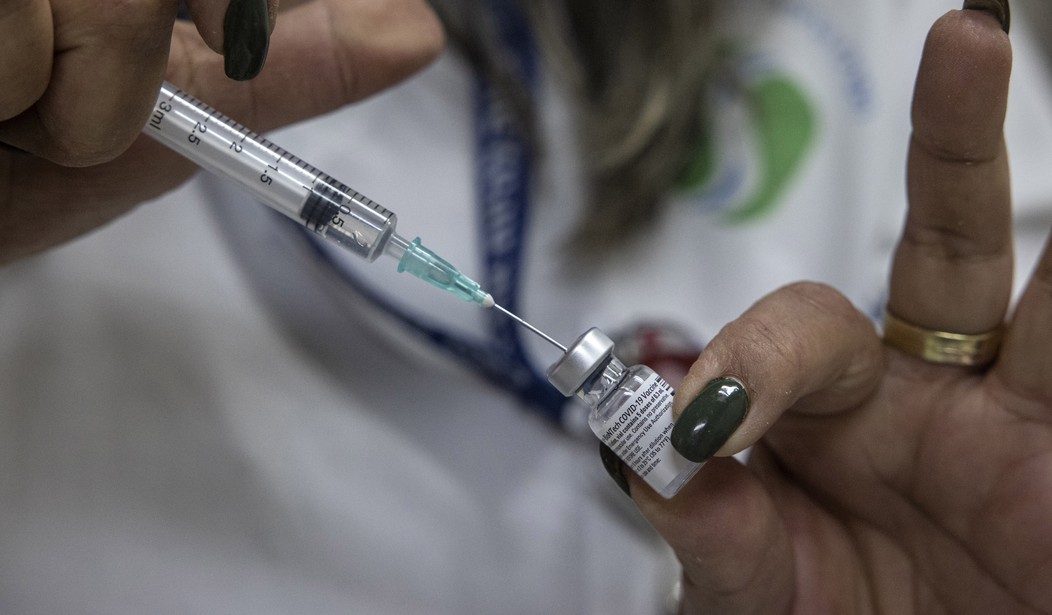
Matt has already reported on the Kaiser Poll that countered the left’s narrative that it’s Republicans who are most vaccine hesitant. According to that data, most of them “are people who are detached from the political process and didn’t vote for either major candidate in 2020,” according to CNN.
Now, a separate study conducted by researchers at the University of Pittsburgh and Carnegie Mellon University has revealed some other interesting data about the vaccine hesitant.
The researchers looked at vaccine hesitancy across race, education, U.S. region and Trump support in the 2020 election. When it comes to education, this survey found it’s actually the most educated who are most hesitant.
The largest decrease in hesitancy between January and May by education group was in those with a high school education or less. Hesitancy held constant in the most educated group (those with a Ph.D.); by May Ph.D.’s were the most hesitant group. While vaccine hesitancy decreased across virtually all racial groups, Blacks and Pacific Islanders had the largest decreases, joining Hispanics and Asians at having lower vaccine hesitancy than whites in May. (UPMC.com)
Following this trend, a recent MIT study found similar results—that “a substantial portion of public-health skepticism was highly informed, scientifically literate, and sophisticated in the use of data,” reports NRO.
The inventor of the mRNA vaccine is speaking. Is anyone listening? Thank you for your honesty @RWMaloneMD https://t.co/XVAfTYGd8e
— Valerie (@Val_Navigate) August 10, 2021

Join the Conversation
VIP members get the ability to comment on articles.