




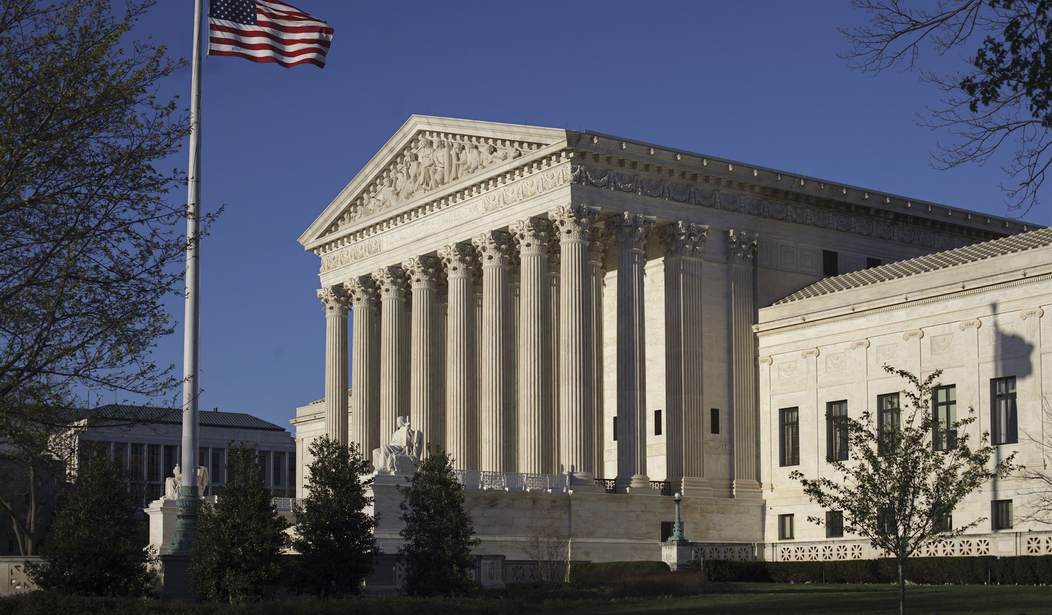
A recent poll, commissioned by C-Span, found that the majority of Americans – 52 percent – can’t name a single Supreme Court justice. It also found that the vast majority of Americans – 91 percent – believe that the Supreme Court has an impact on their everyday lives.
Among the likely voters surveyed, 48 percent were able to name a Supreme Court justice. Justice Ruth Bader Ginsburg was the most cited at 25 percent, followed by Justice John Roberts (14 percent), and Clarence Thomas (14 percent).
A small group of those who responded incorrectly (1 percent) cited President Trump’s Supreme Court nominee Brett Kavanaugh as a Supreme Court justice.
The survey also found that 69 percent of those surveyed say they have been closely following the news about the nomination process to replace retiring Justice Anthony Kennedy.
However, just over a third (35 percent) of those surveyed could identify Kavanaugh as President Trump's pick; 65 percent could not.
Notably, only 28 percent thought that the U.S. Supreme Court acts “in a serious and constitutionally sound manner.”
"Two in three American citizens who have an opinion think the U.S. Supreme Court is a partisan political body similar to Congress and those numbers are rising," said Robert Green, Principal at PSB research, which conducted the survey for C-Span. "More Americans get their information on the High Court from TV and online media today than ever before. The easiest way to convey to the public that the Supreme Court takes its responsibilities seriously as a constitutional court would be to permit Americans to view the Court oral arguments unfiltered through TV or online."

The results were based on PSB research’s online interviews conducted “from August 13-15, 2018 among n=1,000 U.S. likely voters.”











Join the conversation as a VIP Member