





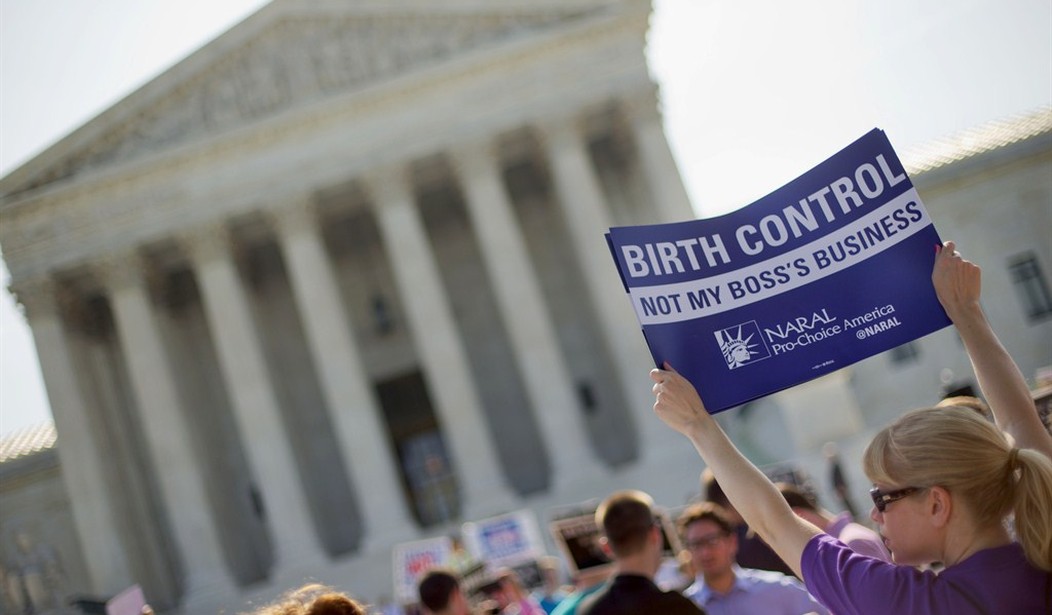
The U.S. 3rd Circuit Court of Appeals ruled Friday that Real Alternatives, a secular non-profit organization in Pennsylvania that provides pro-life alternatives to abortion, must comply with the Obamacare contraception mandate in their healthcare coverage despite moral objections.
Judge Marjorie Rendell wrote in the majority opinion that Real Alternatives while “grounded in sincerely held moral values” is “in no way like a religious denomination ... — not in structure, not in aim, not in purpose, and not in function.”
“Permitting Real Alternatives to qualify for the exemption would similarly run afoul of this country’s vast history of legislative protections that single out and safeguard religious freedom but not moral philosophy,” Rendell wrote.
“If mere disagreement, however vehemently felt, were sufficient to bring an equal protection claim,” she added, “virtually any law implicating religion would be rendered moot because the exemption would be too easy to invoke.”
“Finding all single-issue non-profit organizations to be similarly situated to houses of worship based on their adherence to a shared position on one issue would expand religious exemptions beyond what is constitutionally required,” she said.
However Judge Jordan, in his dissent, said that the group could be compared to Hobby Lobby “because the claimants in Hobby Lobby and [Real Alternatives plaintiffs] were both forced by the United States to take nearly identical action: purchase of and participation in a plan that covers a form of contraception that they believe is antithetical to the sanctity of life.”
Rendell countered that the case did not address “the [Religious Freedom Restoration Act] question we confront today” because in Hobby Lobby the owner objected to providing insurance to employees that violated the owners’ views, but in Real Alternatives’ case, the employees filed the complaint about their own coverage.
“In Hobby Lobby, the Supreme Court found that an employer’s provision, not an individual’s maintenance, of coverage may violate RFRA,” Rendell wrote. Real Alternatives employees “ignore this important distinction and attempt to stretch the holding of Hobby Lobby well beyond its factual confines.”
“Real Alternatives' sole purpose is to provide services to women so they choose childbirth rather than abortion,” a spokesperson for the group told the Pittsburgh Post Gazette. “We abhor abortion. The U.S. Government, through Obamacare, requires Real Alternatives to purchase insurance coverage for abortifacient contraceptives for its staff – who do not want them!”
“We believe our conscience should be respected and not violated, just like it’s not permissible to violate the conscience of a religious organization,” the spokesperson added. “The effect of the court's decision is akin to the government requiring the American Lung Association to purchase cigarettes for its staff.”
The draft interim final rule, reportedly proposed by the Trump administration to provide exceptions for the contraceptive mandate, would allow organizations like Real Alternatives that object to contraceptive coverage for primarily moral rather than religious reasons to not provide it for their employees. The rule would also allow individuals who object to contraceptives for religious or moral reasons to buy insurance without contraceptive coverage if insurers offer it.



Join the Conversation
VIP members get the ability to comment on articles.