







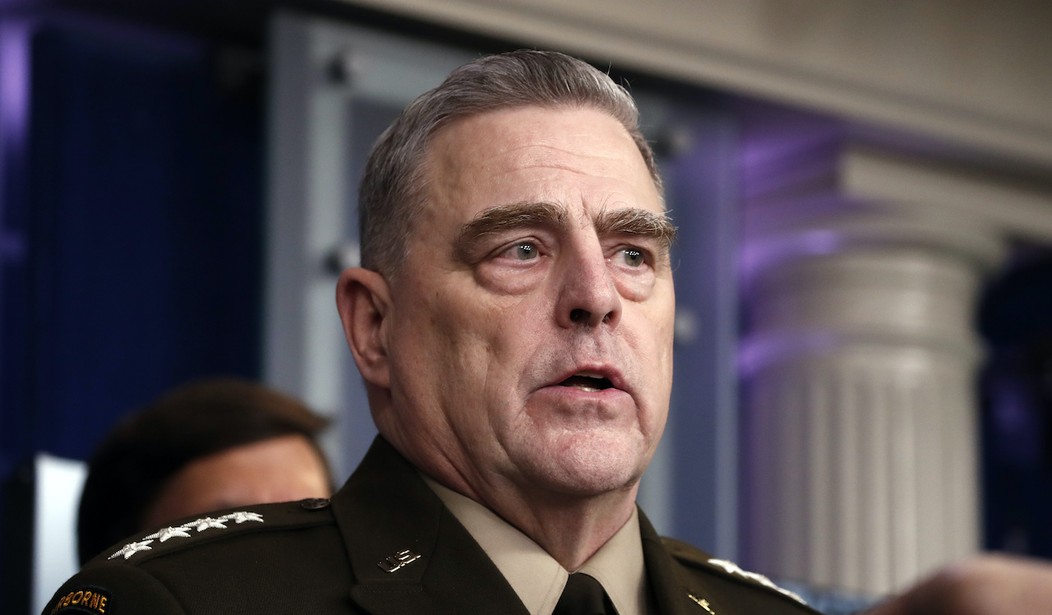
Chairman of the Joint Chiefs of Staff Gen. Mark Milley said that it is "likely" that conditions of a civil war could develop in Afghanistan now that the U.S. no longer has a military presence in the region and that such a conflict could lead to the "reconstitution" of terror groups such as al-Qaeda or ISIS.
"Well you know this is something that I've thought a lot about," Milley said Saturday in an interview with FOX News' Jennifer Griffin. "And I personally think that my military estimate is is that the conditions are likely to develop of a civil war. I don't know if the Taliban is gonna be able to consolidate power and establish governance - they may be, maybe not."
"But I think there's at least a very good probability of a broader civil war, and that will then in turn lead to conditions that could in fact, lead to reconstitution of al Qaeda or a growth of ISIS or other myriad of terrorist groups," he continued.
The general noted that, now that U.S. troops have been pulled from Afghanistan, maintaining U.S. security and intelligence gathering in the region will be increasingly difficult.
"We'll have to reestablish some human intelligence networks, etc.," he said. "And then as opportunities present themselves, we'll have to continue to conduct strike operations if there's a threat to the United States."
President Joe Biden has previously said that "over horizon" counterterrorism capabilities will continue through the use of military airstrikes instead of having boots on the ground.
However, Milley also acknowledged that the U.S. returning to Afghanistan was not off the table but that it is too early to give a definitive answer, saying that he "wouldn't say yes or no to anything."
This comes following the chaotic final evacuation of U.S. troops from Afghanistan on Aug. 31, which marked the end to a 20-year war. Hundreds of Americans seeking evacuation, however, remain in the region, which is now under Taliban rule.

Join the Conversation
VIP members get the ability to comment on articles.