





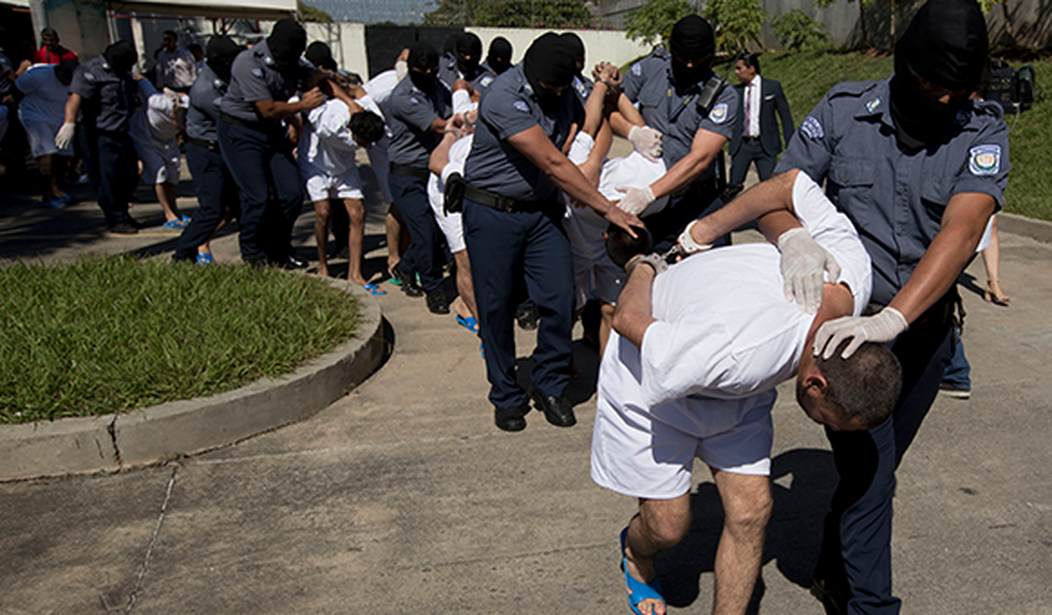
The Guardian published an editorial criticizing El Salvadoran President Nayib Bukele for his hard crackdown on the violent gangs that terrorized the Latin nation for years because it does not address the root causes of the violence.
The editorial said the government crackdown has resulted in positive results in making the country, once the most dangerous in the world, much safer, leading to historically high popularity for Bukele. People in neighboring countries are now demanding their governments copy Bukele's plan to tackle the gang and cartel problems.
Still, The Guardian writes, the peace has come at a high price and could backfire:
They also say the fall in crime is unsustainable – with good reason. Previous hardline drives in the region have ended badly, followed by surges in offending. They do nothing to tackle underlying causes such as poverty and discrimination. They breed resentment and enable the recruitment and hardening of those not entrenched in gangs. Many of the criminal organisations that now terrorise parts of Latin America were born in prisons.
As one critic observes, the real success story is not of the defeat of gangs, but the perpetuation of Mr Bukele’s power. This is a man who dubbed himself 'the coolest dictator in the world' in response to criticism. In February 2020, he marched soldiers into parliament to demand security funding. After he gained a supermajority in parliament the following year, it fired the attorney general and five members of the supreme court’s constitutional chamber.
It is assumed that the popularity of his crackdown will sweep him back into power next year, even though multiple experts say that would violate the country’s constitution. What worries opponents, scholars, lawyers and civil society most is what he may do after that, with renewed authority. “Bukelismo” should not be admired, or emulated.
Bukele recently posted a video on his Twitter account to address criticisms being brought forth by journalists and media organizations.
"Given that we have over 300 international media outlets in the country today, I want to ask you to go speak with people on the street, ask anyone you meet at random...Here, in El Salvador, you are free to go anywhere you want. It's totally safe...Nothing will happen to you. Nobody will stop you," said Bukele.
Mensaje a los periodistas / Message to journalists pic.twitter.com/CigeHXXTKW
— Nayib Bukele (@nayibbukele) June 25, 2023

Join the Conversation
VIP members get the ability to comment on articles.