





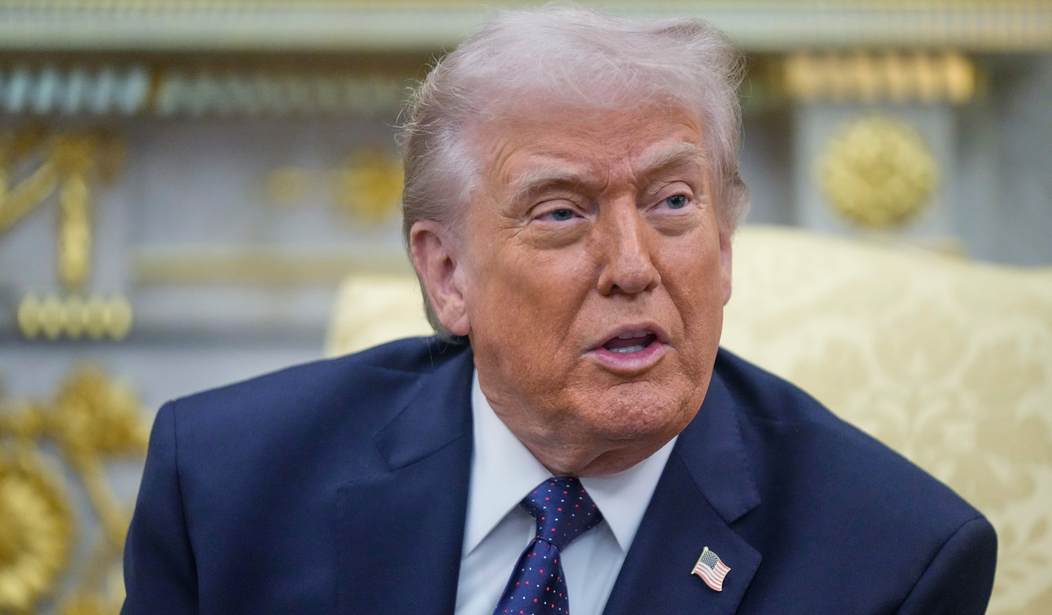
President Donald Trump is pressing U.S. allies to send warships to help reopen the Strait of Hormuz after Iranian forces shut down large swaths of commercial traffic through the region.
In a Saturday post on Truth Social, the president noted that countries “who are affected by Iran’s attempted closure of the Hormuz Strait” would be sending ships to the area “to keep the Strait open and safe.”
He explained that while the U.S. has “already destroyed 100% of Iran’s Military capability,” it is “easy for them to send a drone or two, drop a mine, or deliver a close-range missile somewhere along, or in, this Waterway.”
He said he hoped China, France, Japan, South Korea, the United Kingdom, and others would also lend their naval support to the effort to reopen the Hormuz Strait.
However, many of these nations have rejected Trump’s call for help.
Germany and other European Union states said they view the Hormuz conflict as an extension of the broader U.S.-Iran war, which they have opposed. They argued that they do not wish to escalate the situation by sending warships into a high-risk zone. Instead, European leaders have floated the idea of defensive maritime missions focused on de-escalating the conflict instead of joining the U.S. in using force.
Trump on Strait of Hormuz: "Really, I'm demanding that these countries come in and protect their own territory, because it is their territory ... they should help us. You could make the case that maybe we shouldn't be there at all, because we don't need it. We have a lot of oil." pic.twitter.com/y97MflXvLs
— Aaron Rupar (@atrupar) March 16, 2026
French President Emmanuel Macron previously suggested escorting ships through the area.
Japan told reporters that it has not officially responded to Trump’s request but that it would not rush to send naval vessels to the region. China has expressed similar concerns about its impact on global energy supplies, but has not committed to sending vessels.
🇬🇧🇺🇸 Keir Starmer has dismissed President Trump's request for European allies to aid in opening the Strait of Hormuz:
— Europa.com (@europa) March 16, 2026
"It's vital that we continue to focus on supporting Ukraine, we cannot allow the war in the Gulf to turn into a windfall for Putin."
Follow: @europa pic.twitter.com/Cm4Gqe6VkH
Trump responded to the rejections, warning NATO allies that he would “remember” which governments refuse to help and accused countries that benefit from U.S. security guarantees of being disloyal. He also hinted that he might delay a planned meeting with Chinese President Xi Jinping if it does not help to reopen the Strait of Hormuz.
BREAKING: Germany’s government rejected Donald Trump’s demand that NATO allies help secure the Strait of Hormuz, saying the alliance has no role in the war.
— Republicans against Trump (@RpsAgainstTrump) March 16, 2026
Stefan Kornelius, spokesperson for German Chancellor Friedrich Merz: “This war has nothing to do with NATO. It’s not… pic.twitter.com/Gmbh4BREOB
Iran has used a mix of missile strikes, naval units, drones, mines, and harassment to effectively shut down a large chunk of traffic through the waterway. The regime’s actions have disrupted about one-fifth of the world’s oil supply, CNN reported.
Meanwhile, the U.S. and Israel have continued strikes on the Iranian regime. Iran has responded by striking U.S. military bases in the Middle East and Persian Gulf. Israel has launched an incursion into southern Lebanon to attack terrorist group and Iranian proxy Hezbollah.
Editor’s Note: Do you enjoy Townhall’s conservative reporting that takes on the radical Left and woke media? Support our work so that we can continue to bring you the truth.
Join Townhall VIP and use promo code FIGHT to receive 60% off your membership.


Join the Conversation
VIP members get the ability to comment on articles.