


Democrats appear to have moved on from shouting about why men should be allowed in women’s sports and are now focusing on what people actually care about: The economy.
With millions of Americans struggling with inflation, Democrats have begun pushing for a higher minimum wage in the lead-up to the 2026 midterm elections.
Recent polling suggests there may be significant support for increasing the minimum wage, according to a UPI report.
A new round of polling unveiled on Capitol Hill on Tuesday showed broad voter support for raising the federal minimum wage to at least $25 an hour, underscoring how affordability and wage concerns are poised to shape the 2026 election cycle.
"A $25 living wage isn't just a policy idea to me. It's personal. It's the difference between barely hanging on and actually having the chance to build a stable, dignified life," said Kennedy Grant, a college student in Washington.
National pollster Celinda Lake, president of Lake Research Partners, presented the findings at a briefing alongside leaders from the National Living Wage for All Coalition and One Fair Wage, workers and policy advocates.
"People understand that there is a basic affordability crisis, and you're only going to do so much on prices, and what you really need to do is something on wages," Lake said.
The data, drawn from competitive swing districts and major U.S. cities, suggested that a simple, universal living-wage proposal has strong bipartisan appeal and outperforms more complex economic messaging.
Lake's topline results indicate that voters across demographic groups increasingly see higher wages as central to economic security, with Black, Latino, young and working-class voters identifying affordability as a decisive voting issue.
"A very strong majority of people support raising the minimum wage to $25 for all workers, including tipped workers, across all kinds of districts and states and cities and rural areas," Lake said.
People talk a lot about affordability these days — and they should. Every time we buy groceries, pay rent, fill the tank, or try to cover basic bills, we feel the pressure.
— Josh Warburton (@JoshWarburton) December 3, 2025
But the other half of that conversation rarely gets talked about: wages.
The federal minimum wage has… pic.twitter.com/BRmQ2dZjft
The federal government recently hiked the minimum wage from $7.25 per hour to $9.50 per hour. This marks the most significant increase since the early 2000s. Congress also approved a provision that could raise the minimum wage to $15 by 2030. This initial increase means full-time workers would get an extra $160 per month.
The UPI report cites two polls showing support for raising the minimum wage:
The first, covering 18 competitive swing congressional districts across states such as Arizona, Pennsylvania, Michigan and New Mexico, found that 55% of likely voters support raising the minimum wage to $25 for all workers -- including tipped and subminimum-wage workers -- while 30% oppose it.
A second multicity poll from New York, Los Angeles, Chicago and San Francisco shows even higher support in high-cost areas, with roughly two-thirds of voters backing a $30 minimum wage in major cities.
If raising the minimum wage made everyone rich, then why not raise it to $1,000,000 per hour and make everyone millionaires?
— The Pholosopher 🌎🕊 (@ThePholosopherX) December 2, 2025
It's because raising the wage does not raise productivity.
You need greater productivity justifying greater earners, else, you're on the unemployment… pic.twitter.com/hzo0ESfsyz
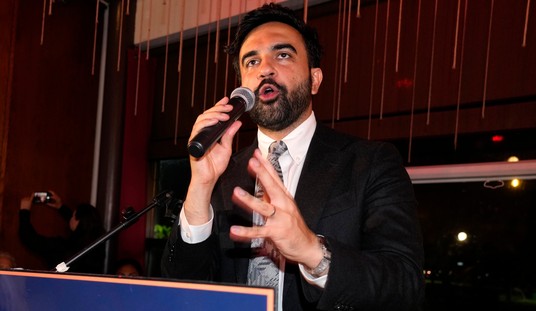
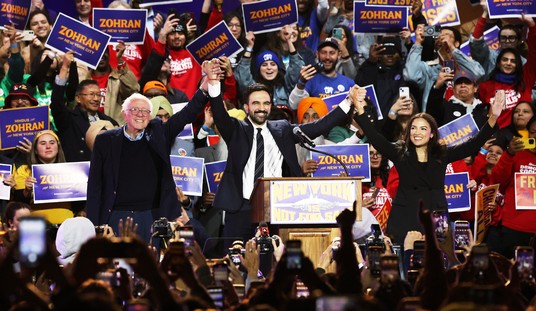
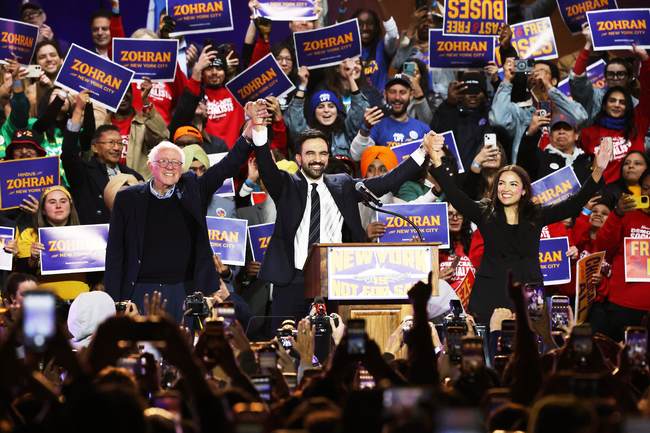
New York City Mayor-elect Zohran Mamdani made the minimum wage a central component of his campaign, promising to raise the city’s minimum wage from $16.50 per hour to $30 by 2030. This increase would occur incrementally each year.
Mamdani’s idea has met with some fierce pushback — especially from businesses. Mariano Torres, professor and chair of finance at the Robert B. Willumstad School of Business at Adelphi University, told CNBC that the city has “seen a recent exodus of small businesses from NYC, as business owners find themselves priced out by policies that invariably favor large corporations and especially real estate developers.”
Michelle Bufano a small business consultant said increasing the city’s minimum wage would have a detrimental impact. She said if this increase happens, “small businesses will have to raise pay across the board to keep the tiered structure in place,” which will “add up fast for small businesses."
Editor’s Note: Do you enjoy Townhall’s conservative reporting that takes on the radical left and woke media? Support our work so that we can continue to bring you the truth.
Join Townhall VIP and use the promo code FIGHT to get 60% off your VIP membership!







Join the conversation as a VIP Member