





The Supreme Court on Wednesday considered a case that could determine whether states can require pornography sites to implement age verification measures to prevent minors from accessing their content.
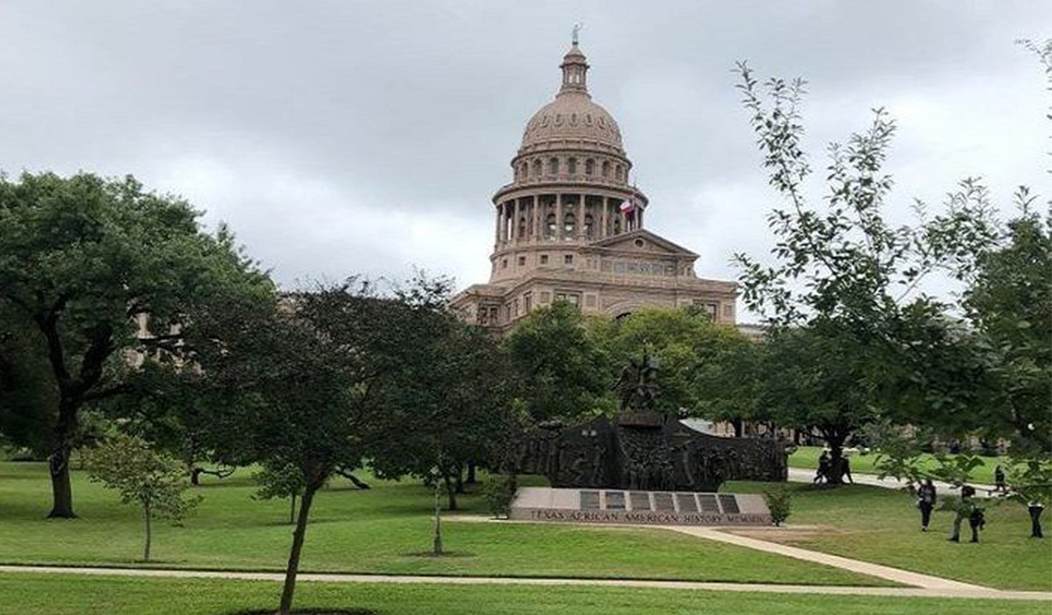
At the center of the case is a lawsuit against Texas over a state law that mandates that companies operating websites in which one-third of their content could be harmful to children verify the ages of their users.
The attorneys arguing against the measure cite a 2004 Supreme Court ruling in Ashcroft v. ACLU which found that a federal law similar to Texas’ measure was unconstitutional.
Under Texas’ law, individuals visiting porn sites would have to prove their age by uploading a government-issued identification or providing other types of information, such as bank statements. It mandates that the website performing the verification cannot retain private information.
Several other states have passed similar measures.
The court is reportedly divided on the matter, according to SCOTUSBlog.
After more than two hours of debate on Wednesday, it was not clear whether a majority of the justices were ready to uphold the lower court’s ruling. Some justices seemed to agree with the challengers, led by a trade group for the adult entertainment industry, that a federal appeals court in New Orleans should have applied a more stringent test to determine whether the law violates the First Amendment. But even that ruling might prove to be only a limited victory for the challengers in the short term.
Brian Fletcher, the principal deputy solicitor general who argued on behalf of the Biden administration, agreed with [attorney Derek] Shaffer that the court of appeals was wrong when it applied the less rigorous standard of review. But that should not prevent Congress or the states from preventing the distribution of pornography to children online, Fletcher emphasized.
Defending the law, Texas solicitor general Aaron Nielson stressed that the challengers do not dispute that the websites that H.B. 1181 targets harm children. When the Supreme Court faced a similar situation more than 50 years ago, in Ginsberg v. New York, he noted, it applied rational-basis review to a law that made it a crime for brick-and-mortar stores to sell pornographic magazines to young people.
If strict scrutiny applied to H.B. 1181, Nielson told the justices, Texas would have to satisfy the same high standard to keep children from entering strip clubs – something that the Supreme Court’s cases do not require, he said. And Texas has long tried to use content-filtering software, which the challengers cite as an alternative to H.B. 1181’s age-verification requirement, to keep children from having access to pornography, but the problem “has only gotten worse.”
Chief Justice John Roberts and Justice Clarence Thomas seemed to embrace the notion that more government scrutiny might be warranted given the advances in technology. Roberts noted that access to pornographic material has “exploded” over recent decades.
Thomas pointed out that the Ashcroft ruling occurred in a “world of dial-up Internet” access and that “we’re in an entirely different world now.”
Justice Amy Coney Barret appeared to side with Roberts and Thomas, noting that it has “been 20 years” since the Ashcroft ruling and that minors can “get online porn through gaming systems, tablets,” and other means.
Justice Samuel Alito expressed similar sentiments, asking whether Shaffer knew “a lot of parents who are more tech savvy than their 15-year-old children” and questioning whether 19 states would have passed these laws “if the filtering (of pornography) is so good?”
Other justices, like Justices Ketanji Brown Jackson and Sonia Sotomayor appeared to oppose the law. Jackson pointed out that imposing age verifications could prevent children from accessing porn, but would also make it harder for adults to consume the content because of the possibility that their privacy could be violated.
Shaffer argued that Texas’ law was worse than laws passed in other states and that it is the responsibility of parents to safeguard their children from inappropriate material online, not the state’s. He argued that “Texas is telling these targeted speakers that pornography is, among other things, contributing to prostitution. You have a hostile regulator who is saying to adults, ‘You should not be here.’”
Conversely, Texas Attorney General Ken Paxton pushed back against Shaffer’s argument during a press conference, insisting that the measure is intended to protect children. He predicted that Texas is “going to have the right to enforce this.”
Other critics suggested that the law was too broad and could be used against websites offering information on sexual education and LGBTQ content.
The Supreme Court is expected to issue a ruling on the case in the summer.


Join the Conversation
VIP members get the ability to comment on articles.