





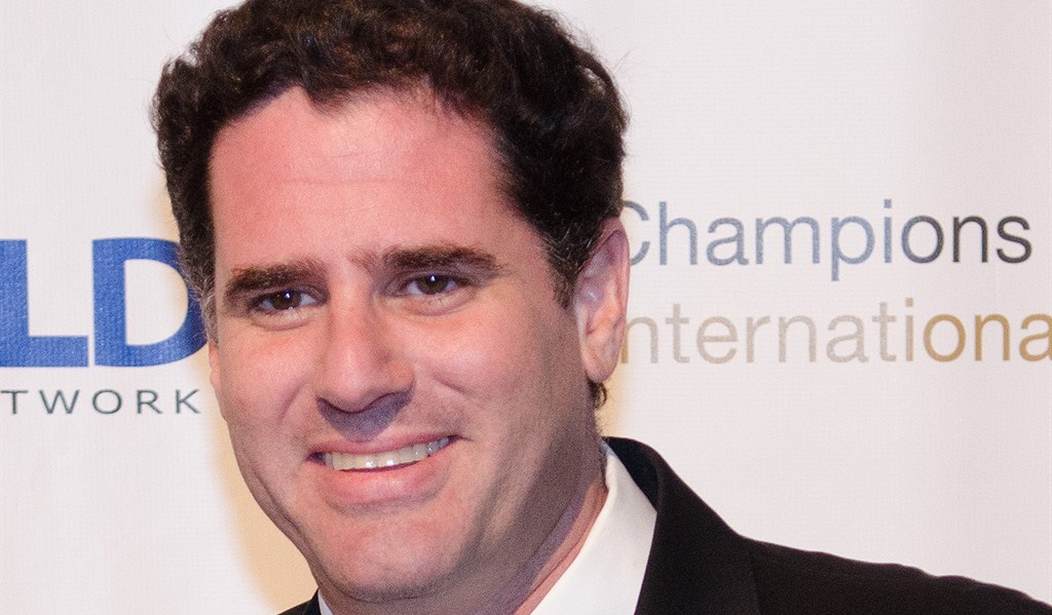
Ron Dermer is Israel’s ambassador to the United States. Born in Miami and educated at Oxford and the University of Pennsylvania, he immigrated to the state of Israel in 1996, quickly rising to positions of leadership in the Israeli government and becoming a close political ally of Benjamin Netanyahu.
On Thursday at The Heritage Foundation, Ambassador Dermer delivered the annual Jesse Helms Lecture on foreign policy, where he spoke about the importance of the Israeli/US relationship and why it still matters today.
“Ladies and gentlemen, every person who has the privilege to serve as Israel’s ambassador to the United States develops a special appreciation for the unique alliance between America and Israel,” he said. “As a Jew, I also have a deep appreciation for what America has meant for the Jewish people.”
“For the Jewish people, I can sum up the greatness of America in less than a sentence, less than a word, less than a letter,” he continued. “It’s a hyphen. It’s the hyphen in the middle of the phrase ‘Jewish-American.’ Now, throughout our history, Jews—if we were lucky—faced a choice: We could keep our Jewish identities, and be shut out of the larger society. Or we could abandon our Jewish identity and become full members of those societies. But in America, Jews didn’t have to make that choice. We could stay true to our faith and traditions.”
And yet, he also reminded the audience that Israel is not only a unique and pluralistic country; it is the Jewish people's homeland.
“As I got older, I also grew to appreciate the profound importance of the rebirth of the Jewish state,” he said. “The importance of the Jewish people having the capability to defend themselves. The importance of having a place of refuge. The importance having a sovereign voice among the nations. And the more I understood the unique nature of both America and Israel, the more I understood the unique nature of the alliance between our two countries.”

“America and Israel are two promised lands founded on the same ideals, upholding the same values, fighting the same enemies, and sharing the same destiny,” he continued. “America has long been, as Lincoln once said, the last best hope on earth, carrying the torch of freedom for all humanity—and entrusted by history with securing liberty’s future. Israel is the hope of the Jewish people, holding the torch of freedom high in the darkest region on earth—and entrusted by history in securing a Jewish future. In much of the discussion over the US/Israel alliance, this fundamental bond is too often forgotten.”
He also strenuously argued that the special relationship between the United States and Israel has not been irreparably harmed or damaged in recent years.
The relationship, he said, remains strong.
“Policy disagreements between our two governments have never been decisive in determining the trajectory of the overall US/Israel relationship,” he declared. “That trajectory has been far more affected by our enduring values and by changing perceptions of Israel’s strategic importance.”
“What started for some as a moral imperative to help the Jewish people overcome the horrors of the past became an effort by many to strengthen a reliable ally that could help America address both present, and future, challenges in the Middle East,” he added.
Finally, Dermer also unsubtly criticized the proposed nuclear deal with Iran—championed by the Obama White House—as both bad for Israel and the United States.
“The bottom line is that the Obama administration believes that the deal they are currently negotiating with Iran blocks Iran’s path to the bomb,” he said. “Israel believes that this deal paves Iran’s path to the bomb. It paves that path by legitimizing Iran’s illicit nuclear weapons program by quickly removing the sanctions, and by automatically removing critical restrictions on Iran’s nuclear program in a decade.”
“Iran won’t have to sneak in, or break in, to the nuclear club, they will simply walk into the nuclear club,” he added. “Israel believes that the alternative to this bad deal is to keep the pressure on, to insist on a far more significant rollback of Iran’s vast nuclear infrastructure and—critically—to link the removal of restrictions on Iran’s nuclear program to a change in behavior of the Iranian regime.”




Join the conversation as a VIP Member