





On Thursday we brought you a quick summary of Rep. Jim Banks's (R-IN) rocky conversation with NPR host Michele Martin about the whistleblower complaint against President Trump. The two disagreed about the contents of the complaint, as well as the phone transcript between Trump and President Zelensky, in which Trump asked his Ukrainian counterpart to investigate Joe Biden. Martin seemed to have reason to believe Trump took advantage of the presidency, while Banks said there was no such evidence. In fact, he challenged Martin to read the part of the that proves the former is guilty of high crimes and misdemeanors.
The truth is, Banks said, he's "yet to hear an account by any Democrat on Capitol Hill" that can prove Trump guilty.
Yet, Martin interpreted the transcript to mean that Trump was guilty of quid pro quo, and she wondered how Banks was not arriving at the same conclusion.
You don't see anything problematic with the underlying facts - the fact that, according to the unclassified transcript released by the White House, immediately after the Ukrainian president talks about buying more Javelin missiles, the president is asking Zelenskiy to do him a favor, though - his words - and then he turns the conversation to investigating former Vice President Joe Biden and his son. You have no problem with that.
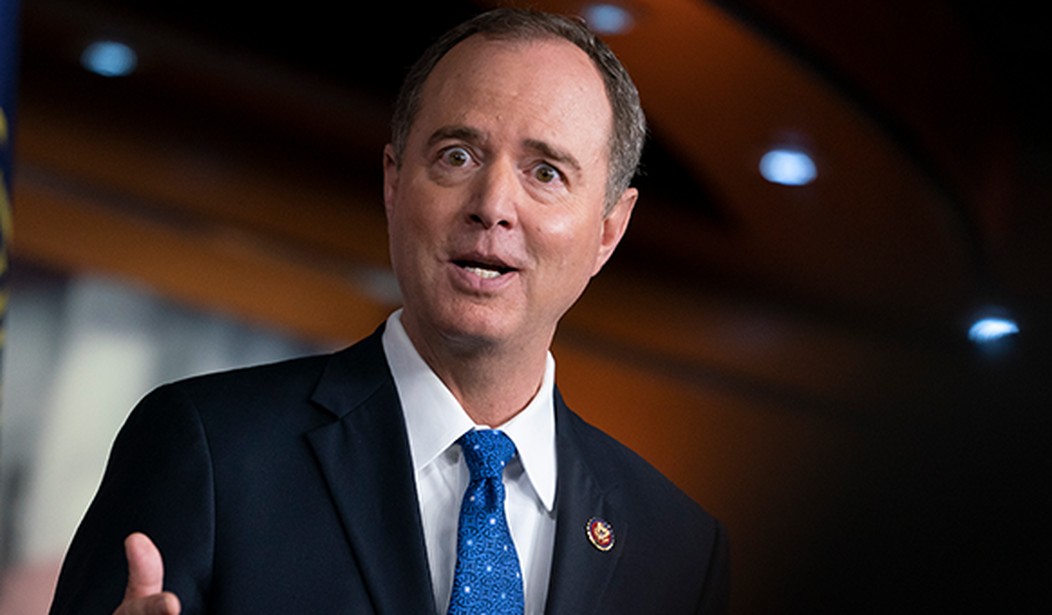
During the interview, Banks also sounded off on House Intelligence Committee Chairman Adam Schiff following a New York Times report that he had early access to the whistleblower and failed to tell his fellow panel members. NPR editors issued a "back-announce" following the interview because they felt Banks "did not accurately describe The New York Times' reporting."
Over the weekend, NPR's Public Editor Elizabeth Jensen revealed that she did not approve of the way the interview was handled, and understands why some listeners may have thought Martin was biased. So, Jensen attempted to set the record straight and apologize to NPR listeners.
"Letting the statements stand on rebroadcast, with only an unlabeled correction at the end, in effect retained the original misinformation and thus could not help but confuse listeners," she regretted.
The additional paragraph "was absolutely necessary given the misinformation Banks had given listeners," Jensen added. She provided a bit more context in her explainer as to why it may have sounded like their host was guilty of partisan politics.
When they work, live interviews are a valuable way to hear the point of view of a newsmaker in their own words. An interview runs into problems, however, when the guest says something that is provably inaccurate or seriously misleading. At that point the host is obligated to push back to correct it, which to some listeners sounds partisan (and it can be unpleasant and unproductive when an interview turns argumentative).
Yet, in the Washington Post's analysis, they found Schiff's claim that he never spoke directly with the whistleblower to be "flat-out false."
"Unlike the quick two-step dance he performed with Anderson Cooper, Schiff simply says the committee had not spoken to the whistleblower," the WaPo writes. "Now we know that’s not true."

Join the Conversation
VIP members get the ability to comment on articles.