




The Democratic National Committee has a few concerns heading into 2019. For starters, their cash flow is not even in the same stratosphere as the Republicans' haul. The RNC raised $227.2 million in 2018 to the DNC's nearly $120 million. Secondly, their voter data infrastructure appears to be crumbling. A new strategy pushed by DNC leadership would compile all the voter data from Democratic groups into a single, for-profit entity. It is a strategy that is "modeled" after their Republican counterpart, Politico explains. But, the shift is causing a major argument between the national committee and the Democratic state parties, who are wondering why they should agree to give up this control of the voter database.
But in interviews with more than two dozen state party chairs, vice chairs and executive directors, the response to the proposal being pushed by DNC Chairman Tom Perez and his leadership team ranged from skeptical to outright hostile. Both sides agree that being able to swap data seamlessly with outside groups is necessary, but they’re at loggerheads over the best way to make it happen.
“I’m not willing to give up one of our most important tools to a group of people who have never even worked on a campaign before,” Trav Robertson, chairman of the South Carolina Democratic Party, said of Perez’s team. (Politico)
"There’s definitely, ‘what’s in it for us?’ questions still there,” added Valdez Bravo, a vice chairman of the Oregon Democratic Party.
The committee is also considering cutting a $10 million grant program to state parties.
State parties have some justification for their skepticism after the bias the DNC showed in the 2016 presidential election. They essentially rolled out the red carpet for Hillary Clinton, to the detriment of Bernie Sanders's campaign. Former DNC interim chair Donna Brazile wrote a whole book about it and said the bias at the committee was so rampant it made her weep.

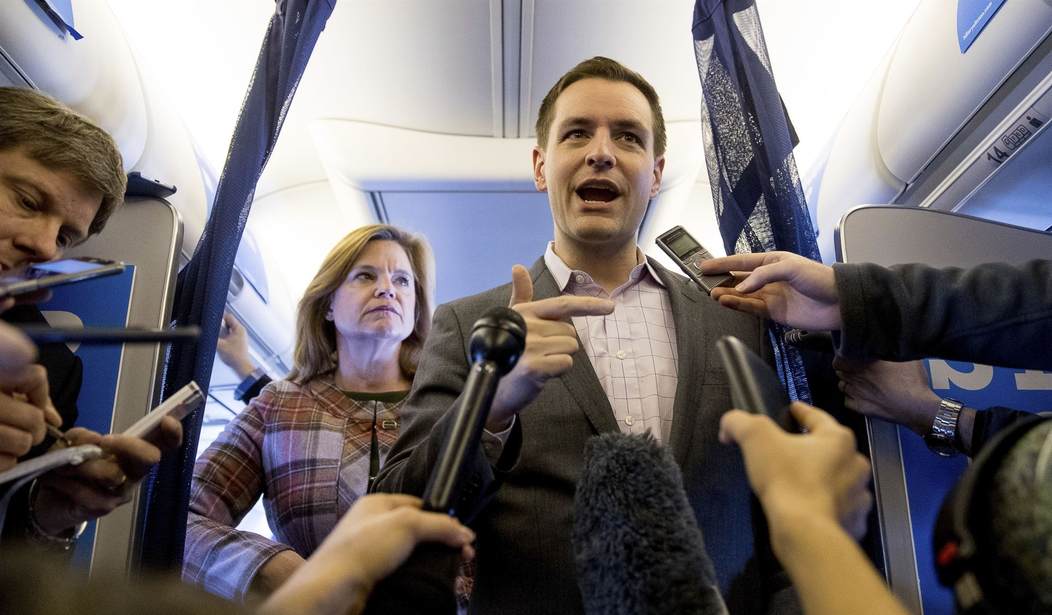
Former Hillary Clinton campaign manager Robby Mook admitted their party has a "crisis."
"We have a crisis,” said Robby Mook, Hillary Clinton’s campaign manager in 2016. “Republicans are going to have a major strategic advantage over us in 2020 if we don’t fix it.”
State Democratic parties are reportedly drafting their own counter proposal for next year.











Join the conversation as a VIP Member