





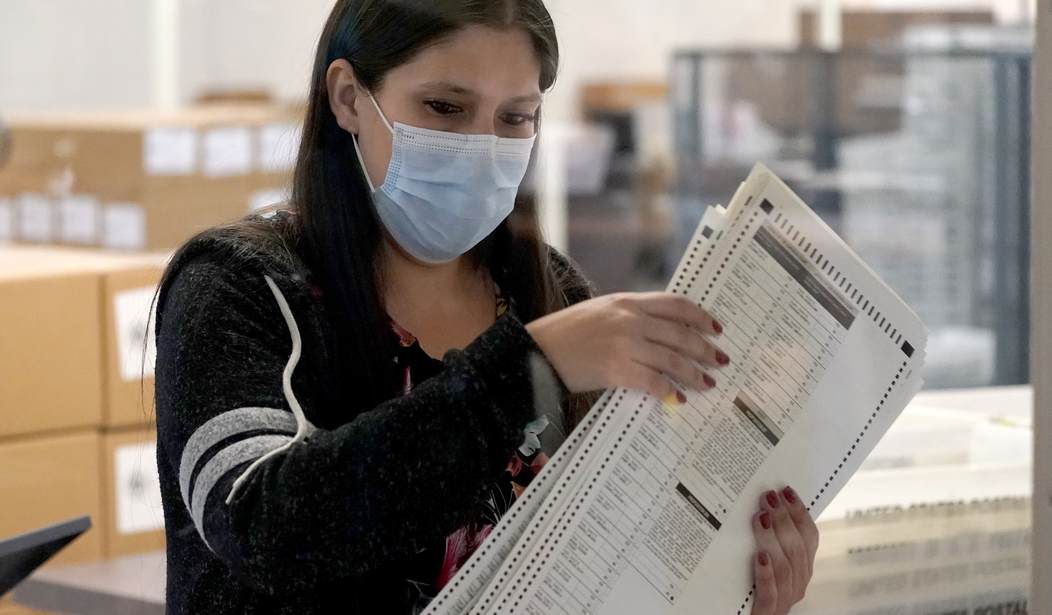
Tight races like this demonstrate why no amount of voter fraud is acceptable. It was already being called one of the closest elections in history. Republican congressional candidate Dr. Mariannette Miller-Meeks held a 34-vote lead over Democrat Rita Hart in Iowa's 2nd District race. Following a recount in Clinton County, Miller-Meeks' lead has now dropped to a mere six votes.
After weeks of recounts, the GOP candidate is expected to be certified as the winner.
Congratulations to my friend, and the first woman to represent Iowa’s 2nd District, @millermeeks! Looking forward to serving alongside you in Congress representing our Great State of Iowa.
— Joni Ernst (@joniernst) November 29, 2020
"With the Clinton County recount finished this afternoon, all 24 counties have counted, recounted and in some cases, recounted again, the results of Iowa's 2nd Congressional District," Miller-Meeks said in a statement.
The candidate also thanked county auditors, election staff and volunteers for their hard work over the past weeks in conducting recounts.
"While the race is extraordinarily close, I am proud to have won this contest and look forward to being certified as the winner by the state's Executive Council on Monday. It is the honor of a lifetime to be elected to serve the people of eastern and southern Iowa," said Miller-Meeks.
Miller-Meeks is a retired U.S. Army Reserve lieutenant colonel and an ophthalmologist. She was elected to the state senate in 2018, previously serving as director of the Iowa Public Health Department under then-Gov. Terry Branstad.
(Via Fox News)
Congratulations poured in for Miller-Meeks, who is expected to join the ranks of nearly 20 other GOP women newly elected to the House of Representatives, something that's giving the party cause for celebration.
...
Miller-Meeks and Hart ran to replace Democrat Rep. Dave Loebsack, who is retiring after seven terms.
Hart requested the districtwide recount after counties’ initial certifications showed her trailing by 47 votes following an election in which reporting errors flipped the lead back and forth between the candidates.
In a statement, Hart’s campaign manager, Zach Meunier, did not say whether the campaign will file a legal challenge in the race, the closest House election in the nation. A challenge would set in motion a proceeding run by a judicial panel.
“We will closely review what the county and state boards do on Monday with an eye toward making sure all Iowa voices are fully and fairly heard,” he said.
The close race demonstrates the need for election reforms to safeguard against voter fraud and other irregularities threatening to undermine the integrity of our elections.
Matt Braynard, a former data chief and strategist for the Trump campaign, along with his team at The Voter Integrity Project have compiled a review of ballot and election results in the 2020 election.
Braynard has some recommendations for election reforms going forward, such as the use of third parties to audit state registration files. Baynard also recommends states authenticate requests for absentee ballots and attach dates of birth to voter records. Baynard suggests the use of fingerprints to match absentee ballot requests to registered voters, and has called upon election equipment to use open source software so that election data can be reviewed and analyzed.
Braynard announced on Sunday that the FBI has asked his team to hand over their research to investigators.



Join the Conversation
VIP members get the ability to comment on articles.