





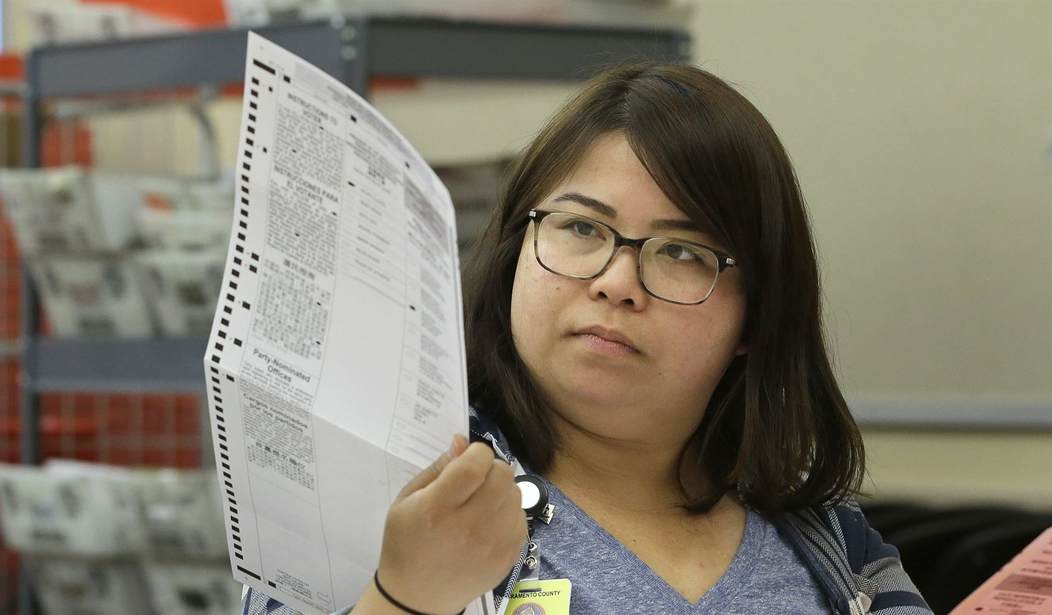
Officials in the Golden State are warning that results will be slow coming out of California following Tuesday's primary election. A large number of California's more than 20 million registered voters are expected to mail-in ballots this year, and, unlike many other states, California accepts ballots that are postmarked on or before election day so long as the ballots arrive at the county election office no later than Friday, according to the Los Angeles Times. County election officials then have 30 days to count every valid ballot and conduct any necessary audits.
According to the report, while a statewide "winner" will likely be declared soon, the official delegate count awarded to the individual candidates probably won't come until sometime in April.
(Via the LA Times)
Of the 494 national delegates in California, 271 of them will be chosen by the results of the 53 congressional districts. Only candidates who win at least 15% of the vote in a district will be eligible for delegates. Those who clear the 15% threshold in the statewide vote total will be awarded portions of 144 at-large and party leader delegates. (Another 79 delegates, a group of elected officials and Democratic National Committee members, aren’t tied to any candidate.)
As the first four early-voting states showed us, a crowded primary can lead to close contests for first, second and third. With four serious contenders still in the race, if the margins are close some campaigns could be hovering around 15% in some districts, waiting to see if they’ll get any delegates at all.
California Secretary of State Alex Padilla defended the slow process, saying, "In California, we'd rather get it right than get it fast." But that's certainly not California's philosophy when it comes to suing the Trump administration.
Voters in 14 states and American Somoa are headed to the polls, and nearly a third of the pledged delegates up for grabs on Super Tuesday will be decided in California. The Golden State is not a winner-take-all state, so as long as a candidate wins at least 15 percent of the vote, they can look forward to getting their hands on some number of California's 144 statewide delegates. Additionally, 271 pledged delegates will be awarded based on the results of each one of California's 53 congressional districts. The presidential candidates must still cross the viability threshold of 15 percent in each district in order to pick up delegates. Given the size and diversity of the state, it is likely the congressional districts will have varying preferences when it comes to choosing the candidates.








Join the conversation as a VIP Member