







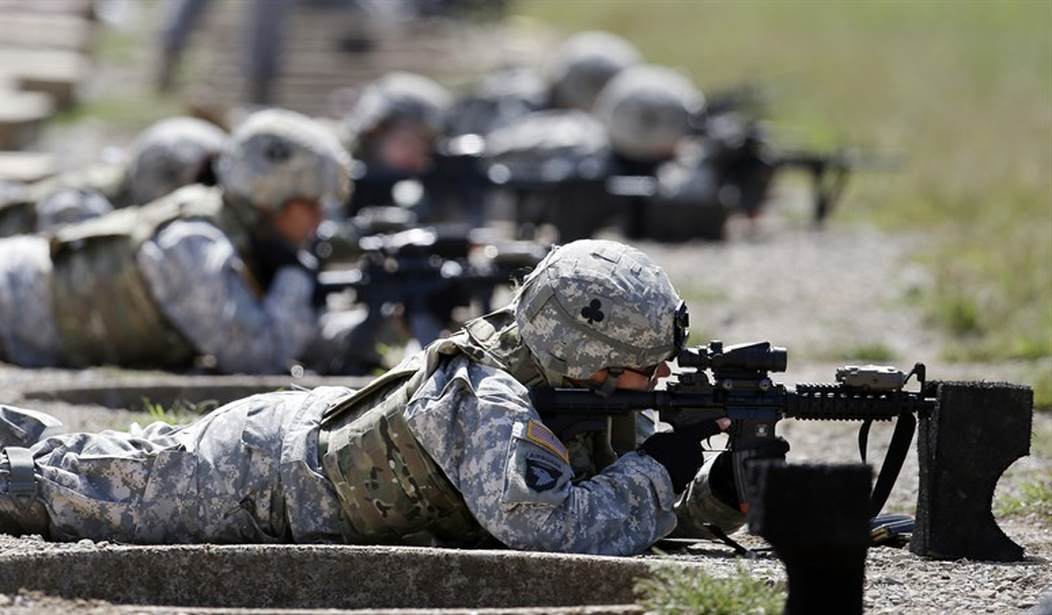
It would appear that female veterans in America aren’t faring so well.
According to a recent NPR article, women who’ve served in combat are 250 times more likely than female civilians to commit suicide.
Male veterans, on the other hand, are only 18 times more likely to kill themselves than their male civilian counterparts.
What, exactly, is going on?
So far, it’s not exactly clear what the reason is for the disparity.
The US Department of Veterans Affairs remains a convenient and expedient scapegoat, certainly, and not entirely without good reason. Just this past May, Forbes published a piece titled 3 Ways to Fix the VA Among Ongoing Scandals. The article describes woefully inadequate facilities and cites the 2014 scandal in particular, which erupted under the Obama administration, and where government officials allegedly falsified data showing just how long desperate veterans were waiting for appointments.
But the ongoing problems and corruption in the VA can’t fully explain the problem.
Nor can the VA be wholly responsible for the suicide rate among female veterans having increased by 85%--not an insignificant number, surely--in recent years. Why are women in combat doing so much worse, comparatively, than men? And what is the reason for the sudden, sharp increase?
If nothing else, the latest polls and research seem to validate something conservatives have been saying for a long time: men and women are indeed different.
Researchers with the Service Women’s Action Network (SWAN) just released a series of mental wellness recommendations for servicewomen and female veterans. One of those recommendations is the establishment of stronger social support networks. There is concern among researchers that women who’ve served in combat zones, in contrast to men, have no real community with which to share their experiences.
But while that may be true to some degree, it doesn’t necessarily speak to why women in particular are struggling so much. Surely men, too, have a difficult time finding positive ways of processing what they’ve seen.
One wonders if this latest research will ignite the age-old debate over women serving in combat positions, in general. It’s certainly possible. As recently as 2016, PBS was reporting a Marine general’s predictions that “the Defense Department’s vows to maintain the same standards for women and men in combat jobs won’t last,” and that “the military will eventually be pressured to lower the qualifications so more women can serve in jobs like the Marine infantry.”
At the time, the Marine Corps was opposed to opening certain infantry and combat positions to women, claiming that evidence showed male-only units were more effective than combined-gender units. They also worried about the potential for sexual harassment, and for the general well-being of women serving in such positions.
Two years later, it appears that the sharp decline in women’s mental health may support the Marine Corps’ position.
It was in 2013 when then-Secretary of Defense Leon Panetta granted women the previously unavailable right to serve in combat. Three years later, and against the Marine Corps’ recommendations, all military occupational specialties (such as ground units) were made available to women.
Liberals have long insisted that true gender equality demands women be afforded access to the same opportunities as men. But what this position fails to take into account is now being borne out in the extremely troubling suicide statistics: for all the talk of equality, servicemen and servicewomen are not faring the same. Women, who now have equal access to combat positions, are suffering disproportionately. Even if they make it back to their families alive, they may still not survive.
Controversial or not, perhaps it’s time to reconsider whether serving in combat is truly what’s best for women.


Join the Conversation
VIP members get the ability to comment on articles.