





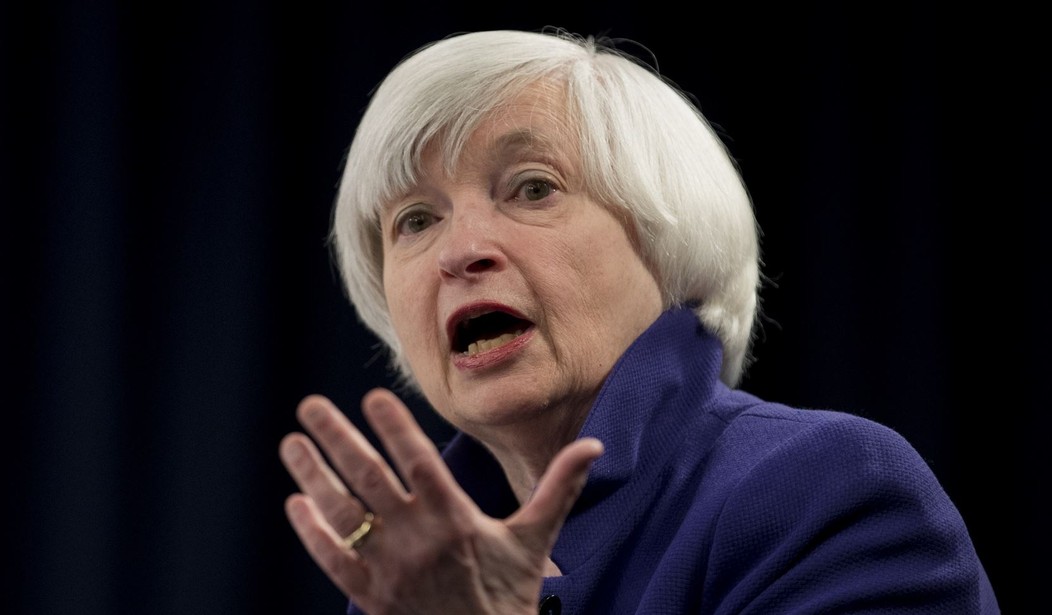
Treasury Secretary Janet Yellen on Sunday acknowledged the increased risk of inflation should Congress move forward and pass President Joe Biden's $1.9 trillion American Rescue Plan. According to Yellen, the benefits outweigh the risks, especially as Americans continue to suffer from the Wuhan coronavirus pandemic.
The secretary said that with 10 million Americans unemployed and another four million dropping out of the workforce, relief is needed to help them make ends meet. She also pointed out that a number of women who have dropped out of the workforce have done so because of childcare issues, which is another reason kids need to be sent back to school.
"People are on the verge of losing the roofs over their heads. The package provides rental assistance," she said. "We have 24 million adults and 12 million children that are going hungry everyday. We need to provide them with food."
The goal is to make sure there is no "permanent toll" on Americans, particularly low-wage and minority workers.
"We need a package that's big enough to address this full range of need and I believe the American Rescue Plan is up to the job," Yellen said. "My predecessor has indicated that there's a chance this will cause inflation to rise. And that's a risk that we have to consider. I've spent many years studying inflation and worrying about inflation and I can tell you, we have the tools to deal with that risk if it materializes."
"We face a huge economic challenge here and tremendous suffering in the country. We've got to address that. That's the biggest risk," she explained.
“We need a package that’s big enough to address this full range of needs and I believe that the American Rescue Plan is up to the job,” Treasury Secy. Janet Yellen discusses Covid-19 relief. “We face a huge economic challenge... and tremendous suffering in the country” #CNNSOTU pic.twitter.com/QA7ybkBtA6
— State of the Union (@CNNSotu) February 7, 2021
The comments come after President Bill Clinton's Treasury Secretary, Larry Summers, penned an opinion piece in The Washington Post about the "admirably ambitious" stimulus plan, saying it brought "big risks." Specifically, Summers warned that the gap between actual and estimated economic output would be significantly higher than what was seen during the 2008 recession. That would mean inflation would be worse under this one economic package alone (not including the previously-passed relief bills).
"In 2009, the gap between actual and estimated potential output was about $80 billion a month and increasing. The 2009 stimulus measures provided an incremental $30 billion to $40 billion a month during 2009 — an amount equal to about half the output shortfall," he explained.
"In contrast, recent Congressional Budget Office estimates suggest that with the already enacted $900 billion package — but without any new stimulus — the gap between actual and potential output will decline from about $50 billion a month at the beginning of the year to $20 billion a month at its end. The proposed stimulus will total in the neighborhood of $150 billion a month, even before consideration of any follow-on measures. That is at least three times the size of the output shortfall."


Join the Conversation
VIP members get the ability to comment on articles.