





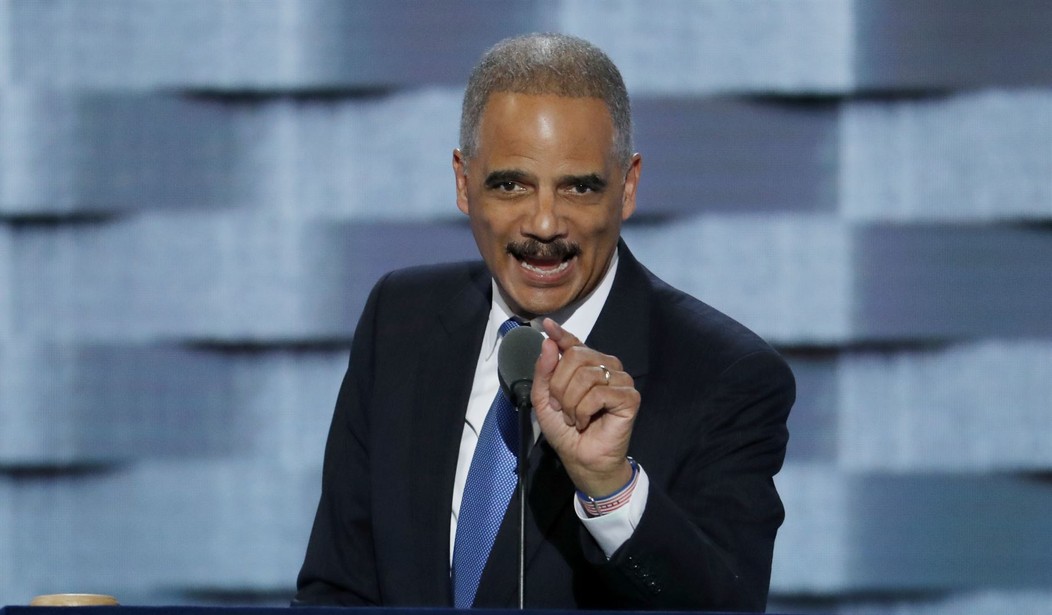
One of the last bills outgoing Wisconsin Gov. Scott Walker (R) signed into law – which implemented voter identification restrictions – is now being challenged by two liberal groups. One Wisconsin Institute and Citizen Action of Wisconsin Education Fund are working closely with former Attorney General Eric Holder's group, the National Democratic Redistricting Foundation. The NDRF is providing the two groups with legal assistance, The Milwaukee Journal Sentinel reported.
The two groups want to change the state's ID requirements in order to vote. They want to see temporary voting credentials be valid for 180 days, opposed to the law's 60 days. The liberal groups also want to allow students to use their student ID to vote, even if it's expired.
The other point of contention the liberal groups have is the length of time designated for early voting. The bill signed into law limits early voting to the 13 days prior to the election. In the past, there was no set timeframe. Local government was able to determine how long they allowed early voting to take place. And, in Democratic strongholds like Milwaukee and Madison, people had six weeks to vote prior to Election Day.
“The Wisconsin Republican attempts to rig the rules on voting were unconstitutional in 2016 and they’re unconstitutional today,” One Wisconsin Institute's executive director, Scot Ross, said in a statement. “We are going back to federal court to ask the judge to enforce his previous ruling and actions to force the GOP to respect our right to vote.”
“In the original case Judge Peterson found that the early voting restrictions imposed by Scott Walker and conservatives in the Legislature constituted deliberate racial discrimination and violated the democratic rights of all Wisconsin voters,” Robert Kraig, Executive Director of Citizen Action of Wisconsin, said in a statement. “It is shocking that without any legal rational, the Legislature and Governor Walker have has decided to ignore the ruling of a federal judge by again seeking to limit early voting. We are optimistic that this latest attempt to disenfranchise Wisconsin voters will blocked in time for the spring 2019 elections.”
Holder took to Twitter to criticize Walker's decision to sign the bills into law:
Scott Walker leaves as he governed: with no regard for the wishes of the people of his great state. Totally obedient to the special interests and his party. To lead you have to be bigger than that. https://t.co/3seTUyHsV5
— Eric Holder (@EricHolder) December 14, 2018
We will sue to stop Wisconsin Republicans from undermining our democracy.
— Eric Holder (@EricHolder) December 14, 2018
The bill that was signed into law was part of Gov. Walker's attempt at limiting the amount of power incoming-Gov. Tony Evers (D) will have once he takes office.



Join the Conversation
VIP members get the ability to comment on articles.