
Last weekend, I saw 'Pressure,' the WWII film starring Brendan Fraser as Gen. Dwight Eisenhower. He, as Supreme Allied Commander, is tasked with the near-impossible: deciding whether to give the go-ahead for D-Day, and he has 72 hours to do so. Postponing it would ruin a rare and strategic opportunity to deal a fatal blow to the Nazis in occupied France and elsewhere in Europe. There is one major variable that will tip Eisenhower's decision: the weather.
For that, he calls in Scottish meteorologist James Stagg (Andrew Scott), whom Prime Minister Winston Churchill recommended as a genius. Stagg is paired with American forecaster Irving P. Krick (Chris Messina), and the two do not see eye-to-eye. Stagg warns a storm is coming, one that would devastate the invading fleet; Krick says the weather will improve.
Weighing particularly heavily on Eisenhower's mind was the friendly-fire tragedy of Exercise Tiger, where troops — having missed a message about a delay in part of the landing force — were killed by friendly fire, causing significant casualties.
Eisenhower knew D-Day, even in pristine weather conditions, would result in numerous casualties. He hoped to avoid increasing that number by sending the troops in during a major storm. But, as mentioned, the clock was ticking. British Commander of the Allied ground forces, Bernard Montgomery (Damian Lewis). Montgomery argued that the deception efforts (e.g., inflatable tanks, dummy parachutists, phantom armies) that were part of Operation Fortitude could only keep the Germans misdirected for so long.
Tick tock.
I won't spoil the film, although we are marking D-Day today, so you will know that the operation did happen. How it got there, well, go see the film.
Omaha Beach was the toughest landing area. Some 34,000 American troops landed there, and certain landing craft were hit almost instantly by German fire. Some companies lost as many as half of their men within minutes. Company A, 116th Infantry Regiment, landed in the first wave at Omaha and was almost entirely wiped out; just 18 of the 230 men survived.
90% of the soldiers on the first boats to hit the beach didn't live to see the end of the day. Look at those faces. Some of them never made it to 18.
— The Iceman (@the_iceman64) June 5, 2026
Never forget that they paid the ultimate price for our freedom. We live our lives the way we do because of them. pic.twitter.com/nVCkuLaVHs
Casualty rates for the entire operation ranged from six to ten percent.
We've all seen the graves at Normandy.
Good morning.
— Steve Cortes (@CortesSteve) June 6, 2026
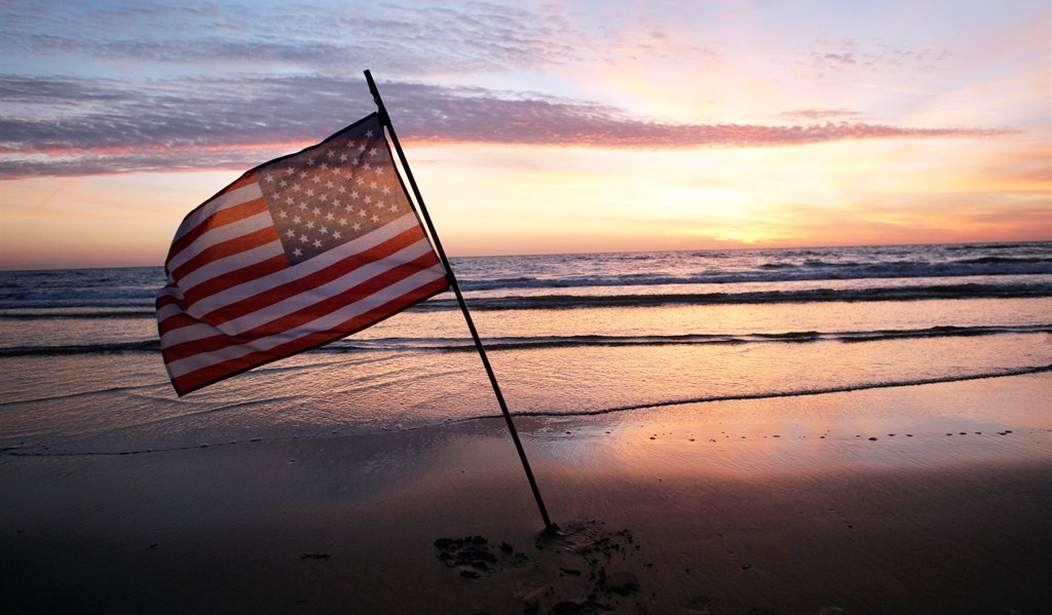
Today in 1944, a lot of brave young Americans stormed the beaches of Normandy. pic.twitter.com/8kyis6pLYA
Those men, despite knowing the risks and that it was highly unlikely they'd be returning home to their families, went anyway. They slept in mud, trudged across Europe, risked life and limb to free the continent from Nazi tyranny.
I've seen people argue of late that their sacrifices were in vain. That Europe has fallen to tyranny, one instituted not by Nazis, but by woke Leftists who decided racism is a bigger crime than systematically raping British girls or murdering British university students.
They're not wrong on the latter part, but they are wrong on the former.
Those men who died on Omaha Beach, or Utah, or Gold, or Juno, or Sword knew one thing: fascism must be fought, but it can never be eradicated. The arc of human history often bends towards tyranny, and that tyranny takes different forms when it rears its ugly head. Today, it's the tyranny of an ideological class that believes hurt feelings and mean words are the world's greatest offense because — at some point in history — their forebears may or may not have done things we now consider bad.
The only way we let the sacrifices made on D-Day be in vain is if we stop fighting back against the contemporary tyrants who would crush us under their boot. If those men can storm Omaha Beach, we can reclaim our government from those who abuse their power.