





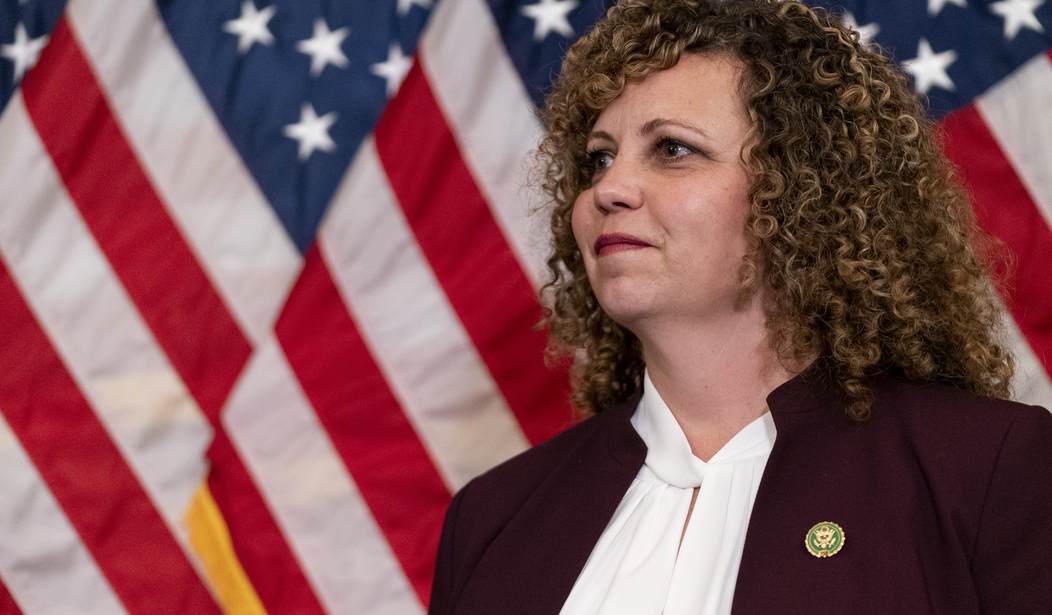
For years, Americans trying to build, expand, or improve our infrastructure, or create a product or service that will increase American prosperity, have run headfirst into a bloated federal permitting system that is slow, opaque, and often arbitrary. Rep. Celeste Maloy's Full Responsibility and Expedited Enforcement (FREE) Act aims to change all that by replacing bureaucratic guesswork and hoops with clear, enforceable rules.
Rep. Maloy joined the Build America Caucus last year, one of 30 lawmakers who aim to turn the "Abundance Agenda" into legislative action. The Caucus aims to remove government obstacles to energy, housing, and infrastructure.
I am looking forward to spearheading the new Build America Caucus to streamline federal permitting. My FREE Act sets a 30-day deadline for agency reviews and cuts duplicative red tape so Utah can move forward on housing, energy, and infrastructure without years of delay. It’s…
— Celeste Maloy (@CelesteMaloyUT) June 2, 2025
In 2024 and 2025, Maloy introduced the Full Responsibility and Expedited Enforcement (FREE) Act which would require federal agencies to replace individual review processes with quicker “permits by rule.”
Maloy said she is currently “testing the theory” that permitting reform has bipartisan support as she lobbies Democrat lawmakers in support of her bill, which would also give agencies just 30 days to grant applications.
“Those are all things that can get easy bipartisan support,” Maloy said. “We’ve reached a critical point where the problem is clear to everyone.”
Both before and after joining the Caucus, Maloy introduced the FREE Act in the House. The FREE Act would require federal agencies to replace the individual review process with quicker "permits by rule" (PBR).
PBR means that government agencies would set pre-set substantive standards for obtaining permits, and applicants would be denied a permit only if they failed to certify that they met those standards. Under PBR, the government would either acknowledge the certifications and grant the permit or identify which standard was not met. It would also focus on enforcement actions against those who fail to meet the standards.
The FREE Act would require federal agencies to create a report detailing which permits could be converted to PBR, and then enact such changes.
While the FREE Act has advanced out of committee and been reintroduced in the current Congress, it has not yet been scheduled for a floor vote in the House. Still, the broad concept of permitting reform is gaining traction on Capitol Hill. Several bipartisan proposals aimed at streamlining federal approvals for energy, housing, and infrastructure projects have moved through the House in recent months, signaling growing momentum for reform. Whether Maloy’s FREE Act becomes the vehicle for that overhaul remains to be seen, but the appetite for cutting red tape is clearly building in Washington.
In a statement to Townhall, Rep. Maloy said, "The federal permitting process has become a maze that punishes people for building or innovating. The FREE Act fixes that by setting clear standards, reasonable deadlines, and real accountability for agencies that drag their feet. If you certify compliance and the government can't find a problem in 180 days, you get your permit. That's how it should work.“
For decades, politicians have promised to streamline the federal permitting process. Meanwhile, projects stall, costs balloon, and communities wait years for approvals that should take months. The FREE Act raises a simple question: should bureaucrats wield veto power by default, or should Americans and businesses who meet clear standards be allowed to build? The FREE Act affirms the latter.
Editor’s Note: The 2026 Midterms will determine the fate of President Trump’s America First agenda. Republicans must maintain control of both chambers of Congress.
Help Townhall continue to report on the Democrats’ radicalism and inform voters as our nation faces a crossroads. Join Townhall VIP and use promo code FIGHT to receive 60% off your membership.


Join the Conversation
VIP members get the ability to comment on articles.