




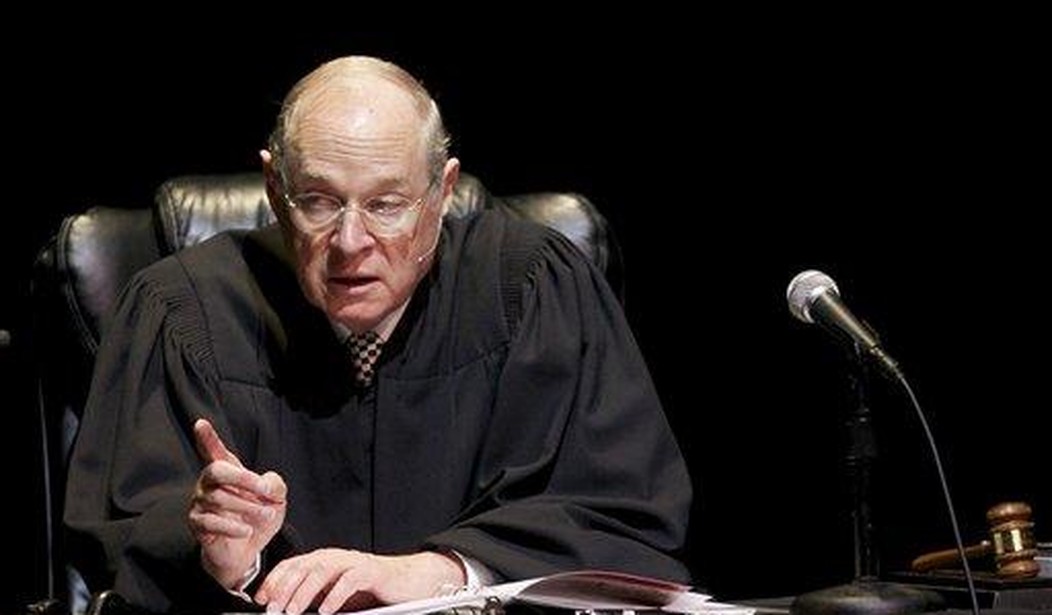
The Supreme Court ruled Monday that public prayer before government meetings does not violate the First Amendment’s Establishment Clause. In the lawsuit, an atheist and a Jewish resident of Greece, New York claimed prayers held prior to the town’s meetings promoted explicitly Christian values and placed “coercive pressure on citizens to participate in the prayers.” However, the Justices of the Supreme Court announced in a 5-4 ruling the assertion is unfounded.
The invocations are a natural outcome of Greece’s religious demographics, Justice Anthony Kennedy explained in the Court's Opinion:
The town followed an informal method for selecting prayer givers, all of whom were unpaid volunteers. A town employee would call the congregations listed in a local directory until she found a minister available for that month’s meeting. The town eventually compiled a list of willing “board chaplains” who had accepted invitations and agreed to return in the future. The town at no point excluded or denied an opportunity to a would-be prayer giver. Its leaders maintained that a minister or layperson of any persuasion, including an atheist, could give the invocation. But nearly all of the congregations in town were Christian; and from 1999 to 2007, all of the participating ministers were too.
Greece neither reviewed the prayers in advance of the meetings nor provided guidance as to their tone or content, in the belief that exercising any degree of control over the prayers would infringe both the free exercise and speech rights of the ministers.
Any clergy in Greece is free to become a “board chaplain” and pray prior to the meeting. If the majority of congregations in the town are Christian prayers invoking the names of “Jesus,” “the Holy Spirit,” and “Your Son” are freely catering to the needs of the community at large.
Recommended
Board members would be restricting free speech were they to censor prayers. This would lead to unlawful excessive government entanglement.
The Establishment Clause is not structured to remove religion from the public square, but rather to protect citizens from government enforcement of one religion. The invocations in question are currently free of government entanglement and the Supreme Court was right to acknowledge the practice’s constitutionality.
Read my previous post for more information on Town of Greece v. Galloway.









Join the conversation as a VIP Member