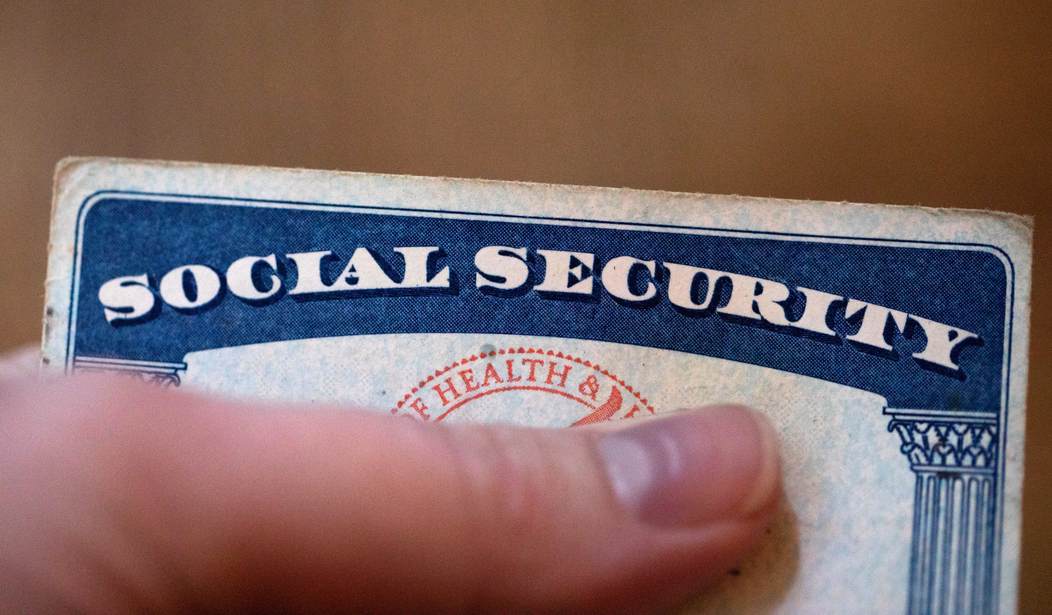

There remains a pervasive myth about Social Security, that retirees are simply getting back the money they paid into it.
A few days ago, Social Security stirred up debate on social media when a December 2025 Cato Institute poll resurfaced, showing that the vast majority of older Americans were willing to raise taxes on younger Americans to keep their own benefits funded. Support fell with age but 89 percent supported the move among those 65 and older, 84 percent among those 55-64, 74 percent among those 45-54, 57 percent among those 30-44, and 47 percent among those under 30.
When I covered the poll, the comments revealed a familiar divide. Many readers flatly rejected raising taxes on younger Americans, a promising sign. Others offered a different defense: “I paid into the system. I’m going to get my benefits out of it.” Beneath that argument was the pervasive myth about Social Security: that seniors are simply getting their own money back.
But that simply isn't true.
First, Social Security was never meant to work that way to begin with. Retirees collecting benefits today aren’t simply getting their own money back; their checks are funded by payroll taxes paid by Americans working today. And the pool of workers supporting each beneficiary has shrunk dramatically: in 1940, there were roughly 160 workers paying into the system for every person collecting benefits. Today, there are just 2.6, leaving far fewer workers to shoulder the cost.
Second, even if that were how the system worked, retirees draw far more in benefits than they ever contributed. According to the Committee for a Responsible Federal Budget, the average American employee pays about $100,000 in payroll taxes over a career, while their employer contributes about $200,000. Yet the average retiree collects roughly $730,000 in benefits over retirement, 7.3 times the employee’s contributions and more than twice the combined contributions. “I’m simply getting back what I paid in” is convenient, but the math doesn’t follow.
So the question becomes: should the wealthiest generation in the United States be entitled to more of younger generations’ money?
That is not meant as an insult to retirees. The government made promises it couldn’t keep and encouraged people to plan their financial futures around benefits it pledged to provide. Now everyone is stuck trying to kick the can down the road. The fault lies with the government, not with retirees who took it at its word.
But consider what that means for the people being asked to pay more. The average retiree collects about $25,000 a year in Social Security, hardly enough to live on. Yet the average American household under 35 only has a net worth of about $39,000. Those households have bills to pay and futures to save for, too. How can anyone justify demanding more of their income to fund someone else’s retirement?
As for the solution, there may not be an easy one, but it should be clear what it can’t be: endlessly asking younger Americans to shoulder a greater burden.
If anything, this should be reason enough to put faith back where it should have been all along, in private hands. When the government invests your lifetime contributions, it yields around a two-percent return, almost nothing. Had that same money been invested in an Individual Retirement Account (IRA), most American retirees would have ended their career a millionaire.
No idea why there's a civil war over Social Security, but the core problem is it's paying boomers just 2% returns because Congress stole the rest. While investing on their own -- IRA's -- would have paid 6%. Compounded, that comes to $1,247,000 with the IRA -- the median senior would be a millionaire. Instead, the median Congressman is a millionaire. So, yes, Boomer voters kicked the can down the road. And, yes, Boomers also got ripped off.
— Peter St Onge, Ph.D. (@profstonge) October 8, 2026
Instead, Americans were told the government would provide for them, and younger generations are now being asked to make good on that promise. But government promises aren’t the whole story either. Individual choices matter, too. Some Americans put off saving until it’s too late, dip into their retirement accounts early, or never contribute in the first place. People should be free to make those choices. That does not mean taxpayers should be obligated to subsidize the consequences of poor choices.
The government bears responsibility for the expectations it created. But younger Americans deserve the chance to build their own financial security, not someone else's. Retirement policy should ultimately put more money and more responsibility in individual hands, rather than continually asking the next generation of Americans to sacrifice more.