






Fear of artificial intelligence is growing, but so is the list of things even the best-positioned experts are getting wrong about what these systems will actually do.
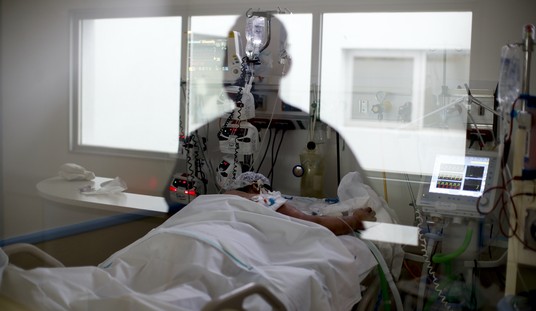
A clip from a June 2026 interview with Geoffrey Hinton, a Nobel laureate widely considered the “godfather of AI,” is currently recirculating, and for good reason. In 2016, Hinton predicted that within five years radiologists would no longer be a profession, because computers would read scans better than any human. A decade later, that hasn’t happened. Instead, radiologist ranks are projected to grow by roughly 26 percent over the coming decades, even as AI tools flood the field.
Hinton now says his prediction was “way early,” and wrong for two reasons. First, letting computers read scans didn’t mean hospitals needed fewer radiologists; it meant they could simply perform more scans, faster and cheaper. Second, he admitted his conception of a radiologist’s work was partly false: he’d leaned on a single example and characterized an entire profession by one narrow task, overlooking everything else radiologists do.
His incorrect prediction highlights two crucial lessons as AI continues to expand and improve. First, AI will first and foremost boost productivity, and that doesn’t necessarily mean people will be out of jobs. Second, everyone is making predictions about industries they know little about, including the AI industry itself. It’s worth remembering that trying to legislate, or even debate, based on that ignorance is ill-advised.
GODFATHER OF AI ADMITS HE WAS WRONG ABOUT RADIOLOGISTS
— Dany (@danysvnt) September 6, 2026
geoffrey hinton predicted in 2016 that within about 5 years radiologists wouldnt be reading scans anymore
10 years later he gives two reasons he got it wrong
first, making scans cheaper and faster didnt mean hospitals… pic.twitter.com/hkoy0Pwk23
"The first [reason] is that healthcare is elastic. So if you could do more scans and get more scans read, there'd be a lot more scans happening," Hinton said. "And that's one thing that's happening. So a significant fraction of the cost of doing a scan is the cost of the radiologist interpreting it. As AI gets to help more and more radiologists interpret scans, we can interpret them faster and for less and less money, they're getting more efficient. And you would have thought that would mean you needed less radiologists, but actually what it means is you get more scans. So that aspect of the prediction was wrong."
"A second thing that was wrong was I didn't know enough about radiologists and what they do. And that was because I had a former student who had an MD and then did a physics PhD with me on something called Boltzmann machines. And he didn't particularly like people. So he got a job as a radiologist, just interpreting scans. And he was my model for radiologists," he added. "All he did was interpret scans. He never talked to people. And that's what was going to get replaced. And that is now becoming replaced. So I think there's now of the order of a hundred AI systems for interpreting scans that have been federally approved."
The lesson here goes beyond radiology or any single industry. If the “godfather of AI” can be this wrong about a field adjacent to his own, what does that say about the confidence of politicians, activists, and commentators calling for sweeping bans and heavy-handed rules based on even shakier and less informed assumptions?
Like much of history, the belief that regulation is the key to mitigating these problems is misguided, self-important, and reveals a striking lack of confidence, not just in individual people, but in the collective efforts of millions operating within America’s robust free market.
It’s important to keep that connection at the surface, especially as Republicans wonder how Americans began voting for socialism. It was no accident. Our leaders have simply raised a populace to have no faith in humanity’s ability to adapt, or in the idea that chaos, guided by an invisible hand, can still produce something positive. The answer isn’t another sweeping set of rules; it’s more trust, in the market, in innovation, and in the millions of Americans who have always turned uncertainty into opportunity.
Editor's Note: Do you enjoy Townhall's conservative reporting that takes on the radical Left and woke media? Support our work so that we can continue to bring you the truth.
Join Townhall VIP and use promo code FIGHT to receive 60% off your membership.
Join the Conversation
VIP members get the ability to comment on articles.