







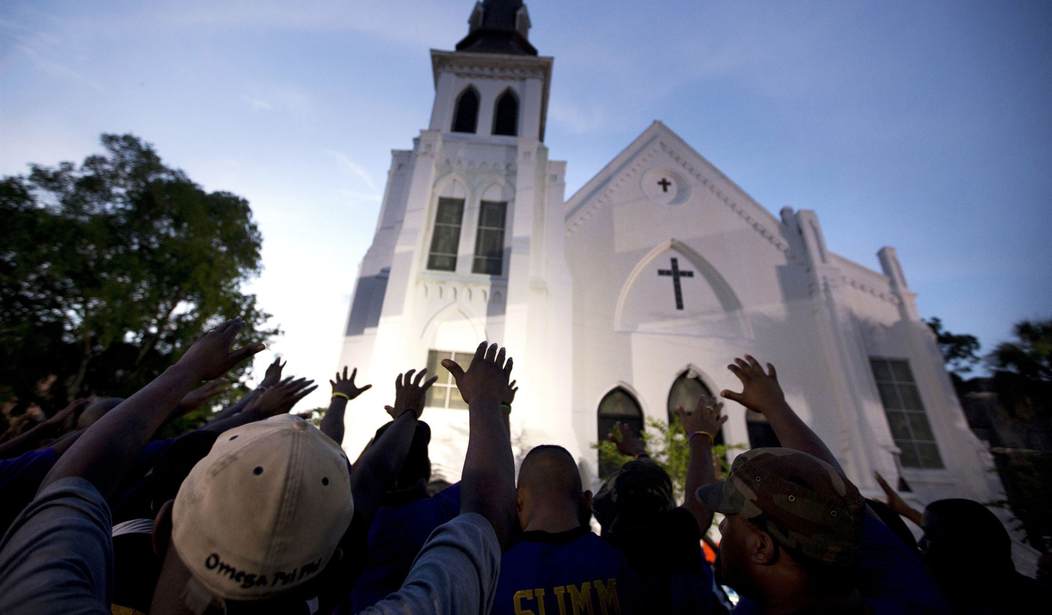
On June 17th 2015, a white supremacist walked into a predominantly black church during a Bible study and murdered a pastor and several of the congregants. The shocking events became a national story and President Barack Obama later visited the community and gave a eulogy for the late pastor. Many people might think they know the whole story about this national tragedy but a new film shows otherwise.
The new documentary Emanuel, named after the church where the shooting took place, explores the events of that tragic day and how some relatives of the deceased found a pathway to forgiveness.
The 74-minute feature opens with comedian Jon Stewart talking about the shooting. A man who could find humor in nearly everything looks lost talking about the horrific events.
Director Brian Ivie then focuses on the community itself, setting the stage by introducing the history of Charleston, South Carolina. Many slaves arrived in the United States via the Charleston ports. It was in this community that the Emanuel African Methodist Episcopal Church became the first free-standing black Church in the South, a historian notes.
That church was hosting a Bible study the night it was attacked.
Ivie focuses his camera on family members who lost loved ones during the shooting. Nadine, who lost her mother that day, talks about what she went through during that horrific day. It’s her personal, painful testimonial that offers a hint of the heartbreak experienced in that community.
“Everything I had in this world was gone,” she says, recalling the moments she realized her mother had passed.
The feature’s first half is painful and hard to watch but it's also necessary. It can be easy to lose sight of individual victims after a major tragedy like this but this feature never does. It offers some of the victims’ families an opportunity to grieve for their loved ones and the pain they faced that day.
In the film’s second half, there’s a focus on what happened after the shooting and after the killer was apprehended. During a court appearance (during which the victim’s families could see and talk to the perpetrator via a monitor), some of the family members offered him their forgiveness. It’s hard to imagine how but they did it.
The story doesn’t end there though and it’s to Ivie’s credit that he doesn’t end the story by making it seem like forgiveness resolves anything. He freely talks to the people who were generous with their forgiveness but he also talks to some of the families who can’t forgive. Forgiveness isn’t easy and to suggest otherwise does would do a disservice to the victims and their families.
There are survivors here who can’t imagine offering something as precious as forgiveness. A white supremacist took their loved ones away from them. What he did, they argue, is unforgivable.
There are no easy solutions here about faith or forgiveness. Instead, the documentary simply captures discussions about the subject, keeping its focus on the victims themselves and the ones they left behind.
Executive producers Stephen Curry and Viola Davis lent their talents to their project alongside Mariska Hargitay, who served as a co-producer. Together with Ivie, this team of stars has crafted an unflinching and powerful look at a harrowing tragedy, the complexity of forgiveness and the victims that lost their lives nearly four years ago.
Emanuel will be in theaters nationwide June 17th and June 19th. Click here for a list of theaters showing the film.

Join the Conversation
VIP members get the ability to comment on articles.