





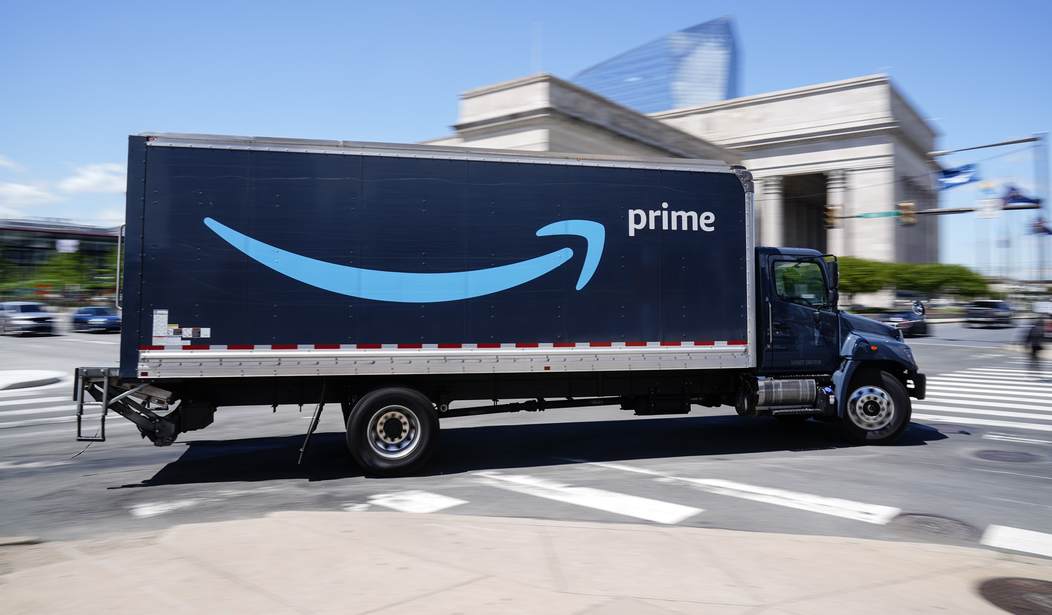
If you’re an Amazon Prime member and enjoy a good deal, you may be hoping to score some discounted items on Prime Day. In 2020, small and medium-sized businesses recorded a record breaking $3.5 billion sales on Prime Day and consumers saved over $1.4 billion. However, the introduction of five antitrust bills by Representatives David Cicilline (D-NJ) and Ken Buck (R-CO) would negatively impact how consumers are able to utilize the platform - as well as other platforms that Americans use every day.
The antitrust legislation is crafted to only target a handful of large technology companies, which are identified as “covered platforms." Two of the pieces of legislation introduced, the Ending Platform Monopolies Act and the American Innovation and Choice Online Act, would discriminately ban covered platforms from engaging in behavior that is common in grocery, retail, and streaming services. This would lead to fewer options and higher prices for consumers.
The Ending Platform Monopolies Act would make it unlawful for a covered platform to “own, control, or have a beneficial interest” in a line of business that utilizes the covered platform or gives rise to a “conflict of interest.” For example, this would prevent Amazon from selling their private label AmazonBasics towels alongside other towel brands. This is commonly referred to as “self-preferencing,” and it benefits the consumer. The demonization of “self-preferencing” for online companies is largely overblown and one only needs to look at your local grocery or retail store to see why.
Walmart’s food private label, Great Value, competes directly with name brand products. Without the additional marketing costs, private labels generally offer lower priced options for consumers and help keep prices low across the board through increased competition. Both Amazon and Walmart are large companies, so why are AmazonBasics products targeted as anti-competitive but not the Great Value brand? One argument is that consumer data gives Amazon an unfair advantage but this is a dubious claim. Customer loyalty programs used by Walmart and numerous other retailers give these companies key insights to individual consumers’ shopping habits. Walmart is also aggressively expanding their online business offerings and invests more in information technology than Microsoft or AT&T.
In a similar attempt to arbitrarily banish “self-preferencing” for a small group of technology companies, the American Innovation and Choice Online Act would make it unlawful for a covered platform to advantage their own line(s) of business over a competitor or potential competitor that utilizes the platform. At first glance, this may seem pro-competitive. However, Netflix and other streaming platforms produce their own content and often feature it in menu options. Rather famously, Costco sells Kirkland Signature (their private label) rotisserie chicken for just $5, which is priced below other competitors. Costco is vertically integrated, allowing them to sell their private label chicken at a financial loss to more regularly bring in consumers to the bulk-shopping warehouse.
Many Americans are still financially recovering from the COVID-19 pandemic. Private labels provide consumers with more options and can help low-income individuals purchase necessary supplies. A recent Nielsen study found that 71 percent of North American shoppers buy private labels to save money. The focus on online platforms displaying their own line(s) of business on their platform ignores that this is the reality across multiple other industries. To continue the Costco rotisserie example, this sought-after product is often in the back of the store which forces shoppers to navigate through aisles of other goods. It would be fair to expect that online platforms would receive the same treatment as brick-and-mortar stores when it comes to displaying and promoting their own private labels.
These bills are not responsive to any objectionable measures of consumer harm or anti-competitive actions. Instead, as a whole, the antitrust bills take punitive action against some of America’s most successful companies. If the sale and promotion of private labels is harmful to competition, lawmakers supporting antitrust bills should be consistent and call out the host of other industries that behave the same way as the select few technological companies. Better yet, lawmakers should maintain the light-touch approach to antitrust enforcement and not choose winners and losers. That power lies with the consumer, and while lawmakers may disagree with the results, it does not justify big government limiting consumer choice.
Will Yepez is a policy and government affairs associate with the National Taxpayers Union, a nonprofit dedicated to advocating for American taxpayers at all levels of government.


Join the Conversation
VIP members get the ability to comment on articles.