





As the recent U.S.-Iran war demonstrated, public opinion is a global battlefront that requires governmental attention, strategy, commitment, and funding. Soft power is often exercised by non-governmental organizations that ostensibly proclaim worthy humanitarian goals. The reality, however, can be very different.
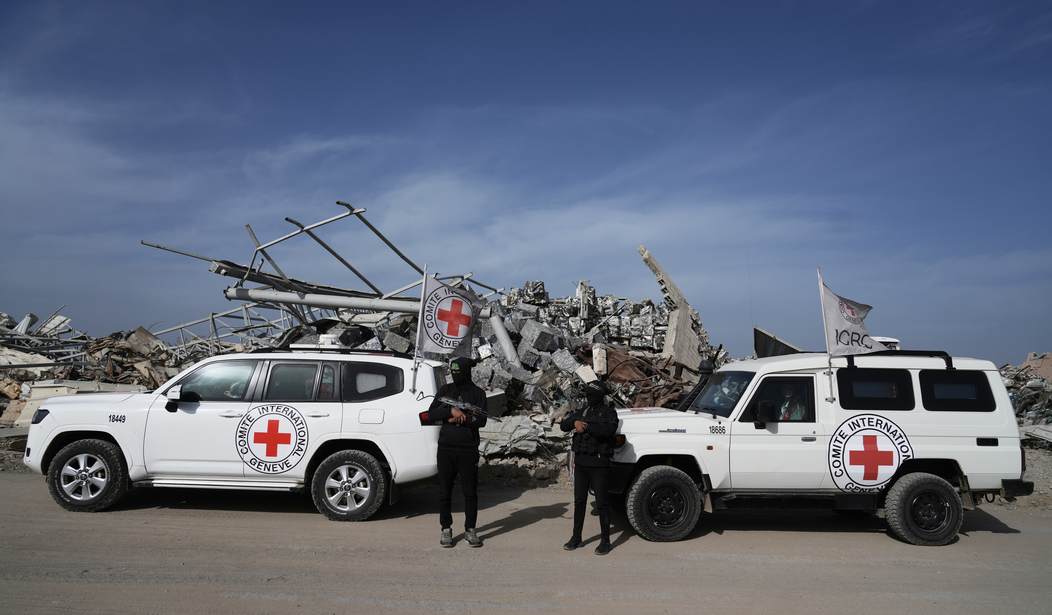
The International Committee of the Red Cross (ICRC) has long occupied a unique place in the architecture of global humanitarianism. Founded in 1853 and located in swanky Geneva, Switzerland, wrapped in the language of neutrality and shielded by a reputation built over more than a century, it is often treated in Washington as a moral compass. That is no longer sustainable.
Times have changed. Conflicts often involve states and non-state actors that are not signatories to the Geneva Conventions and have no regard for the constraints they impose or for maintaining an international reputation as law-abiding. In these scenarios, the ICRC's silence in the face of monstrosities has arguably made it more a party to moral hazard than a beacon of humanitarian concern.
In 2024, the United States provided roughly one-third of the organization’s CHF 2.14 billion budget (the U.S. contribution was approximately $910 million). The budget appeal for 2025 totaled CHF 2.17 billion, and the U.S. reportedly remained the largest donor.
An America First approach demands measurable returns on spending. What exactly is Washington buying? The answer, increasingly, is ambiguity where clarity is required and silence where accountability should be expected.
The supreme governing body of the ICRC is the Assembly, composed of 15 to 25 members. All must be Swiss. The Assembly recruits new members if/when needed. While most American Red Cross funds come from private donations, most ICRC funding comes from governments.
The organization exists to assist victims of armed conflict. It is supposed to monitor their treatment and provide information about their fate. That mandate is not being fulfilled across multiple theaters relevant to American foreign policy and in numerous global humanitarian crises.
For example, since the Russian invasion of2022, access to Ukrainian prisoners of war held in Russian custody has been severely limited, while access to prisoners held by Ukraine has been freely given. High-profile atrocities, including the killing of Ukrainian detainees at Olenivka, occurred without meaningful sanction or follow-up. Returning prisoners have consistently reported that they were malnourished and never visited. European institutions have documented abuse and torture, and Yale researchers identified dozens of Russian detentioncamps in which civilians were kept incommunicado under conditions that included “insufficient sanitation, shortages of food and water, cramped conditions and reported acts consistent with torture.”
Karabakh offers another damning case study. After the USSR collapsed, Armenian forces occupied Karabakh and several surrounding districts, all of which were recognized as part of Azerbaijan by the U.S. and the UN. Approximately 4,000 Azerbaijani military personnel and civilians went missing. The conflict over the disputed region ended after decades, following Azerbaijan’s 2023 military recapture of territory, and a framework toward a final peace settlement was signed by both countries at the White House in August 2025.
As for the missing, most of their families waited in vain for word from the ICRC for over thirty years. It was only when the Azerbaijanis began finding mass graves in the retaken territory that the waiting ended for some. By the time the ICRC office in Azerbaijan closed in 2025 at the government’s request, fewer than one percent of the missing had been identified.
Similarly, after the brutal killings, rapes, and hostage-taking conducted by Hamas, the families of the 250 men, women, and children dragged into Gaza on October 7, 2023, waited, desperate, begging the ICRC for help. No help came. However, the ICRC did engage in broad statements that appeared to place more blame on Israel than on Hamas for the horrors of war and to stress the suffering of Palestinians while failing to mention the suffering of Israeli hostages. The ICRC’s image was further compromised when Hamas used the organization as a sort of prop in staging humiliating, public power displays in Gaza when finally releasing hostages.
For decades, the ICRC has operated within a cocoon of its own design. Information is filtered through internal processes and shared selectively, often conditioned on consent frameworks that prioritize institutional interests over the needs of the affected state. This is a private Swiss association under a legal framework that shields its archives and decision-making from external scrutiny. Its doctrine of confidentiality limits transparency by design.
That model may have been defensible in a different era. It is increasingly out of step today’s geopolitical environment. For Washington, this is not an abstract debate about humanitarian philosophy. The U.S.is the principal funder of an organization whose performance directly intersects with conflicts that define current American foreign policy priorities.
The time for a reassessment of ICRC has come. Funding should be conditioned on measurable improvements in access, reporting, and transparency. Claims of neutrality should not shade into covering up for dictatorships and terrorists.
If the ICRC cannot secure access to detainees and cannot expose torture, starvation, and systemic prisoner abuse, then its value proposition requires reassessment. The ICRC began in an era when quiet diplomacy, parties’ consent, and confidentiality were seen as indispensable tools. Today, those same tools can become shields for atrocities. Neutrality that refuses to distinguish between right and wrong, does not elevate humanitarianism. It destroys it.
Join the Conversation
VIP members get the ability to comment on articles.