





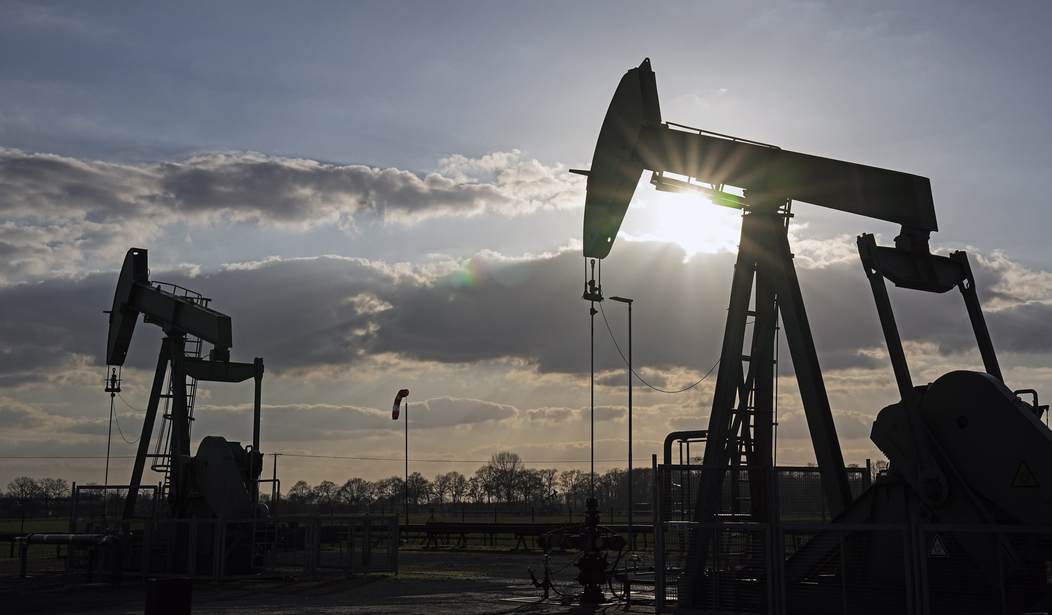
Michigan Attorney General Dana Nessel took aim at BP, Chevron, ExxonMobil, Shell and the American Petroleum Institute, hauling them into federal court on antitrust charges. The theory was breathtaking in scope.
She accused them of stealing the future. Nessel’s complaint claimed that the companies had colluded, in violation of federal antitrust law, to hold back wind, solar, and electric vehicles and that Michigan families had paid inflated energy bills as a result.
Judge Jane M. Beckering of the U.S. Western District Court in Michigan dismissed the complaint, holding that the state lacked standing to pursue the claim at all. That was only the beginning of the court's skepticism.
As reported, Judge Beckering found that the alleged chain connecting a decades-long conspiracy to the state's claimed overcharges stretched too thin to support most of the injuries Michigan tried to claim. The U.S. Justice Department has spent the past year fighting a nationwide wave of climate suits.
“This dismissal should make states rethink the use of lawfare to enact climate change policy,” said Associate Attorney General Stanley E. Woodward Jr. “We are committed to upholding antitrust and environmental law. Michigan’s case would have accomplished neither. ... Antitrust law protects competition and thereby consumers; it is not a tool to advance societal goals unrelated to competition.”
Michigan wanted a judge to rewrite decades of energy history and then hand the state a check, a ploy that should embarrass every state official who endorsed it.
A Case Built on an Imaginary Past
Attorney General Nessel's theory rested on a counterfactual, asking the court to picture an America where alternative technologies had overtaken oil companies decades ago and energy had somehow become cheaper as a result.
A judge would need to know how a debate going back to Thomas Edison and Henry Ford had been resolved differently and how the 1973 Arab oil embargo, the 1979 Iranian revolution, the shale revolution, China's takeover of solar manufacturing, and other imponderables might have played out under a fanciful scenario.
Physics also would need to be overturned. Gasoline carries 40 times more energy per kilogram than the best lithium-ion batteries on the market. A boardroom plot didn’t create that gap. Chemistry did.
Energy systems grow out of millions of decisions by engineers, investors, utilities, legislators, and ordinary households choosing what works at an affordable price. No court can rebuild that history. Judge Beckering refused to join the fantasy.
Biting the Hand That Fed
The ruling also exposes the playbook behind so many climate suits. Cities, counties, and states from Honolulu to California have sought to hold energy producers financially liable for a changing climate. Yet, they cannot define climate sensitivity, quantify natural variability, or explain the difference between weather and climate. And they demonize a harmless molecule, carbon dioxide, that is necessary for plant photosynthesis and all life.
There is nothing improper about democratic governments debating energy policy. But climate lawsuits are ideologically driven schemes to punish producers of energy that consumers, industries, governments and entire economies demanded for generations. They seek judicially imposed penalties that will not stop with corporate shareholders. Also paying the bill will be households, workers, pension funds, utilities and every consumer who buys gasoline, electricity, food, or manufactured goods.
Civilized legal systems demand clear causation, identifiable harm, and a remedy proportionate to the conduct. Climate litigation tries to bypass those requirements through fake moral outrage. There is no climate emergency. There is the broadest prosperity in human history, and it runs on the fuels these suits put on trial.
Billions of people escaped poverty within living memory because oil, natural gas, and coal made food, medicine, shelter, and mobility available. Fossil fuels still supply about 80 percent of the world's primary energy. Recasting this societal history as a criminal conspiracy is political fiction.
Michigan built its identity on the automobile, putting the world on wheels that ran on gasoline and diesel. The state's residents bought the fuel, its factories burned it, its truckers depended on it and its governments taxed it for a century.
Michigan sued the industry that powered its own prosperity, employing a strategy that substitutes prosecution for persuasion. Governments that cannot convince voters to accept costlier, less reliable energy are not allowed to impose it by judicial fiat instead, says the court in western Michigan.
Vijay Jayaraj is a Science and Research Associate at the CO2 Coalition, Fairfax, Virginia. He holds an M.S. in environmental sciences from the University of East Anglia and a postgraduate degree in energy management from Robert Gordon University, both in the U.K., and a bachelor’s in engineering from Anna University, India. He served as a research associate with the Changing Oceans Research Unit at University of British Columbia, Canada.
Editor's Note: Do you enjoy Townhall's conservative reporting exposing the radical left and woke media? Support our work so we can keep bringing you the truth.
Join Townhall VIP and use promo code FIGHT to receive 60% off your membership.

Join the Conversation
VIP members get the ability to comment on articles.