





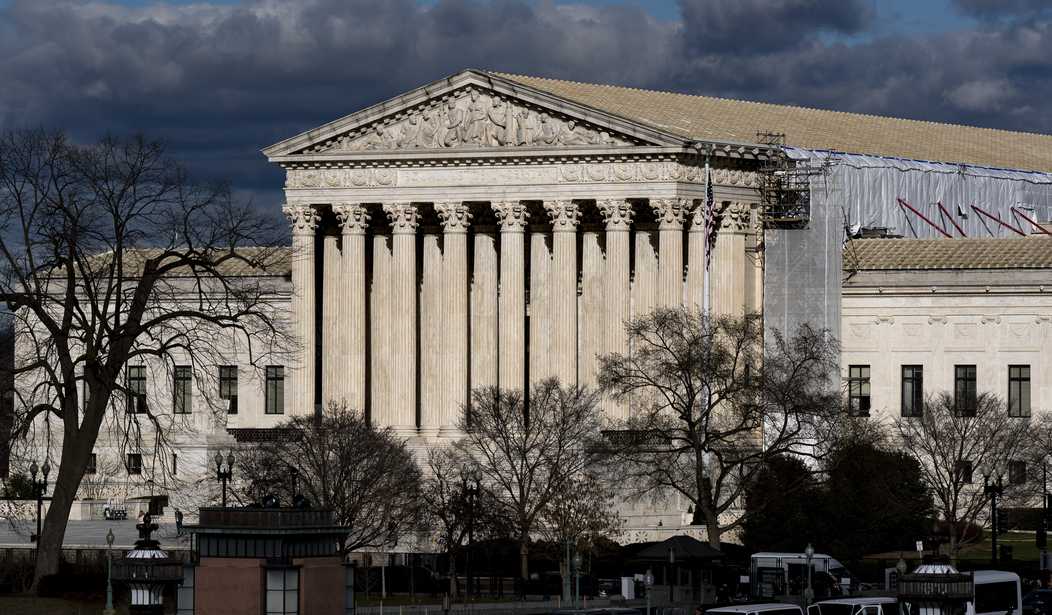
The United States Constitution vests all legislative powers in Congress. Yet, over the past century, we've witnessed a disturbing trend of legislators increasingly delegating much of the authority to set the laws that govern the land to the executive branch, which includes unelected officials at administrative agencies. This undermines democratic accountability, contributes to government bloat and abuse of powers, and disrupts the balance of power crafted so carefully by the framers.
Reasserting congressional authority is essential for maintaining a balanced government and ensuring that policies reflect voters' wishes. It's also the best hope for promoting economic freedom and growth. Unfortunately, getting Congress to stop evading its authority is an uphill battle. After all, we're talking about an institution that systematically fails to do another of its primary jobs by passing legitimate budgets on a timely basis.
Nevertheless, there is some light at the end of the tunnel, as the Supreme Court might soon stop being so deferential to executive branch agencies in interpreting the laws set by Congress.
As I understand it, "Chevron deference" is a judicial doctrine created by the 1984 U.S. Supreme Court ruling Chevron U.S.A., Inc. v. Natural Resources Defense Council, Inc. This ruling compels courts to defer to a federal agency's interpretation of ambiguous language in statutes that the agency is tasked with administering.
In theory, the deference allows agencies to implement complex statutes. In practice, it limits the judiciary's proper role in holding the other two branches of government responsible for carrying out and sticking to their constitutional duties. One result is too much discretionary power exercised by agencies who were envisioned to enforce, rather than create, the law.
Some plausibly argue that the concentration of power placed in the executive branch by Chevron deference leads to excessive, overreaching regulation by agencies with wide latitude to essentially set policy. Another argument against Chevron is that it encourages Congress not to do its job. Because members of Congress understand that courts will defer to agencies, they can write vaguely worded statutes, knowing that the agencies will fill in the details without much judicial oversight. It can also remove the grounds for judiciary recourse on behalf of individuals whose lives and liberties are negatively affected by regulators' outreaches.
This brings us to the case of Loper Bright Enterprises v. Raimondo. Loper Bright Enterprises, a family-owned herring-fishing company, and other fishing companies challenged a rule issued by the National Marine Fisheries Service under the Magnuson-Stevens Act. The rule requires these companies to pay federal observers to collect data on board their vessels to prevent overfishing. The fishermen argued that the MSA did not explicitly authorize the NMFS to impose such costs on the fishing industry.
In 2021, the U.S. District Court for D.C. used Chevron deference to rule in favor of the NMFS, stating that even if the statute was ambiguous, the NMFS interpretation was reasonable. The U.S. Court of Appeals for the D.C. Circuit upheld the lower court's decision, again relying on Chevron's deference.
This case and a similar one involving Relentless, Inc. were argued before the U.S. Supreme Court in January. The decision, to be released soon, could be pivotal.
If Chevron is overturned, it could significantly impact how courts review and interpret agency regulations. That could in turn curtail the extent to which agencies can interpret ambiguous statutes without direct congressional authorization.
One hope is that agencies will exercise more discretion when interpreting their own powers and mandates under existing statutes. A second hope is that Congress responds by drafting statutes with more care and precision, thus being clearer -- for agencies and the public -- about what it intends and doesn't intend. Finally, there is also the possibility that we could look back at some regulatory abuses passed under the veil of the Chevron deference and challenge them.
The bottom line is that we might be only one Supreme Court decision away from Congress being obliged to write better and more explicit statutes than it usually does. This obligation doesn't seem like a lot. Some scholars believe that hopes for markedly improved lawmaking post-Chevron are wishful thinking. But considering Congress's now-routine cowardice at doing its job, I will take even a little hope over despair.


Join the Conversation
VIP members get the ability to comment on articles.