







Tax complexity is a breeding ground for government corruption. It's much easier to add new corporate handouts to a tax code that's already overrun with favoritism, and it's simpler for politicians to justify adding narrowly targeted benefits when the practice is already common. Businesses, in turn, have an incentive to spend more time and resources lobbying the government than satisfying customers.
That's why simplification of the tax code was one of the objectives of tax reform. The Tax Cuts and Jobs Act brought a larger standard deduction that means far fewer taxpayers will itemize. It also eliminated numerous deductions and the capping of others. Yet many special provisions and exemptions remain. Among them is the tax credit that comes with the purchase of an electric vehicle.
The electric vehicle (EV) tax credit is valued from $2,500 up to $7,500 depending on the vehicle specifications. As the Tax Foundation has shown, the credit is disproportionately claimed by higher-income households. Including its various phaseouts, it would cost $7.5 billion in federal revenue through 2022, says Congress's Joint Committee on Taxation.
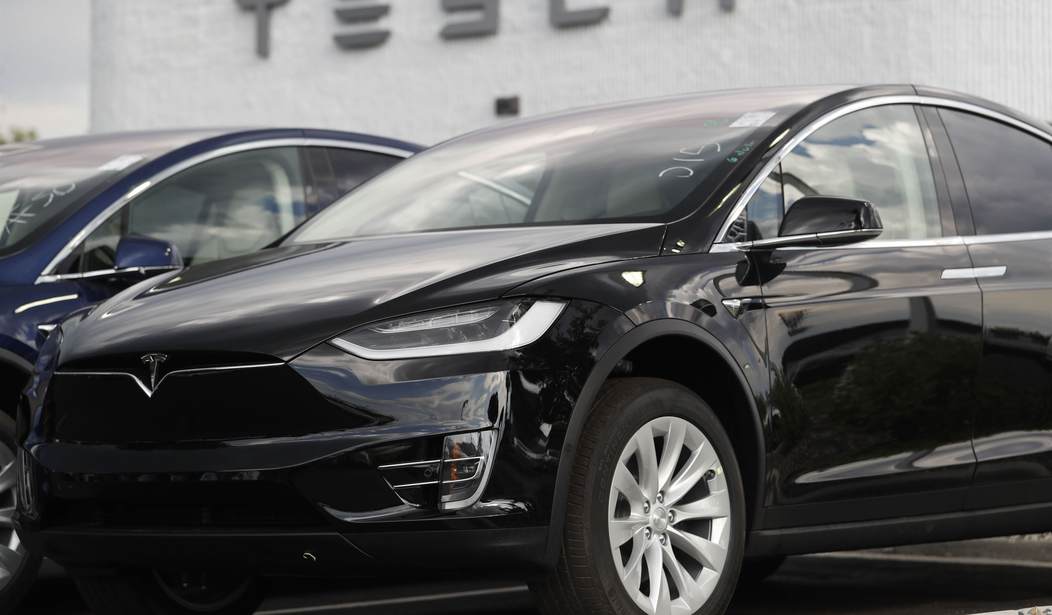
The distortions and questionable handout to top income earners made the EV tax credit a prime target for elimination, but ultimately, it survived. The current credit, however, will end all on its own thanks to a phaseout that it triggers for a given manufacturer once it hits 200,000 in total EV sales. Tesla has already crossed the threshold, and GM is expected to do so before the end of the year.
But rather than let the benefit expire for these manufacturers and simplify the tax code even further, some Republicans are looking to extend the credit well into the future. Republican Sen. Dean Heller -- whose home state of Nevada hosts Tesla's Gigafactory 1 -- introduced a bill with a companion bill from three Republicans in the House to lift the 200,000-vehicle cap and extend the tax credit until 2022. But don't let that date fool you. If the credit isn't allowed to die today, there's little reason to believe it would be allowed to do so in the future.
Once 2022 rolls around, it's more than likely that the EV tax credit will be included in the annual "tax extenders" bill, where lawmakers renew for the next year what is mostly a collection of handouts that have passed their planned sunset dates, some of which occurred long ago.
The extender ritual is explained by the phenomenon of concentrated benefits and dispersed costs. That's where the recipients of government handouts have a greater incentive to fight for the preservation of their benefits than the larger number of taxpayers, whose costs are spread thinner, have to resist them. And the longer the EV tax credit exists, the more powerful its constituency becomes.
Seven Senate Democrats would go even further than Sen. Heller and have proposed legislation that would increase the cap, extend the credit until 2028 and allow unused portions to be carried forward up to five years.
Yet a third option, the Fairness for Every Driver Act introduced by Republican Sen. John Barrasso of Wyoming, would eliminate the credit immediately, while also asking electric vehicle owners to pay a user fee roughly matching the gas tax that's used to fund the Highway Trust Fund. Since electric vehicles use and contribute to the wear and tear of highways, too, the absence of such a fee amounts to its own form of favoritism. Whether or not the Highway Trust Fund is the best approach to infrastructure maintenance is another question, but so long as it exists and is funded by gas taxes, owners of all types of vehicles should pay proportionally to their road usage.
This isn't the tale of "Goldilocks and the Three Bears," where a middle-of-the-road option between the three proposals is "just right." Barrasso's proposal makes the tax code simpler and less distortionary, making it the most economically sound. Returning to strong financial footing requires real alternatives to our current system -- not just options that are only slightly less bad.


Join the Conversation
VIP members get the ability to comment on articles.