





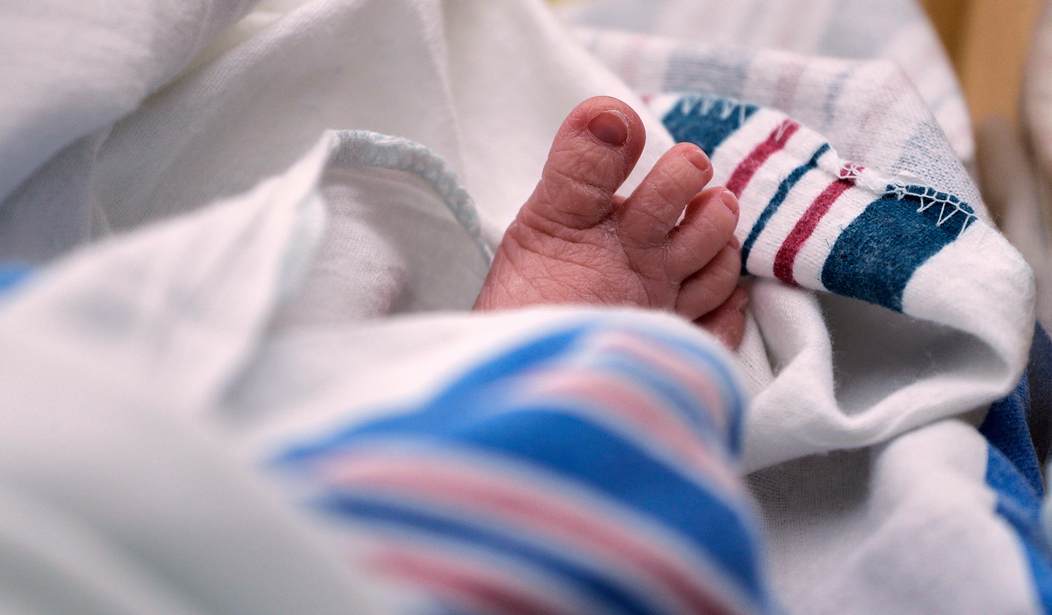
The Social Security Administration just released the most popular baby names for 2025, and they reveal an unfortunate trend.
Girls’ names lean toward elegance and tradition — names our grandmothers and great-grandmothers had. Olivia remained No. 1 for the seventh year, followed by Charlotte, Emma, Amelia, Sophia, Mia, Isabella, Evelyn, Sofia and Eliana.
Boys’ names are split between tradition and the rejection of it. Liam and Noah took the top two spots, followed by Oliver (3), Theodore (4), Henry (5), James (6), William (9) and Lucas (10).
Elijah (7) and Mateo (8) are interesting choices. Elijah is the strong biblical prophet’s name. Mateo is the Spanish form of Matthew, meaning “gift of God.” Mateo is most popular among Hispanic families but is also growing among parents of all backgrounds.
Beyond the top 10 girls’ and boys’ names, the real story is that many parents are rejecting tradition in favor of new age concepts influenced by mythology, other cultures and a desire to make up entirely new names.
The fastest-rising girls’ names include Klarity (a modern spelling of “clarity,” evoking brightness and light), Rynlee (a soft, invented name), Ailanny (a Hawaiian-inspired name, meaning high chief or shining light), Naylani (Hawaiian for heavenly or sky) and Madisson (an intentional misspelling of Madison).
The fastest-rising boys’ names include Akari (“light”), Eziah (a version of Isaiah, meaning “God is salvation”) and Jasai (“healer”).
Why the unusual names?
Some parents think it will help their children stand out or gain some advantage in a competitive social media age — a naming trend that started kicking into high gear a little over 20 years ago when parents began obsessing over what to name their kids.
Ever since, some parents have been spending up to $30,000 to hire nameologists, spiritualists and advertising brand experts to arrive at the perfect name.
The interesting truth is that traditional children’s names — common biblical or family member names — became common in the 1880s, because parents, many of them immigrants, wanted their children to blend in, not stand out.
Common names — Kathy, Lisa, Jennifer and Dan, Jeff and John — were standard for kids for more than 110 years into the 1990s.
Over the last three decades, however, all kinds of quirky names have emerged:
Nevaeh, which is heaven spelled backwards, became popular around 2000.
Paisley, originally a fabric pattern, became a trendy girls’ name in the 2010s.
Kasai, meaning “fire” in Japanese, is currently the fastest-growing boys’ name.
I think it’s a disadvantage to give a child a unique name that makes him think he’s special.
If you really want your kid to stand out, his name is never going to do it — he’s going to have to earn that kind of respect.
The only way to earn such respect is to learn what he is good or bad at — then work hard to develop his unique talents.
It will be easier to do that if he’s humble — and humility will come easier if he doesn’t have a silly new age name, such as Neithan, which is Nathan misspelled on purpose.
Neithan sounds like an herbal treatment for a COVID-induced medical malady, not something a parent would name his kid.
Find Tom Purcell’s syndicated column, humor books and funny videos of his dog, Thurber, at TomPurcell.com. Email him at Tom@TomPurcell.com.
Editor's Note: Do you enjoy Townhall's conservative reporting that takes on the radical left and woke media? Support our work so that we can continue to bring you the truth.
Join Townhall VIP and use promo code FIGHT to receive 60% off your membership.


Join the Conversation
VIP members get the ability to comment on articles.