






Too many modern universities — for centuries hallowed halls that encouraged passionate debate — have lost their way.
The first universities, Plato’s Academy (387 B.C.) and Aristotle’s Lyceum (335 B.C.), were built on Socrates’ conviction that truth emerges from passionate, open debate.
For centuries, universities were places in which sharp minds shredded weak ideas to give life to the most enduring truths — about science, politics, philosophy and human nature.
The Romans incorporated the Greek devotion to reason and rhetoric into their forums and courts.
Cicero (106-43 B.C.) argued that a republic could only survive if citizens were trained to reason together.
In the Middle Ages, when Aristotle’s works were rediscovered through Arabic and Latin translations, disputation — the formal practice of debating both sides of a question — became the lifeblood of Europe’s universities.
Truth was expected to emerge from the collision of conflicting ideas — not through lazy conformity to the conventional wisdom or groupthink of the times.
Centuries later, as universities matured through the Enlightenment, great minds such as Voltaire, John Locke, Immanuel Kant and René Descartes championed reason, liberty and debate.
When Thomas Jefferson (1743-1826) founded the University of Virginia in 1820, he said: “This institution will be based on the illimitable freedom of the human mind… to follow truth wherever it may lead, nor to tolerate any error so long as reason is left free to combat it.”
So, after centuries of free thinking and open debate, how are we doing?
Some universities are upholding these traditions well, according to the 2025 Foundation for Individual Rights and Expression (FIRE) College Free Speech Rankings.
Jefferson’s vision lives on at UVA — his university is ranked No. 1 for free speech in the nation.
But far too many universities are falling short — with Ivy League schools among the worst free-speech offenders.
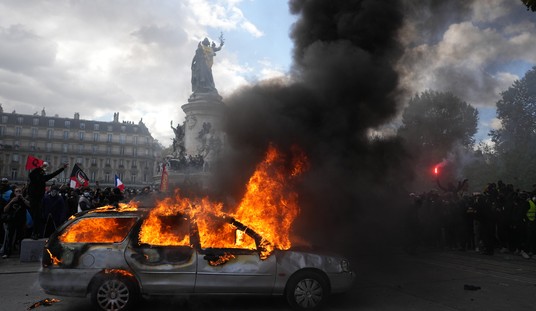
Which brings us to growing campus violence.
FIRE finds that 34 percent of college students think violence is sometimes justified to silence ideas they do not like.
At Middlebury College in 2017, conservative author Charles Murray was shouted off the stage. Professor Allison Stanger, who tried to moderate, was left with a concussion.
At the University of California, Berkeley in 2017, rioters smashed windows, set fires and hurled fireworks at police to successfully prevent right-wing provocateur Milo Yiannopoulos from speaking.
Riley Gaines, an advocate against biological males competing in women’s athletics, was swarmed by an angry mob at San Francisco State in 2023 and forced to barricade herself for hours until police could escort her out.
And now — assassination.
As Charlie Kirk’s influence grew, his opponents increasingly portrayed him as a homophobe, racist, misogynist and hater — twisting his lengthy discussions out of context to portray him as a closed-minded bigot.
Hours of nuanced debate were truncated to make him look like a cartoon villain.
Some accepted Kirk’s caricature wholesale — rather than explore how and why his Christian faith and extensive dialogue with others informed his thinking.
Like or dislike Charlie Kirk’s views, his method was in full accord with our most cherished university principles.
He came to Utah to speak freely, debate openly and embrace the clash of conflicting ideas with passion.
He left in a body bag.
Good God, what has happened to our universities?

Join the Conversation
VIP members get the ability to comment on articles.