







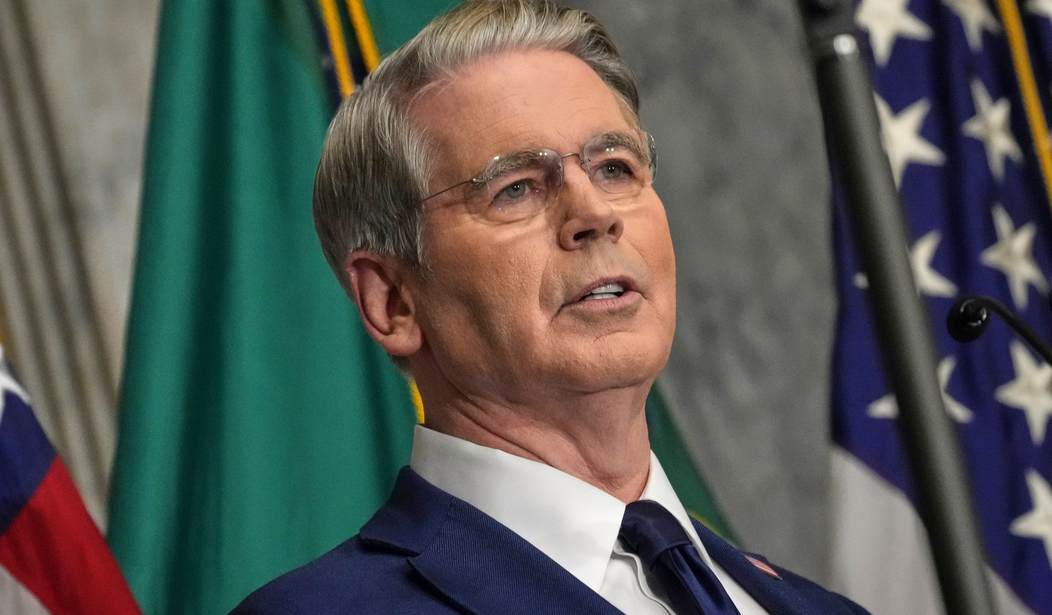
Donald Trump has changed the battlefield in his confrontation with Iran. After almost six months of war, Washington is turning from bombs and missiles to financial strangulation. Treasury Secretary Scott Bessent has launched what he calls “Operation Economic Outcast,” warning countries, banks, and businesses that continue to sustain Iran’s economy that they, too, risk being cut off from the American financial system. This is far more than another round of sanctions. It represents an attempt to sever the Islamic Republic’s remaining economic lifelines and force Tehran into submission through financial isolation. Bessent has described it as an “economic D-Day.” Trump has said Iran is “completely collapsing.” The language is dramatic, but the underlying reality is even more dramatic. Iran’s economy was already tottering before this latest assault began.
The new measures target five critical sectors: digital assets, technology, gold, aviation, and shipping. Almost 60 entities, individuals, and vessels have already been sanctioned. Washington is also threatening secondary sanctions against countries and companies that continue to facilitate Iranian trade. The message is stark. Those who want access to the dollar-based financial system will have to choose between doing business with America and keeping the Iranian regime afloat.
For the mullahs, this comes at an exceptionally dangerous moment. Iran’s rial has plunged to record lows, approaching two million to the dollar on the black market. Inflation has made basic goods increasingly unaffordable. Oil exports have collapsed from roughly two million barrels a day before the war to around 400,000 barrels a day by mid-August, according to maritime tracking data cited in the latest reporting. The regime has survived sanctions for decades by creating front companies, shadow fleets, alternative banking arrangements, and clandestine trading networks. China has remained its principal oil customer. The United Arab Emirates has functioned as a crucial financial and commercial conduit. Turkey and other regional states have provided additional channels. Trump’s new strategy is aimed precisely at those escape routes.
If Washington follows through, the economic consequences for Tehran could be devastating. Iran requires hard currency to pay for imports, support its industrial base, finance government salaries, and sustain the enormous apparatus of the Islamic Revolutionary Guard Corps (IRGC). Cut the regime’s oil revenue and squeeze its banking channels simultaneously, and the financial oxygen available to the ruling elite becomes progressively thinner.
The crucial question, however, is what happens inside Iran. The answer may already have been demonstrated. At the end of December 2025, Iranian merchants closed their shops in Tehran’s Grand Bazaar as anger over inflation and the collapsing rial erupted into demonstrations. Within days, the protests spread across hundreds of towns and cities in all 31 provinces. The British government described the December 2025 and January 2026 demonstrations as the largest wave of protests in Iran since the 1979 revolution. The economic grievances rapidly became a direct challenge to the entire clerical establishment. That uprising was brutally suppressed. Yet repression failed to eliminate the causes that produced it.
Indeed, those causes have now become dramatically worse.
Every additional percentage point of inflation, every further collapse in the rial, and every factory threatened with closure increases the distance between the Iranian people and the regime that claims to govern them. The ordinary Iranian has endured decades of corruption, mismanagement, unemployment, shortages, and repression while vast sums have been diverted into the IRGC, nuclear projects, missiles, and proxy warfare. The mullahs have always demanded sacrifice from the Iranian people while preserving privilege for themselves. Trump’s economic offensive therefore carries a danger for Tehran that conventional military action alone could never create. It can turn the regime’s greatest weakness, the desperate state of the domestic economy, into a political detonator.
Another nationwide uprising is increasingly plausible. The ingredients are already present. There is profound economic anger. There is deep-seated hostility toward the clerical establishment. There is a younger generation with little attachment to the ideology of the 1979 revolution. There is an organized opposition movement and a population that has repeatedly demonstrated its willingness to confront the security forces despite the lethal consequences. The next explosion could be larger than the last. The regime understands this. That explains the increasingly frantic rhetoric from Tehran. President Masoud Pezeshkian has openly acknowledged the problems of inflation, unemployment, and livelihoods. He and parliamentary speaker Mohammad Baqr Ghalibaf have both spoken of the need to end the war and restore economic activity. The fact that senior figures are pleading for economic relief reveals the pressure building beneath the surface.
Trump should therefore resist the temptation to measure success solely by whether Tehran capitulates at the negotiating table. The real prize is the Iranian people’s freedom. Maximum economic pressure should be accompanied by maximum political pressure. Washington and its allies should expose the regime’s corruption, support the protesters, demand the release of political prisoners, and make clear that the Iranian people have a legitimate right to determine their own future. Above all, the West should recognize that regime change in Iran cannot be imposed from outside. It must come from inside Iran, through the courage and determination of the Iranian people themselves. The clerical regime has survived because the world repeatedly assumed that it was stronger than it really was. The December and January uprising demonstrated the opposite. The regime may possess guns, prisons, executioners, and the IRGC, yet it increasingly lacks legitimacy.
Trump’s economic D-Day could therefore become something far more consequential than another sanctions package. It could become the final financial blow against a regime already hollowed out by corruption, war, and economic mismanagement. When the next nationwide uprising comes, the mullahs may discover that they have run out of money, credibility, and time. And this time, the Iranian people may finish the job.
Struan Stevenson was a member of the European Parliament representing Scotland (1999–2014), president of the Parliament’s Delegation for Relations with Iraq (2009–14), and chairman of the Friends of a Free Iran Intergroup (2004–14). He is an author and international lecturer on the Middle East.
Editor’s Note: Thanks to President Trump and his administration’s bold leadership, we are once again respected on the world stage, and our enemies are being put on notice.
Help us continue to report on the administration’s peace through strength foreign policy and its successes. Join Townhall VIP and use promo code FIGHT to receive 60% off your membership.
Join the Conversation
VIP members get the ability to comment on articles.