





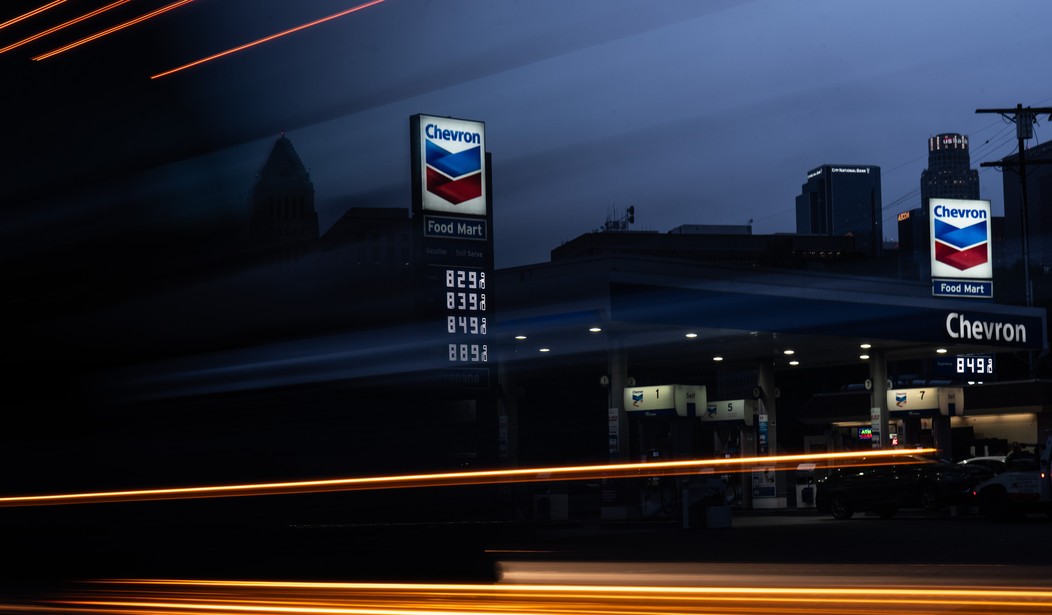
Recent instability in global energy markets, as a result of the Iran conflict and the blockage of the Strait of Hormuz, has reinforced a longstanding national security lesson: America is stronger when it can produce, refine, transport and store the energy it needs. Geopolitical conflict, constrained shipping routes and disruptions at major energy chokepoints can quickly tighten supplies and push prices higher, regardless of how much oil and natural gas the U.S. produces.
That volatility has been on full display in recent months. Renewed attacks on vessels and constraints on shipments through the Strait of Hormuz pushed Brent crude as high as $105 per barrel in July. The U.S. Energy Information Administration now expects domestic commercial crude inventories to remain below their recent five-year low through the end of 2026 as global demand for American exports, reduced imports and high refinery runs draw down available supplies.
These conditions demonstrate why energy security depends on more than any single policy or source of production. It requires abundant domestic supplies, sufficient refining capacity, reliable infrastructure, modernized permitting processes, diversified transportation routes and predictable policies that encourage long-term investment. Offshore production is an important part of that system, and the record shows it can operate alongside, and contribute to, America’s national defense priorities.
It is essential to understand that America is unmistakably stronger when it can rely on abundant domestic energy rather than foreign suppliers. Energy dominance was a driving factor of success in World War II, at a time when this nation was not reliant on foreign oil and was producing around 85 percent of the oil used by the Allied forces. Reducing dependence on adversarial nations gave U.S. leaders greater flexibility during the war and would continue to provide that strategic advantage in times of global crisis today. Since energy security is a prerequisite for national security, America’s domestic energy resources and infrastructure should be viewed as strategic national assets.
A new Department of Energy announcement about a recently released National Petroleum Council report underscores the importance of better understanding and responsibly developing those assets. The report recommends stronger coordination, modern data systems, advanced technologies and workforce development to improve assessments of America’s subsurface resources, including oil and natural gas. That knowledge can help strengthen domestic supply chains, reduce uncertainty and ensure the nation is better prepared to meet future energy and security challenges.
Offshore energy development and military operations successfully coexisting in the Gulf of America is not a new experiment. Since the 1970s, offshore oil and natural gas production has safely coincided with military training, testing, and operational missions, proving that American energy production and military readiness are complementary — not competing — priorities, and must always be so.
That success is no accident. Every offshore lease undergoes a formal review by both defense and energy officials to ensure compatibility with military requirements. Where necessary, lease conditions require operators to accommodate military activities, temporarily suspend operations during exercises, protect sensitive testing, and comply with site-specific restrictions or formal operating agreements. The most sensitive military missions are also carefully considered when determining where development can occur.
Modern technology has made it even easier for offshore energy development and military operations to coexist. Advances such as extended-reach drilling and subsea production allow companies to develop offshore resources with fewer permanent surface structures and a smaller operational footprint. That gives the military greater flexibility to conduct training, testing, and operational missions while allowing responsible energy development to move forward. America no longer faces the operational tradeoffs some critics still point to; the facts demonstrate that offshore production can remain a responsible part of a diversified domestic energy portfolio without compromising military readiness.
I am no Keynesian, but the economic benefits do reinforce our strategic advantage. According to an Energy and Industrial Advisory Partners report, expanding development in the South-Central Gulf could support more than 133,000 American jobs, generate $11.3 billion in U.S. GDP, and produce nearly 470,000 barrels of oil equivalent per day by 2040. Those are not simply economic gains — they represent a stronger industrial foundation, greater energy security, and a nation better prepared to meet the challenges of an increasingly uncertain world. It is not just about jobs and money; it is the issue of long-term security.
But offshore resources are only part of the larger equation. The present energy-market environment underscores the need for policies that support continued production across regions, maintain refining capacity, strengthen pipelines and ports, and allow energy to move efficiently to consumers, military installations, and allies. At a time when disruptions abroad can rapidly affect inventories and prices at home, America must avoid policies that unnecessarily constrain supply, infrastructure, or investment.
America has demonstrated for decades that robust domestic energy production and military readiness can — and do — coexist. A resilient energy system, supported by diverse production, modern infrastructure, ample refining capacity, and responsible offshore development, supports military readiness and reinforces America's strategic advantage in an increasingly dangerous world. As our adversaries continue investing in their own energy and military capabilities, the United States should not voluntarily limit one of its greatest strategic strengths. The record is clear: strong American energy production keeps America secure, prepared, and free. We cannot allow that critical production to be constrained!
Steve Bucci, who served America for three decades as an Army Special Forces officer and top Pentagon official, is a visiting research fellow at The Heritage Foundation.
Editor’s Note: Do you enjoy Townhall’s conservative reporting that takes on the radical Left and woke media? Support our work so that we can continue to bring you the truth.
Join Townhall VIP and use promo code FIGHT to receive 60% off your membership.


Join the Conversation
VIP members get the ability to comment on articles.