





In this Congress, the partisan battles surrounding fiscal policy have been fought through a series of “cliffs,” “ceilings,” and other assorted deadlines. The latest: a December 13 target for a special committee chaired by Sen. Patty Murray (D-WA) and Rep. Paul Ryan (R-WI) to develop a long-term federal budget blueprint.
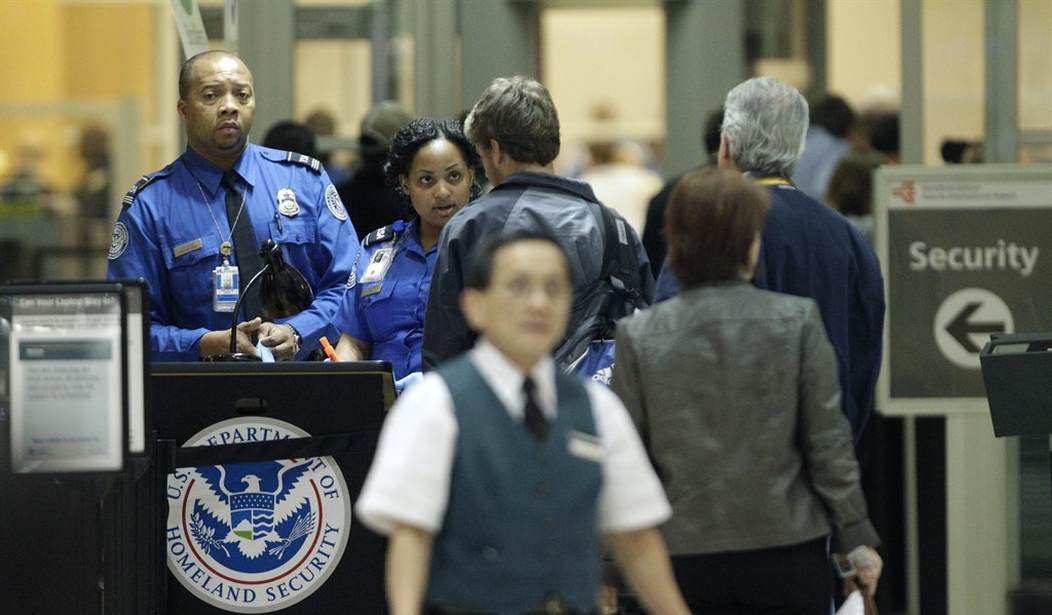
A bipartisan agreement that addresses unsustainable entitlement programs, keeps spending in check, and simplifies our convoluted tax laws would certainly be welcome news. Unfortunately though, several media outlets are reporting that any such deal is likely to contain “revenue raisers,” among them major increases in the fees paid to the Transportation Security Administration (TSA). This is a terrible idea that should be denied permission to leave the proverbial gate, much less to take off.
For one, our federal government is not suffering from a revenue problem. The Congressional Budget Office has estimated that federal revenues as a share of the economy will exceed the recent historic average each and every year for the next decade. The trouble is, federal spending will also exceed its average over the same period, despite Congress agreeing to much-needed caps on part of the budget just two years ago. That means another surge in deficits is on the way.
Furthermore, while we can all agree that transportation security is of the upmost importance, can TSA really get the job done? Americans deserve an answer to this question from their leaders. Between 2007 and 2012, TSA’s budget has increased by 18 percent with its workforce also growing by 13 percent. Over the same period of time, the number of customers being screened decreased by 75 million people or roughly 11 percent. This budget boost cannot be justified when compared to the slowing demand for its services (not to mention the growing national debt, which now exceeds $17 trillion).
In addition, TSA already exacts a large financial toll on the private sector. Last year, as a way to underwrite a budget approaching $8 billion, the agency collected more than $2.3 billion in “security taxes” from airlines and their customers. This amount represents a 100 percent increase since the TSA’s inception in 2002, all in spite of air travel decreasing during the past six years.
Where exactly does all this money go? Down a lot of rat holes, according to the Government Accountability Office (GAO), Congress’s investigative arm. This includes raising concerns that no cost-benefit analysis was conducted before TSA rushed into service “Advanced Imaging Technology” (i.e., full-body scanning) machines, which cost a quarter-million dollars per unit just to purchase and install. Most recently, a GAO report recommended that funding for what has been called a passenger-profiling initiative be curtailed because “TSA cannot demonstrate that the agency’s behavior detection activities can reliably and effectively identify high-risk passengers who may pose a threat to the U.S. aviation system.” This endeavor cost taxpayers a pretty penny, as it required 3,000 “behavior detection officers” at 176 airports, roughly equating to $200 million per year. In total, about $900 million has been sunk into this program since 2007.
Despite such wasteful spending, the conference committee is contemplating the flawed budget arithmetic of a TSA fee hike. But the economic arithmetic is just as worrisome. Higher fees will quite obviously lead to higher airfare prices and hurt both business and recreational travelers. If they cut back on their plans, the negative ripple effects will extend well beyond the airline industry – and that can’t be helpful to an economic recovery still finding its feet.
A middle-class air traveler is already likelier to pay a higher total tax load on an airline ticket than on a 1040 income tax form. Our government should be working to lighten this burden, not make it heavier. Policy makers must also follow the lead of Canada and European nations in using more private security screeners, as well as privatizing air traffic control systems. As a recent Cato Institute report noted, in many aspects the U.S. “has become a laggard in commercial aviation.” Nor should our government, through the Export-Import Bank, underwrite cut-rate passenger jet purchases for foreign airlines (already subsidized by their own governments) that compete with U.S.-based carriers.
In the near term, instead of trying to fatten the Treasury’s coffers by shaking down companies and consumers for more money, our leaders need to live within the modest caps on spending they enacted barely two years ago – and, make them stronger. This can start by forgoing the appalling idea of raising TSA fees, and ensuring that the agency makes better use of the resources it already has. It’s time Congress started screening its own budget baggage – for ineffective, inefficient programs.
Join the Conversation
VIP members get the ability to comment on articles.