







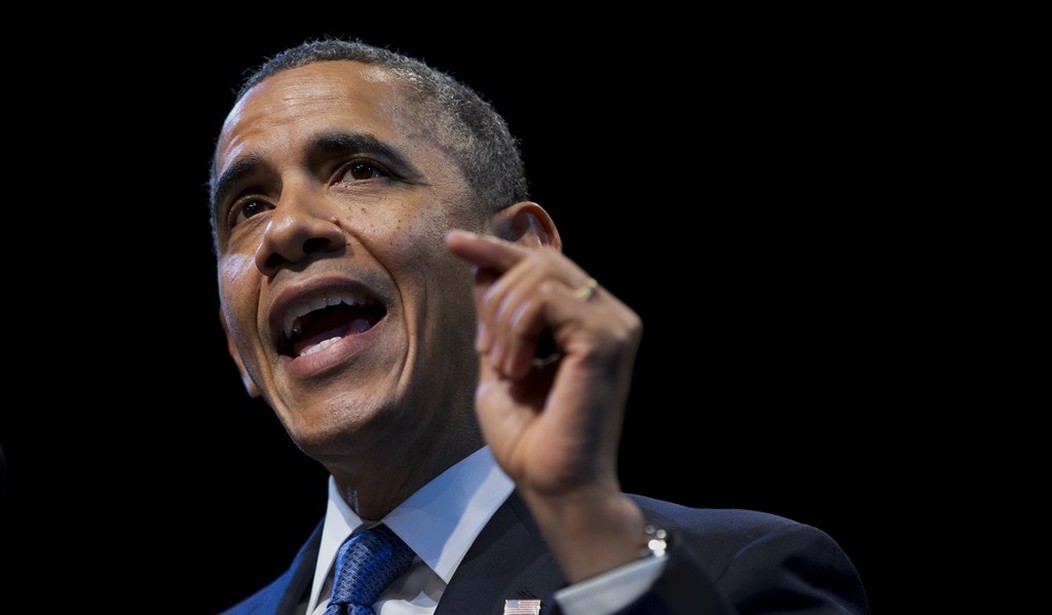
We’re told that “economic inequality” is on the rise . . . by the same people who took our tax dollars to bail out some folks on Wall Street and elsewhere, surely making more than minimum wage.
But, once one investigates the issue beyond the buncombe level of egalitarian hysteria, one finds the reality more complicated than the rhetoric. The biggest truth? The rich may be getting richer, but the poor aren’t getting poorer.
First, contrary to the mind-numbingly stupid MSNBC promo with Lawrence O’Donnell arguing that the “rich got richer every single day,” the data shows the top income earners simply aren’t the same folks one year to the next. In fact, a majority of super-rich “1 percenters” will fall out of that 1 percent category.
There is still income mobility in America.
Meanwhile, some poor folks do indeed become super-rich. Probably more important, over time, most of us move from one quintile to at least the next step up the ladder.
What prevents widespread understanding of this? Intellectual muddles. The difference between income and wealth often get fuzzed up, for example. Take two high-income workers, earning the same pay: The one who saves will wind up with much more wealth than the other who spends it all. And rates of savings vary radically from person to person.
As does everything else.
Which makes making actual equality something of a chimera in and of itself.
But take a step back, take a breath. Those who demand more equality — or less inequality, depending on your focus — at least should face the biggest, ugliest unequalizer in the room: government.
Bailouts are now an integral feature to aid some of the rich, to prevent their losses (we’re told) from spreading “financial contagion.”
Considering the moral hazard involved, I’d say “financial contagion” is endemic . . . on a whole different level.
And now we discover there is yet another bailout in the offing, one written quietly and inserted into the gignormously long Obamacare legislation. Yes, the same health insurance industry demonized by the president to pass the bill (even though the insurance lobby was actually supporting it) is protected from harm by yet another potential bailout.
It seems to me that enemies of inequality and enemies of injustice could join efforts and fight for downward mobility of the rich. Capitalism, after all, is a profit-and-loss system. Modern government has turned it into a guaranteed profit system. And surely some of the reason that some of the rich remain so well-off, today, is that their fortunes have been secured by taxpayer money, with redistribution of wealth going from the less-well-off to them. This would make for greater inequality, at the top level. And it corrupts the standard of responsibility upon which a free society rests.
But it’s worth extending the thought: just as there is a downside to bailing out the “upper classes,” could there be a downside to bailing out the poorest folk, too?
A question for the inequality obsessed: Since the War on Poverty really set in, poverty rates have leveled off and even worsened (that is, the numbers of the officially impoverished have grown, despite increases in after-tax/after-subsidy incomes) — could you be missing the moral hazard that any sort of bailout portends?
The poor may not be getting poorer, under the current welfare state programs, but their numbers are rising, suggesting that the ongoing bailout system disincentivizes responsibility, enticing folks into the trap that is today’s government-managed poverty.
The alternative? Not equality of outcomes, but equality before the law. Real economic justice, as I suggested two weeks ago in this space, is just that, justice. Establishment of good rules, no special privileges.
That means justice for the poor, yes, but also for the rich, and for those in the middle. No special privileges for the well-connected few ought be joined by none for the 99 percent . . . or the 51 percent.
In bemoaning Democratic failure and Republican success in not extending unemployment benefits beyond 52 weeks, Washington Post columnist Eugene Robinson relished the politics of supporting additional benefits for millions of potential voters. He told moving stories of folks losing benefits and facing hardships. He then asked, “Isn’t it in society’s interest to give them a chance?”
It is, Mr. Robinson, yes it is.
A chance. A free and fair chance, but not an entitlement. Oh, it might be nice to live in a world where everyone could have everything. But, in the world we actually live in, everything given away by government must first be produced by someone else.
So we are left with a choice:
A. a functional and diverse job-creating market economy, or
B. a politician-centered redistribution regime.
The second option only looks good so long as you don’t look at it very carefully. Then you notice the obvious: equality doesn’t get served, but insiders do — at the expense of the rest of us.
Join the Conversation
VIP members get the ability to comment on articles.