





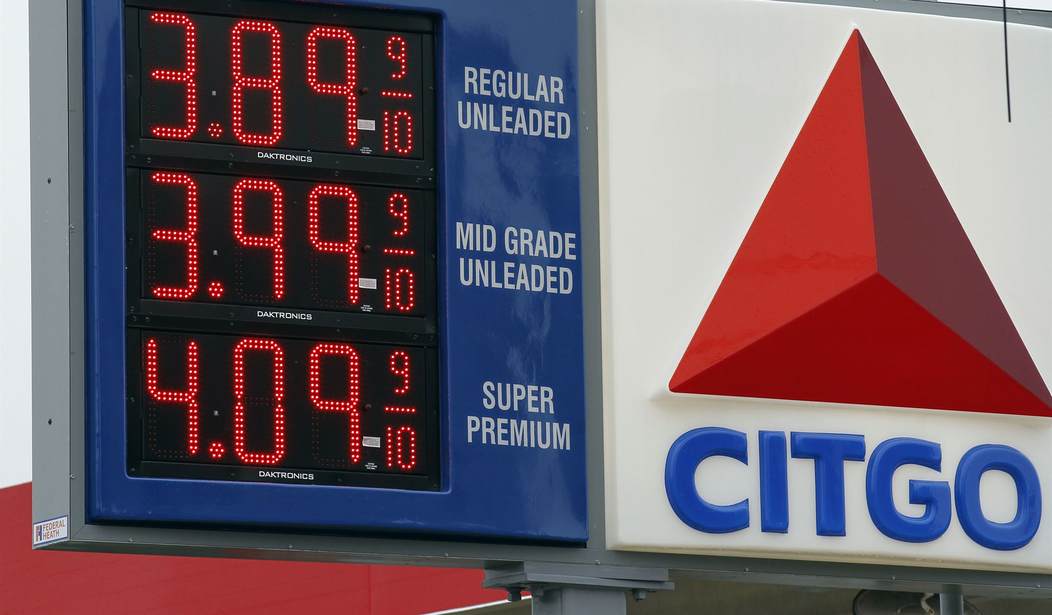
Continuing instability in the Middle East makes it imperative that America protect its domestic energy suppliers.
Under President Donald Trump, US energy companies that were nationalized or had assets seized by Venezuela’s government now have a chance for restitution – unless European bondholders get priority.
One such company is Houston-based Citgo Petroleum, the seventh-largest refiner in the United States. The company is actually owned through subsidiaries by Venezuela’s state-owned oil company, Petróleos de Venezuela, SA (PdVSA), which is essentially an arm of President Nicolas Maduro’s dictatorial regime.
Citgo is currently embroiled in a court-ordered auction. It’s being sold to repay debts incurred by Maduro and previous dictator Hugo Chavez, both of whom expropriated American companies and assets.
Until now, victims of these dictators’ thefts – more than a dozen companies – were unable to recoup their losses, because the Biden administration protected the company from being sold as part of a strategy to prop up Venezuela’s opposition. That could change now.
The auction has been scheduled, and various companies, including some that lost assets, have submitted bids. The fly in the ointment is that European bondholders are trying to jump the line – and claim proceeds from the auction ahead of American companies that the regime robbed.
In 2020, those PdVSA bondholders helped bail out the collapsing Maduro dictatorship, betting that they would reap big payouts under a contract that collateralized their bonds with 50.1% of Citgo shares.
By late August 2023, the bonds had already surged 160% and “investors that scooped up one oil company’s bonds appear to be headed for a massive payout,” Bloomberg Linea reported.
The bondholders had to know they were dealing with a corrupt government and that Venezuela’s National Assembly had publicly announced it had never approved the Citgo bond, as required by the Venezuelan Constitution. That could make the collateralized contract for Citgo invalid.
However, the bondholders were clearly trying to profit from a nation in crisis. They had to have been betting they would profit from selling the collateral if Venezuela defaulted. In the meantime, their money helped Maduro cling to power, suppress dissent, and delay the economic reckoning that Maduro's own policies ensured.
Now, those bondholders want to acquire Citgo as payment, thereby cashing in on the misery they helped prolong. (The PdVSA bondholders are not private citizens, but large corporations, including London-based Ashmore Group PLC, Madrid-based Auriga Global Investors, and UK- and Morocco-based Altana Credit Opportunities Fund.) The question is whether they should take priority over the actual victims of Maduro’s expropriations.
Thankfully, under President Trump, the US Treasury Department’s Office of Foreign Assets Control (OFAC) has already refrained from issuing licenses to take over Citgo through December 20, thereby denying an acquisition by the bondholders that would have helped prolong Maduro’s regime.
However, OFAC must go further – and clarify that it will never permit speculating bondholders to profit before defrauded American companies are repaid.
This clarification is sorely needed, and just this week, one of the defrauded companies filed an emergency request with the Delaware District Court that is overseeing the Citgo auction. Citgo’s lawyers asked the court to seek guidance from the OFAC as to whether the Office will continue to prevent the bondholders from taking over Citgo past the deadline for the auction.
This uncertainty – whether a new owner is purchasing an asset or incurring a liability – must be resolved, hopefully with the result that swindled American companies can recoup some of their losses.
With the final auction deadline set for July 2, OFAC has a short window in which to act.
By issuing this clarification, OFAC can score another win for President Trump’s impressive record of championing American justice and prioritizing American companies.
Paul Driessen is a senior policy advisor for the Committee For A Constructive Tomorrow (www.CFACT.org) and author of many articles on the environment. He has degrees in geology, ecology and environmental law.

Join the Conversation
VIP members get the ability to comment on articles.