





From the establishment of Tsarist Russia in 1547 by Ivan IV, the proclamation of the Russian Empire in 1721 by Peter I, the misanthropic creation of the Soviet Union on December 22, 1922, and the muddled formation of the Russian Federation on December 25, 1991, this territorially monstrous entity's history is a cruel incurvature of domestic brutalization that by its savage inhumanity led to a devilishly immoral state and a torrent of extremely abusive foreign expansions, marred by state-sanctioned periods of unsuccessful modernizations. More specifically, there can be no gainsaying the fact that the violently lawless domestic as well as colonialistic imperialism were the guiding visions of countless Russian cum Soviet tyrants.
In reality, Russia, in its various incarnations, always practiced oppressive tyranny. Consequently, Russia's aberrant existence began with war and will end only with its military defeat. Finally, this lethal Russian enthusiasm for unconstrained warfare had at least three significant repercussions.
First, it blinded, without exception, every tyrant to the destructive asymmetries of their domestic as well as international policies. Their uncompromising eagerness to absolutely oppress every opposition had the most adverse impacts on the conditions of life for their miserable subjects as well as for the violently enslaved non-Russians. Second, tyranny also blinded all the rulers to the intellectual power of ideas. Ruthlessly suppressing constructive creativity that explored the benefits of liberal individualism was persecuted, while simultaneously solidifying freakish stagnation or even bottomless decline. Third, too much tyranny caused the overrating of the scantily positive values of the past and the importance of continuity as opposed to reformative changes.
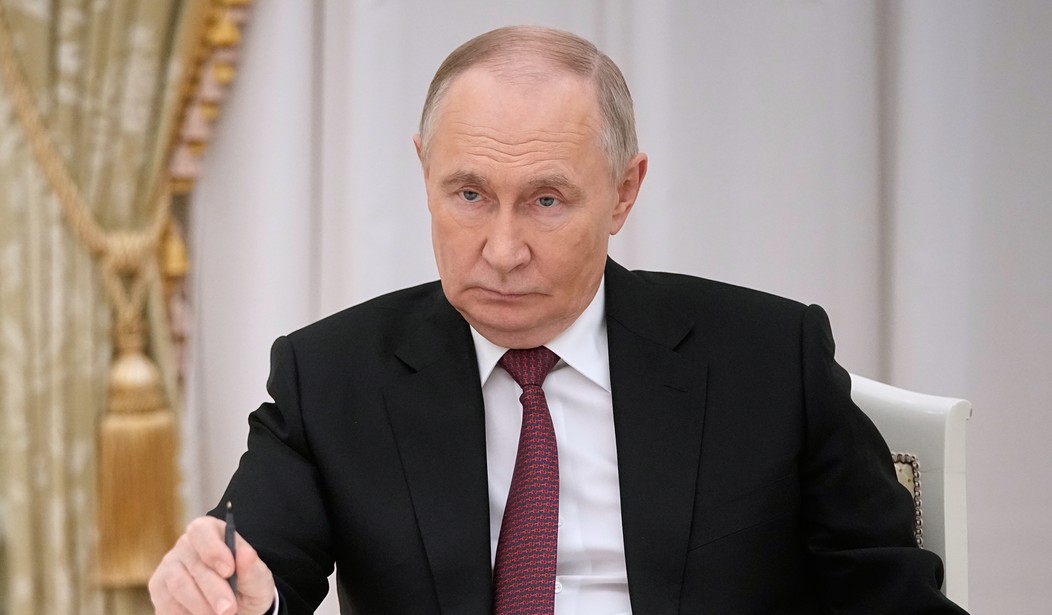
Russia's ugly record of uncivilized barbarism has manifested itself again in Russia's illegitimate military actions against Ukraine that first resulted in the annexation of Crimea and the concurrent incitement of separatist movements in eastern Ukraine in 2014. Successive American administrations' and European governments' answers were ubiquitous political confusion because of the deficit of professionals with a real comprehension of Putin's quintessentially Russian mindset, as well as the leaders' absence of formative minds, in which the shortage of strategic thinking led to cutting into hopelessly disjointed, tiny pieces the Kremlin's alleged motives and its widely fantasized hybrid actions. Having lingered between the uncertain future and the misunderstood past for eight long years, the United States of America and its allies collectively watched President Putin plot unobstructedly the buildup of a dehumanizingly terrifying and monstrous narrative for Russia's rampant military campaign with the objective of reintegrating the sovereign state of Ukraine into the newly emerging Russian Empire.
Unsurprisingly, when the Russian military launched its all-encompassing invasion against Ukraine on February 24, 2022, the leaders of both alliances failed to comprehend that the invasion was the combination of the foundational Russian racist ideology and a deep, strategically motivated mission quest against Ukraine's perceived Westernization by the Kremlin-hated so-called "imperial powers." Declared by President Putin in 2014 that Russia "will protect ethnic Russians and Russian-speakers" and "will prevent chaos after an illegitimate coup in Kyiv," he proceeded to hold a referendum, the result of which was a lie by claiming "Crimeans chose to join Russia." Stating that "no Russian troops were involved" in February 2022, he shifted his false justifications to audacious national security narratives. Declaring in a moronically mendacious style that NATO expansion is a real existential threat; that "Denazification and Demilitarization" of Ukraine is mandatory; that Ukraine is an artificial and, therefore, illegitimate state, and that protecting the Donetsk and Luhansk "Peoples' Republics" is a part of the phantasmagorical "near abroad" doctrine, he consistently reiterated that the war is against the collective West and on behalf of "Historical Russian Motherland."
Not unexpectedly, these justifications remained constant in President Putin's official, as well as private, narrations throughout the war. Clearly, the consistency of President Putin's justifications for the war illustrates the immutable inflexibility of Russia's regional and global thinking. Moreover, employing the word "Motherland," Rodina in Russian, Putin personalized the state. As in World War II, in which the slogan "For the Motherland! For Stalin!" was framed as an unflinching loyalty to "Our Benevolent Little Father Stalin," supporting Putin is also framed as an uncontestable patriotic duty.
West of Russia, the risky confusion about the 2022 invasion continues unabated. Even the nature of Russia's war remains controversial. Some NATO and European Union member states regard it solely as a war between Russia and Ukraine. Others see it clearly as a war of Russian aggression. Finally, there are states that look at the war as a civilizational armed conflict for future domination between Russia and the two Western alliances. The unifying problem with all these reasonings is that they all sound very logical on their faces, yet totally or partially useless in their applications. No less importantly, there are almost irreconcilable perplexities within the two alliances about the short-term, medium-term, and long-term objectives.
Candidly, the present status quo and Putin's unacceptable demands for the final solution of the war are absolutely intolerable. Moreover, the intolerability of the present and future situations shall not be the whole of strategic thinking. Thus, President Trump, leaders of the European Union, President Zelenskyy, and all the leaders of the other states that declared their unequivocal support for Ukraine must cease to tolerate not only the present situation but also repudiate the status quo ante of 2014, which was thoroughly discredited in February 2022. Secondly, their demands must be unified and unassailable. Thirdly, there can be no further tolerance of Putin's actions to terrorize Europe with the threat of nuclear escalation.
Last but not least, if the anti-Russian coalition wants to have decisive leverage, it must present a lever. Rather obviously, such a unified strategy will require a change of negotiating strategy. In its core, the White House, as well as its allies, must break from the thus far prevailing incompetence and declare in unison their resolve to work toward the real solution that was articulated by the late President Ronald Reagan: "Here is my strategy on the Cold War: we win, they lose."
Editor’s Note: Do you enjoy Townhall’s conservative reporting and opinion? Support our work by joining Townhall VIP! Use the promo code FIGHT to get 60% off your VIP membership!

Join the Conversation
VIP members get the ability to comment on articles.