





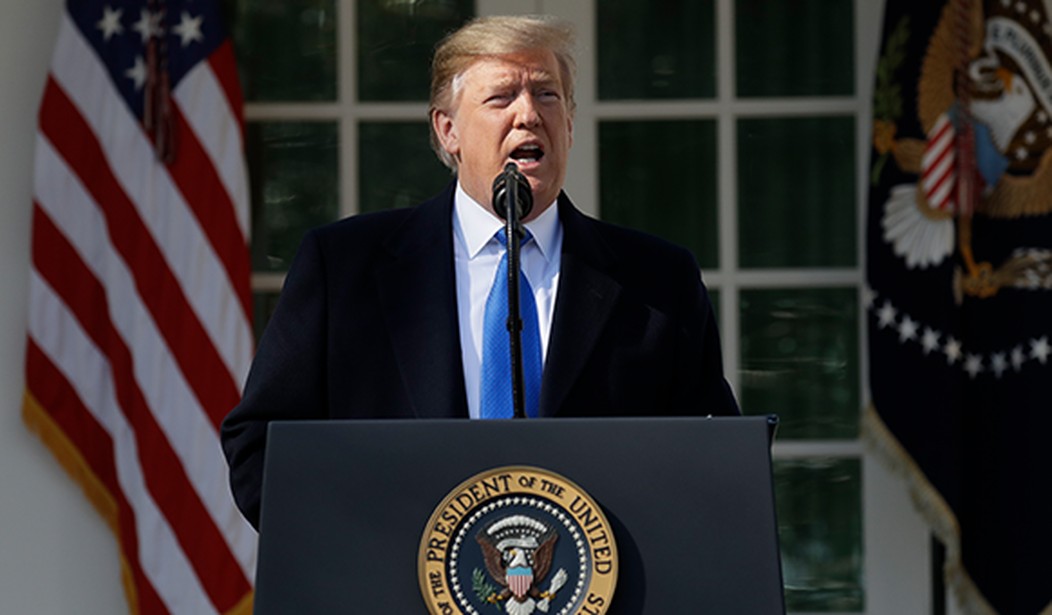
Compromise reached. Donald Trump is going to build -- his administration is said to be building already, with appropriated funds -- the wall, er, barrier. Congressional Democrats have reportedly inserted provisions that make it easier for purported asylum seekers arriving with children to disappear and augment the illegal population.
Compromise unreached. Recipients of the Deferred Action for Childhood Arrivals program haven't received the legalization both sides say they should. Central Americans are still advised to drag their children on a dangerous journey through Mexico to the border. Border apprehensions in January were up sharply from those in 2018, indicating increased inflow but far below levels from 1992 to 2007.
But let's take a longer look at this unsatisfactory compromise, the result of President Trump's failure to get legislation from Republican congressional majorities, which is exacerbated by Democrats' determination to humiliate him.
Trump campaigned against quarter-century-long bipartisan policies toward Mexico, the NAFTA trade agreement and toleration of loose immigration enforcement. But as president, rather than reversing them, he has made relatively modest, arguably constructive changes.
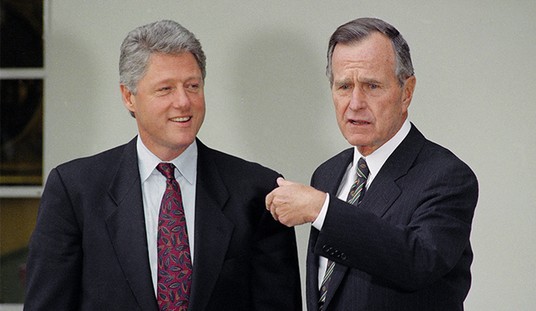
That's because those policies have had some success in reducing the economic and cultural gap between the United States and its southern neighbor. That was the goal of the policies' prime architects, most of whom had Texas-Mexico border roots -- the two George Bushes; former Senator and Treasury Secretary Lloyd Bentsen; and Mexico's 1988-94 president, Carlos Salinas.
Or so argues Andrew Selee, president of the Migration Policy Institute, in his recent book, "Vanishing Frontiers." I think he overstates the convergence in entertainment and sports preferences. And he doesn't convince me that the pessimistic fatalism of Mexico's heavily Mesoamerican culture, noted by writers from Octavio Paz to Jorge Castaneda, has morphed into the optimism of Americans' traditional belief in a connection between effort and reward.
Mexico's informal, off-the-books economy is much larger than America's, its endemic public sector corruption more deep-seated even than Chicago's.
Selee is on solid ground, however, in describing how the two countries' economies are tied together, and not just by auto supply chains. There's plenty of cross-border investment, with Mexican firms creating U.S. jobs and vice versa. Then-President Enrique Pena Nieto's 2013 reform has opened Mexico's oil industry to U.S. investment, reversing its previous deterioration.
Electric grids and gas pipelines have been linked. Incomes are up, and nearly half of Mexicans, in Selee's view, are solidly middle-class. Pickup trucks fill Walmart parking lots in northern Mexico, just as in Texas.
This has had policy consequences. Candidate Donald Trump disparaged NAFTA and Mexico President Andres Manuel Lopez Obrador, inaugurated in December, made a career of Yanqui bashing. But AMLO (as he's always called) allowed the outgoing Nieto to renegotiate. Trump sought and approved, and only marginally changed and cosmetically renamed NAFTA. Any 25-year-old agreement could use some adjustments, and neither president dared to rip apart economies now so closely linked together.
AMLO has also been helpful to Trump on border enforcement, stopping some of the caravans of asylum seekers from Central America short of the border and making provision for some to stay in Mexico. The current border problems are due primarily to U.S. judge-made law, which Congress refuses to change and which allows adults with no legitimate asylum claim -- "a well-founded fear of persecution" -- to use accompanying children as a get-out-of-detention card.
In any case, the resulting inflow of low-skill migrants, with possible wage-lowering effects, will be much smaller than that of Mexicans, legal and illegal, from 1982 to 2007. That inflow dropped suddenly, from hundreds of thousands annually to near zero comparatively. The housing market collapse and financial crisis, and resulting mortgage foreclosures and construction job disappearances, turned many Mexican immigrants' dreams into nightmares.
Now we get more immigrants from India or China annually than from Mexico, and the small inflow is more highly educated than before 2007. We have moved toward Trump's proclaimed goal -- more high-skill immigration, less low-skill immigration -- without legislation. Trump's extension and strengthening of current 600-mile border barriers will contribute marginally to that, despite Democrats' insistence walls are "immoral."
And despite the hostility of university and media elites, assimilation seems to be advancing during this dozen-year slowing of Mexican immigration. As evidence, Selee cites increasing English fluency, and sociologist Richard Alba cites extensive intermarriage. I'd add that like the Ellis Island immigrants a century ago, and despite the efforts of Democrats obsessed with identity politics, Hispanic immigrants seem to lack an adversarial attitude toward America.
So despite angry rhetoric and an unsatisfactory compromise, there's also reason for some long-term progress in narrowing the gap between two nations on each side of a border that's been problematic since 1846.


Join the Conversation
VIP members get the ability to comment on articles.