







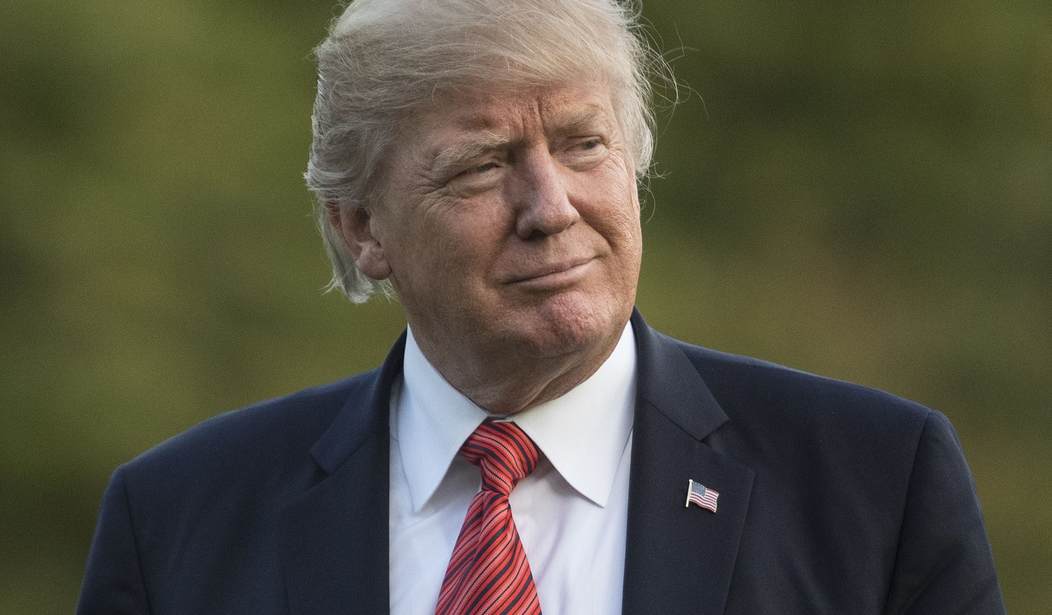
President Donald Trump's Afghanistan speech Monday night was disciplined, measured and sometimes verging on eloquence. It was presidential. Evidently, his vision wasn't impaired when he looked at the eclipse without the proper eyewear earlier in the day.
Like Barack Obama, Trump came to office determined to get out of Afghanistan. "My original instinct was to pull out," he said Monday. But "decisions are much different when you sit behind the desk in the Oval Office."
Trump criticized Obama for his 2011 decision to "hastily and mistakenly" withdraw from Iraq and for announcing an endpoint to his 2009 surge of troops into Afghanistan. Trump said he is shifting "from a time-based approach to one based on conditions."
Also on the way out are "restrictions the previous administration placed on our war fighters that prevented the secretary of defense and our commanders in the field from fully and swiftly waging battle against the enemy."
This delegation to military commanders is evidently paying off in Iraq and may do so in Afghanistan as well. Certainly, it gives enemy leaders less notice of what they may be facing. "These killers need to know they have nowhere to hide, that no place is beyond the reach of American might and American arms."
Permanently putting the Taliban and other enemies on the back foot seems to be the sum of Trump's strategy. His "clear definition" of victory was as follows: "attacking our enemies, obliterating ISIS, crushing al-Qaida, preventing the Taliban from taking over Afghanistan and stopping mass terror attacks against America before they emerge."
Lacking here is an endpoint, not just a USS Missouri moment of unconditional surrender but also a transfer of responsibility to a reformed and responsible Afghan government. Trump has repeatedly repudiated nation building, and he dubbed his alternative "principled realism." He said he will only work with the Afghan government if he keeps seeing "determination and progress," adding, "Our patience is not unlimited."
Critics have complained that Trump provided no specific numbers of troops as previous presidents have done. Evidently, he's not talking about any big increase from the current level of 8,400.
Looking at that number -- so far below those earlier surges and dwarfed by the 550,000 U.S. troops who were in Vietnam a half-century ago and the 12 million Americans at arms during World War II -- it struck me that we're looking at something like the approach of 19th- and early-20th-century Britain in its far-flung empire and environs, which at various times included both Afghanistan and Iraq.
The British military patrolled the empire with small forces of volunteers as the Royal Navy protected the global commons of the seas. It encountered occasional grave setbacks, including in Afghanistan and against Islamic extremists, but mostly prevailed in enforcing a benign world order.
This is the role Trump seems to have come to embrace, against his own inclinations, and in the process he is not above muscling other nations into behaving themselves.
He is refraining from demanding democracy from Afghan leaders but is advising them to avoid America's displeasure. Perhaps more significantly, he is leaning hard against Pakistan and the military that tends to control it. "We can no longer be silent about Pakistan's safe havens for terrorist organizations," he said.
Trump added that he is prepared to call in India "to help us more with Afghanistan, especially in the area of economic assistance and development."
Pakistan's military leaders, as former Ambassador of Pakistan to the U.S. Husain Haqqani writes in his book "Magnificent Delusions," have always regarded India as their chief enemy and the United States as a tool they can manipulate. Trump seems to be telling them that that game is over.
Just as a reminder, he noted, "I have made clear that our allies and partners must contribute much more money to our collective defense. And they have done so."
The 3rd Viscount Palmerston, who was a British prime minister in the 1850s and 1860s, said his nation had no permanent allies or enemies but did have permanent interests. Trump, who may never have heard of Lord Palmerston, seems to have decided that our interests no longer coincide with those of Pakistan's military.
Palmerstonian policies enjoyed political support and served Britain and the world well for many years. Will Trump's policies do so well?


Join the Conversation
VIP members get the ability to comment on articles.