






But experience tells us that it's not always easy to help. Individuals' good intentions go awry. Government programs sometimes produce unintended consequences that make things worse for the intended beneficiaries.
Consider what could be called the three H's: health care, housing and higher education.
Over the last generation and more, government has stepped in to help ordinary individuals and those with special problems on all three issues. The results have been, well, not as good as intended.
Take health care. Just about every health care expert from right to left believes that government's first real foray into the field has been counterproductive.
That was the decision, made during World War II, when defense contractors were looking desperately for workers but were barred from raising wages, that the cost of health insurance policies would be deductible for employers and not taxable to employees.
Seven decades later, that's still the law. People whose employers provide health insurance effectively pay less for it than people whose employers don't.
And those with employer-provided health insurance tend to be insulated from knowledge of the costs of treatment. That's one of the things pushing health care costs up more rapidly than inflation.
In contrast, prices of health care procedures not covered by insurance -- Lasik eye surgery, cosmetic surgery -- have been falling because of technological advance and free-market competition.
Government's efforts to help people -- military contractors and their employees -- created a mess.
Then there's housing. For more than two decades, government policies have tried to make it easier for modest-income people, especially racial minorities, to get mortgages to buy houses. Both the Clinton and Bush administrations pushed this hard.
They were aided and abetted by the government-sponsored entities Fannie Mae and Freddie Mac, whose willingness to buy up such mortgages and sell them to investors pushed literally trillions of dollars into the housing market.
But this housing bubble burst when prices unexpectedly dropped and Fannie's and Freddie's mortgage-backed securities suddenly became unsaleable. This was the proximate cause of the financial crisis of 2008 that sent the economy into recession and created the new normal of slow growth.
Meanwhile, thousands of new homeowners, a large proportion of them Hispanic and black, faced foreclosure and eviction. Government's efforts to help people -- especially minorities with subpar credit -- created a mess.
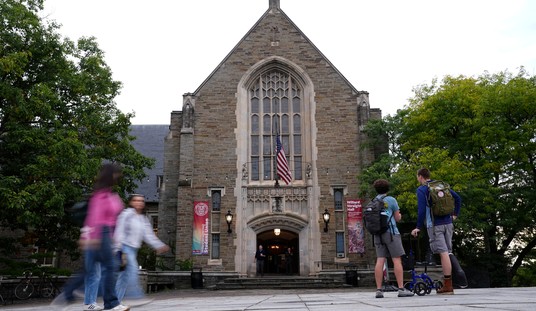
Finally the third H, higher education. Going back three decades, government has subsidized college loans in a way that has pumped money into the nation's colleges and universities. The argument was that college degrees enabled people to make better livings and that government should help everyone who wanted one.
But as government pumped more and more money in, institutions have been raising tuitions and fees faster than inflation for three decades. That leaves college unaffordable for almost every family without government-encouraged loans.
The result has been administrative bloat -- colleges and universities have had more administrators than teachers since 2005 -- and students with college loan debt that can't be discharged in bankruptcy.
Many students leave school without degrees but with plenty of debt. Many who do earn degrees do so in subjects that, in our sluggish new normal economy, don't lead to jobs after graduation.
But the debts remain and can build up for a lifetime. Government's efforts to help people -- young people seeking a college education -- have produced a mess.
Not all policies attempting to help people produce such results. The G.I. Bill of Rights providing higher education benefits and housing loans after World War II worked because it rewarded not only past service but also strenuous effort.
The original FHA home mortgage program worked well because it limited loans to those with good credit ratings.
But policies trying to extend the benefits of health insurance, housing and higher education that tended to sever the connection between effort and reward have backfired and hurt many of the intended beneficiaries.
Government policymakers failed to anticipate the responses of third parties attempting to game the system and grab some of the money government was making available.
The impulse to help those in need is one of mankind's better traits. But the impulse to have government help them is often self-defeating.

Join the Conversation
VIP members get the ability to comment on articles.