







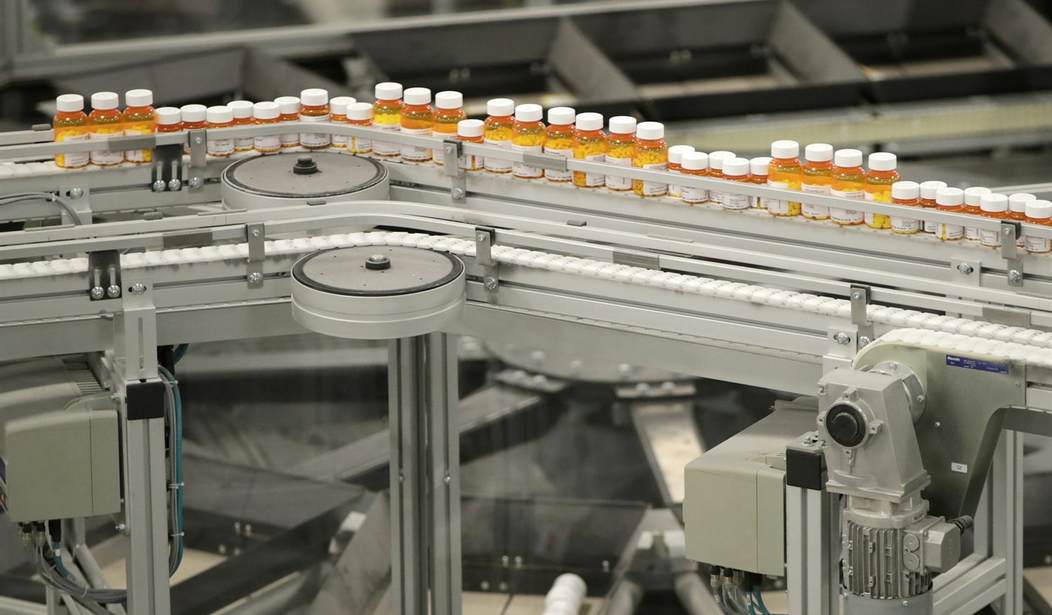
At a recent hearing of the Senate Finance Committee, Chairman Sen. Chuck Grassley (R-Iowa) warned the seven assembled drug company executives not to point fingers: “It’s time for solutions,” he said.
They didn’t listen. Instead, they blamed everything from pharmacy benefit managers to Medicaid to the popular 340B discount program for why prescription drug prices continue to hit record highs. None of them took any responsibility for their own prices.
It’s an odd logic indeed to accuse the government of distorting a market that it has very little to do with. President Trump and the bipartisan leadership in Congress deserve enormous credit for trying to address the problem of sky-high drug prices, and Big Pharma execs need to stop looking for scapegoats.
Drug makers have been increasing prices at an alarming rate. We all know that medication is a vital part of our healthcare system, but it’s extremely telling that when pressed the pharmaceutical industry could not offer a reasonable explanation for its pricing decisions.
The U.S. has long been the world leader in medical and pharmaceutical research and development (R&D) and nobody wants to sacrifice that position of global leadership. However, global leadership in R&D can’t come at the cost of Americans being priced out of access to lifesaving medications. It’s imperative that we get a better deal for American patients that preserves our research dominance while keeping drugs affordable.
The Trump administration is trying to find ways to lower the costs of prescription drugs while maintaining the economic incentives for drug companies to conduct research and development. So are leaders like Senator Grassley and others in Congress from both parties.
Consider the case of Zolgensma, a new drug that treats the ultra-rare conditions known as spinal muscular atrophy, a disease that affects around 300-400 babies each year. Long thought to be untreatable, Zolgensma represented a miracle for these children and their parents.
Sadly, the drug’s manufacturer, Novartis, announced a price of $2.1 million for the drug, making it the most expensive drug in America. This is the kind of behavior that our leaders are trying to put a stop to. While they continue this needed work on pricing reform, it’s vital that they ignore Big Pharma’s tricks.
This includes efforts to try and undermine federal programs that provide discounted drugs to safety-net providers, who are often the only source of health care for working and rural Americans living on low incomes.
The 340B program is one such program. It was originally created with strong bipartisan support and currently achieves its mission without costing taxpayers a single dime.
It works by providing rural and other safety-net hospitals, health clinics, and community health centers with discounted drugs that help these providers continue to serve patients across the country.
Further, many rural hospitals rely on these discounts to keep their doors open. In the last decade, more than 100 rural hospitals have closed, leaving their communities with nowhere to go for emergency care and other live-saving services. Millions of Americans have had to drive long distances and hope they got there in time. 340B serves as a critical lifeline for these health care providers, who are usually also the biggest employer in their towns and counties.
340B is working exactly as Congress intended it to – providing affordable care to working-class and low-income Americans and allowing the hospitals, health centers, and clinics that serve them to remain open, all without spending a dime of taxpayer money or adding one penny to the deficit. Our leaders should continue his fight to make medicine affordable for everyone by keeping their eye on the ball and not letting the finger-pointing to distract them from their mission.

Join the Conversation
VIP members get the ability to comment on articles.