





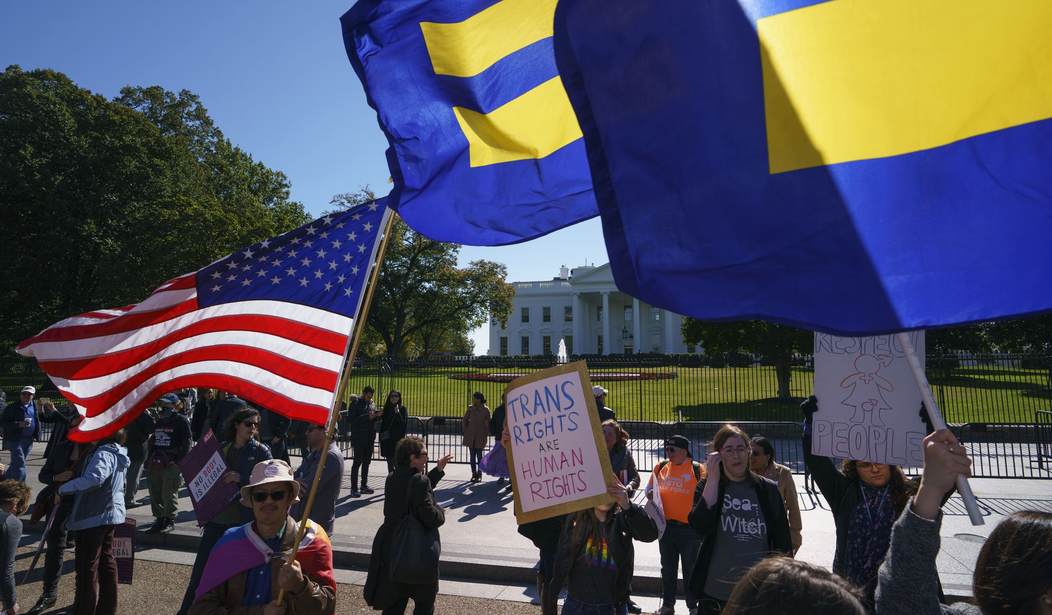
The reported collapse in participation in the Human Rights Campaign’s Corporate Equality Index is not some sudden backlash against the current administration. That narrative is convenient. It is also incomplete.
The surge in corporate alignment with activist scorecards did not materialize overnight. It accelerated during the previous administration, when regulatory pressure, ESG mandates, diversity quotas, and a sprawling network of federally funded NGOs created an atmosphere where noncompliance was treated as rebellion. Companies were not merely encouraged to align with progressive cultural priorities. They were bullied, prodded, and in some cases implicitly warned that failing to do so could invite regulatory headaches, reputational harm or capital access challenges.
When government dollars flow to activist intermediaries and those intermediaries pressure corporations to adopt ideological frameworks, the line between governance and activism has been crossed. When federal agencies signal that certain social positions function as a safe harbor, executives do what executives are wired to do: they manage risk. Many chose the path of least resistance.
But markets eventually correct distortions.
What we are witnessing now is not ideological whiplash. It is a legal and fiduciary recalibration. After the Supreme Court’s ruling in Students for Fair Admissions v. Harvard, corporate counsel across the country began asking uncomfortable questions. If race-based admissions policies in universities are unconstitutional, what about race-based hiring pipelines? What about preferential promotion tracks? What about supplier programs tied explicitly to identity categories?
The legal risk is no longer theoretical. It is measurable.
Boards are now weighing exposure to discrimination lawsuits, shareholder derivative actions and reputational damage among broad consumer bases who never voted for corporate activism in the first place. The conversation has shifted from “Is this culturally aligned?” to “Is this lawful, defensible, and in the long-term best interest of shareholders?”
That is not retreat. That is adulthood.
Blaming the current administration misses the larger point. The surge in participation was fueled by a cultural environment that rewarded public virtue signaling and penalized neutrality. Corporate America was told that silence was complicity and that profitability must be subordinated to “stakeholder” priorities defined largely by activist coalitions.
But businesses do not exist to serve as enforcement arms for social experiments. They exist to create goods, services, innovation, jobs and opportunity. They exist to generate sustainable returns for the people whose capital built them in the first place.
From a conservative Christian worldview, this reset is not merely pragmatic. It is biblical.
Scripture reminds us, “Moreover it is required in stewards that one be found faithful” (1 Corinthians 4:2 NKJV). Stewardship is not an abstract religious idea. It is a governance principle. Corporate executives are stewards of capital entrusted to them by pensioners, retirees, workers and families. Their fiduciary duty is not to ideological scorecards but to lawful conduct, merit-based advancement and equal treatment under the law.
Faithful stewardship does not mean hostility toward individuals. It means consistency in standards. It means hiring and promoting based on competence. It means resisting the temptation to divide employees into demographic categories and instead recognizing them as contributors to a common enterprise.
The past several years blurred those lines. Activist metrics often demanded policies that went beyond nondiscrimination and into preferential treatment. Corporate leaders, fearing regulatory reprisal or reputational backlash, complied. In doing so, many drifted from neutral governance into cultural arbitration.
Now the legal ground has shifted. Consumers are more vocal. Shareholders are more alert. Boards are rediscovering a simple truth: sustainable value creation requires focus.
This moment is not about punishing activism. It is about reestablishing boundaries.
There is a difference between ensuring every employee is treated with dignity and transforming the corporation into a vehicle for social engineering. There is a difference between opposing discrimination and mandating ideological conformity. There is a difference between lawful inclusion and compelled endorsement.
Markets function best when incentives are clear and roles are defined. Government governs. NGOs advocate. Churches disciple. Businesses build.
When those lines collapse, confusion follows.
Fortune 500 leaders are not suddenly discovering courage. They are rediscovering clarity. They are reading the legal landscape. They are listening to customers who care more about product quality and price than political signaling. They are remembering that capital formation and value creation are not morally inferior pursuits. Properly ordered, they are engines of human flourishing.
A company that focuses on excellence, integrity and profitability strengthens its employees, investors and communities alike. A company distracted by ideological scorekeeping weakens all three.
This is not a culture war victory lap. It is a governance correction.
Corporate America is waking up to what time it is. It is time for boards to remember their duty. It is time for executives to prioritize performance over posturing. It is time to protect equal treatment under the law rather than experiment with unequal outcomes.
It is time for business to get back to business.
Financial Issues Stewardship Ministries (FISM) host Mark Minnella brings 35 years of experience helping individuals invest with biblical integrity. He was the founder and president of one of the first investment advisories dedicated to biblically responsible investing principles. A co-founder of the National Association of Christian Financial Consultants and creator of the CFCA designation, Mark has been a voice for biblical stewardship through radio, writing and speaking for over 30 years. He hosted “More Than Money” on Bott Radio Network for 17 years and is the author of “The Wall Street Awakening.” Mark and his wife, Cindy, live in St. Louis, MO, and have three grown children.
Editor’s Note: Do you enjoy Townhall’s conservative reporting that takes on the radical Left and woke media? Support our work so that we can continue to bring you the truth.
Join Townhall VIP and use promo code FIGHT to receive 60% off your membership.



Join the Conversation
VIP members get the ability to comment on articles.