







This term, as the Supreme Court wades into the troubled waters of perhaps the most controversial of social issues, abortion, a look back at recent history may provide guidance and a warning to leave policy to the policymaking branches of government.
Before the Supreme Court of the United States’ ruling in Obergefell v Hodges attempted to summarily end the cultural debate on the issue of same sex marriage, eleven states had already redefined marriage to include same sex couples. The remaining 39 states’ resistance ranged from voter-rejected propositions to include same sex relationships in their state's marriage law(s) to state constitutional amendments defining marriage as only between a man and a woman.
Even prior to Obergefell, those who expressed concern over how the redefinition of marriage to include same sex relationships could be used as the basis to include other relationships such as polygamy were dismissed as alarmists.
Today those alarmists are looking more like prophets. The popular HGTV series "House Hunters" recently featured its first “throuple.” While one cable television show does not a culture make, it is an indication of how quickly culture moves. Proving the axiom that law and politics are downstream of culture, just short of five years since the Court’s decision mandated same sex marriage in all 50 states, the state of Utah is now moving toward recognition of polygamous relationships. The state Senate is considering legislation to decriminalize the practice.
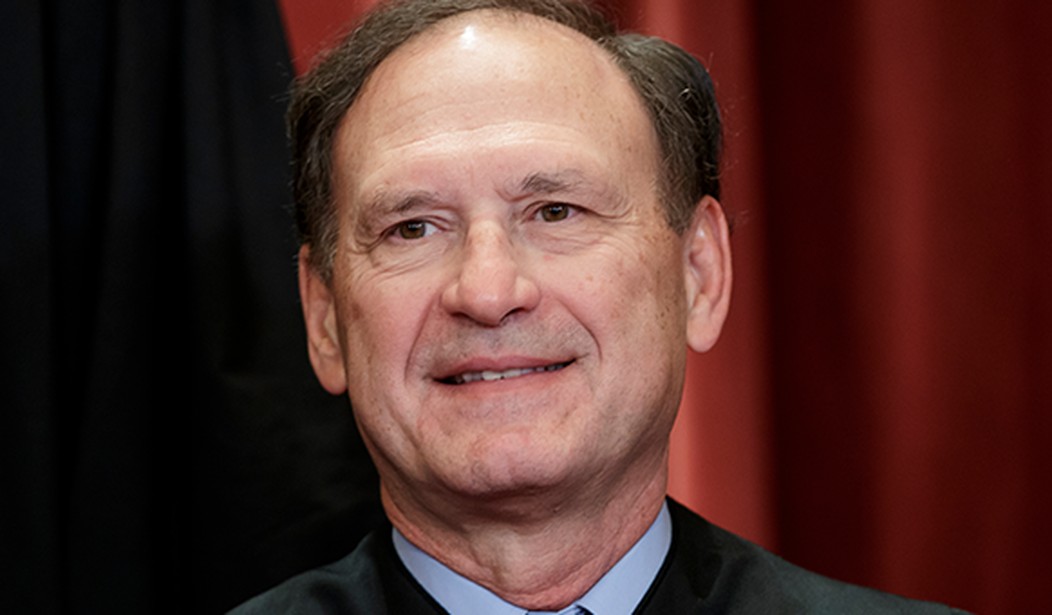
In his dissent from the majority opinion in Obergefell, Justice Alito raised serious concerns over the societal and cultural impact of the decision and the implications, especially for religious liberty. Justice Alito warned specifically that the decision would be used,
“…to vilify Americans who are unwilling to assent to the new orthodoxy. In the course of its opinion, the majority compares traditional marriage laws to laws that denied equal treatment for African-Americans and women. The implications of this analogy will be exploited by those who are determined to stamp out every vestige of dissent.”
Justice Alito continued by noting the two sentences of Justice Kennedy’s majority opinion devoted to the rights of those who would disagree,
“Perhaps recognizing how its reasoning may be used, the majority attempts, toward the end of its opinion, to reassure those who oppose same-sex marriage that their rights of conscience will be protected. We will soon see whether this proves to be true. (emphasis added) I assume that those who cling to old beliefs will be able to whisper their thoughts in the recesses of their homes, but if they repeat those views in public, they will risk being labeled as bigots and treated as such by governments, employers, and schools.”
While it is unlikely that any published opinion by an appellate court judge, let alone a Supreme Court Justice, was ever encapsulated by the phrase “told ya so,” Justice Alito would now be justified in pioneering this technique of rhetorical brevity and may soon have the opportunity.
After their initial decision was vacated and remanded by the U.S. Supreme Court, the Oregon Court of Appeals recently heard oral arguments in the case of Aaron and Melissa Klein. The Kleins lost their family business, SweetCakes by Melissa, when the Oregon Bureau of Labor and Industry (BOLI) imposed a $135,000.00 penalty against the bakers for declining to custom design a wedding cake for a same sex couple. The Kleins were indeed labeled bigots by government and called much worse by the “tolerant” community of social media who plumbed the depths of the English language to verbally assault the Kleins and their children.
Those determined to stamp out every vestige of dissent haven’t limited their efforts to the private sector. In Waco, TX, Justice of the Peace Diane Hensley created a system in her office to accommodate everyone who came to her for a wedding while simultaneously reconciling her own deeply held religious convictions on the issue of marriage. Simply put, Hensley researched and created a referral list to provide to any couple, traditional or same sex, when she could not perform their wedding due to her religious beliefs, court schedule, or any other conflict. Despite the lack of even a single complaint about the practice, the Texas Commission on Judicial Conduct publicly reprimanded Hensley and indicated if she continued her practice she could face further disciplinary action including removal from office.
When five unelected and unaccountable judges wrest policy away from the intended policymaking branches, the only dissenters tolerated are the other four unelected and unaccountable judges.
It is debatable whether these consequences were unanticipated or unintended by Justice Kennedy and the liberal wing of the Supreme Court. However, cases like SweetCakes by Melissa, Diane Hensley, and many others are undoubtedly fueling an ongoing debate over a difficult social and cultural question. The fact that the debate continues is ample evidence the Court was mistaken if it believed it could or should settle the issue for the nation.


Join the Conversation
VIP members get the ability to comment on articles.