





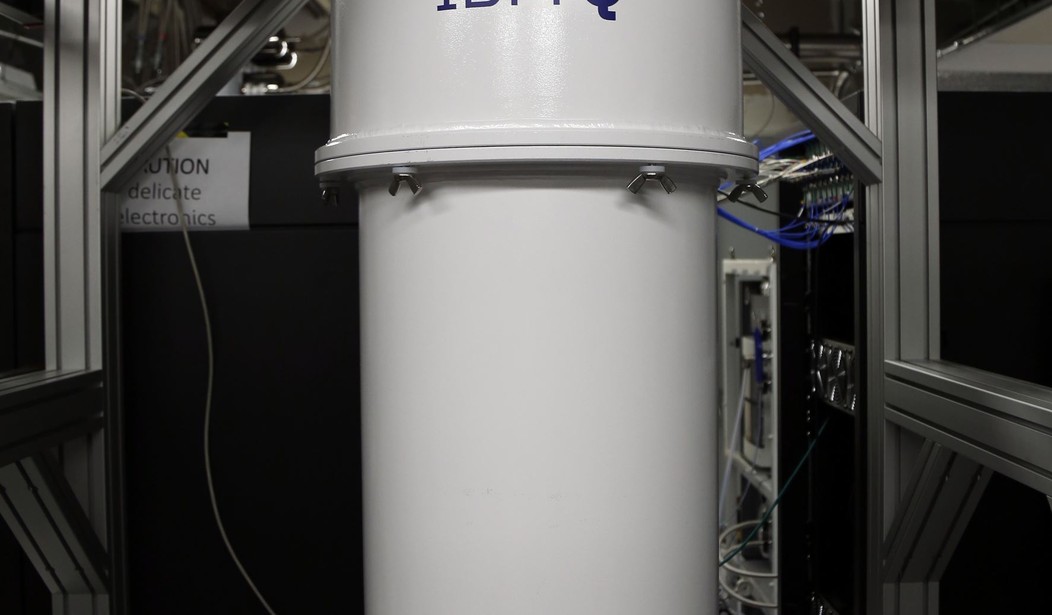
Every generation gets its favorite apocalypse. The Cold War had nuclear annihilation. The early internet era got Y2K. Silicon Valley gave us killer AI, robot uprisings, and a rotating menu of “the machines are coming” panic every six months. Most of those fears either fizzled out or arrived in forms far less cinematic than advertised.
Q-Day has the potential to be the first technological nightmare that lives up to the hype. And almost nobody outside cybersecurity circles is taking it seriously enough.
For the uninitiated, Q-Day is the term used for the point at which quantum computers become capable of breaking the encryption standards that currently underpin modern digital life. Banking. Defense systems. Corporate networks. Medical infrastructure. Satellites. Cloud storage. State secrets. Intellectual property. The entire modern economy runs on cryptography, the way a casino runs on electricity. You don’t think about it until the lights suddenly go out.
The difference between this threat and past cyber scares is scale. A ransomware attack can cripple a hospital. A data breach can devastate a company. Q-Day threatens the actual foundation beneath the digital world itself. And here’s where things start getting uncomfortable. A lot of businesses still operate with the cybersecurity maturity level of a college kid putting duct tape over a check engine light.
Executives love talking about “digital transformation” right up until the conversation turns to spending money on endpoint protection, post-quantum readiness, network segmentation, or zero-trust architecture. Then suddenly everybody becomes a budget hawk. Entire industries continue sitting on mountains of sensitive proprietary data protected by aging systems that were designed for a world where quantum decryption wasn’t breathing down humanity’s neck.
That world is disappearing faster than many people realize.
Security experts increasingly warn that hostile governments and sophisticated cybercriminal organizations are already collecting encrypted information today with the expectation that they’ll decrypt it later once quantum capability matures. “Harvest now, decrypt later” sounds abstract until you realize what’s potentially sitting in those stolen archives: defense contracts, energy infrastructure blueprints, pharmaceutical research, trade negotiations, classified communications, AI models, financial records, and decades of private corporate intelligence.
In other words, the theft may have already happened. The unlocking just comes later.
And despite what some business leaders would like to believe, governments are not going to ride in like cyber superheroes and save every vulnerable private enterprise from the consequences. They can barely secure themselves.
If a geopolitical rival achieves meaningful quantum decryption capabilities before Western infrastructure fully transitions to post-quantum cryptography, the implications are staggering. Military communications could become vulnerable. Intelligence operations could be exposed retroactively. Satellite systems, weapons logistics, naval infrastructure, and strategic communications all suddenly enter dangerous territory.
At that point, cybersecurity stops being an IT department issue and starts becoming a global stability issue. Because the modern world runs on invisible trust.
Financial systems trust encryption. Governments trust encryption. Militaries trust encryption. International diplomacy trusts encryption. The internet itself is basically a giant confidence game held together by mathematics and server racks. Crack the math, and the trust starts to crack with it.
That reality should have been front and center during the recent summit discussions between the United States and China. Especially because the incrementally revised 1979 science and technology agreement between the two nations belongs to a completely different technological universe. Back then, “technology competition” looked like industrial development and manufacturing expansion. Today, it means AI races, semiconductor supply chains, cyber espionage, quantum supremacy, and digital warfare capabilities that could alter the geopolitical balance for decades.
Meanwhile, back in the real world, countless companies are still getting compromised by embarrassingly unsophisticated attacks.
Every day, regular employees fall for fake system alerts warning that files have been deleted or devices have been compromised. “Stealer” malware like Remus continues vacuuming up passwords, browser credentials, authentication tokens, crypto wallets, and proprietary business access with alarming efficiency. Criminal operations don’t need quantum computing to infiltrate organizations today. They’re already succeeding with malware kits sold in Telegram channels and phishing campaigns written with the grammatical precision of a ransom note taped together in a basement.
Quantum just threatens to make the fallout exponentially worse. And unlike Y2K, there’s no clean reset button here.
Y2K was ultimately a coding problem with a visible deadline and a straightforward fix. Companies patched systems. Engineers worked overtime. Civilization continued functioning. Q-Day is more dangerous precisely because it’s gradual, uneven, and difficult to measure. Nobody knows the exact moment the threshold gets crossed. Nobody knows which actor gets there first. Nobody knows how much encrypted information has already been collected, waiting for the day current protections become obsolete. That uncertainty changes everything.
Businesses that still view endpoint protection as a compliance checkbox rather than a core survival priority are gambling with assets that may define their future viability. Intellectual property theft alone could reshape entire industries once post-quantum vulnerabilities become exploitable at scale. A company can recover from a bad quarter. Recovering from the silent theft of proprietary technology accumulated over twenty years is another story entirely. And the word “silent” matters here.
The most dangerous cyber events often don’t announce themselves dramatically. No flashing red warning lights. No movie soundtrack. No hacker manifesto splashed across giant screens. Just a quiet compromise.
Data copied without detection. Communications intercepted invisibly. Systems infiltrated without immediate disruption. Sensitive information sits somewhere offshore waiting for the right technological breakthrough to finally expose it.
That’s what makes Q-Day uniquely chilling. Not the possibility of one catastrophic moment. The possibility is that by the time the world fully understands what happened, much of the damage may already be irreversible.
Julio Rivera is a business and political strategist, cybersecurity researcher, founder of ItFunk.org and ReactionaryTimes.com, and a political commentator and columnist. His writing, focused on cybersecurity and politics, has appeared in major publications around the world.
Editor’s Note: Do you enjoy Townhall’s conservative reporting that takes on the radical Left and woke media? Support our work so that we can continue to bring you the truth.
Join Townhall VIP and use promo code FIGHT to receive 60% off your membership.


Join the Conversation
VIP members get the ability to comment on articles.