





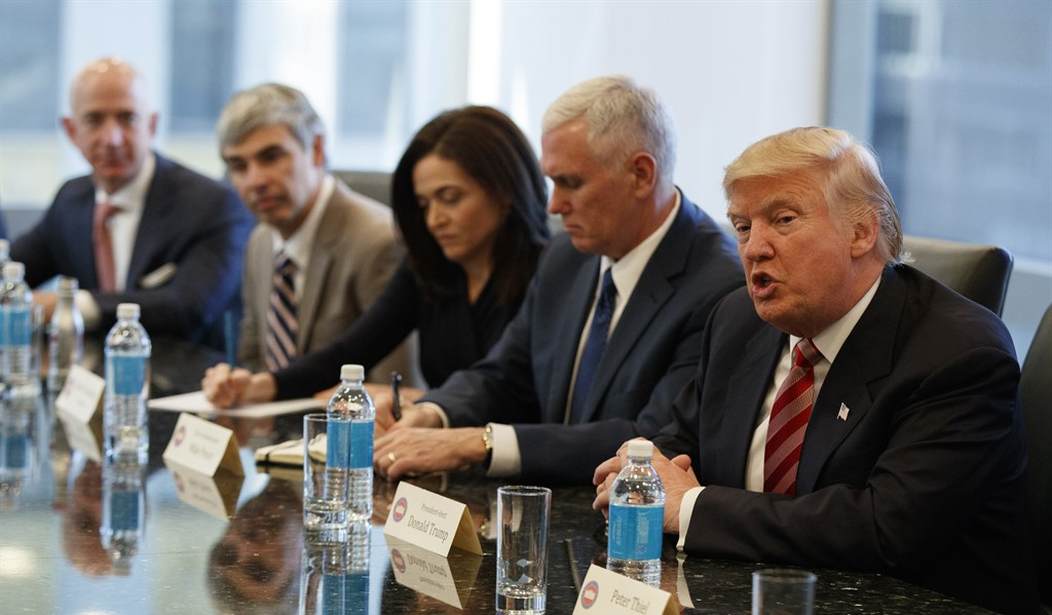
The net worth of Donald Trump's Cabinet appointments so far reportedly exceeds $14.5 billion (if you include Trump's deputy commerce secretary pick, Todd Ricketts).
As someone utterly immune to plutophobia -- fear of wealth -- I have no problem with this. (For what it's worth, I know Todd Ricketts and think he's a great pick.) Rich people can be fine public servants. And if liberals want to argue otherwise, we're going to have to revisit the records of presidents Franklin D. Roosevelt and John F. Kennedy, not to mention plutocrats like Nancy Pelosi, John Kerry, Jay Rockefeller, Jon Corzine and, for that matter, Hillary Clinton. Surely even Green Party gadfly Dr. Jill Stein would be ecstatic if the Constitution permitted billionaire George Soros to be president of the United States.
Just as it is not automatically terrible to have a clowder of fat cats descend on Washington, it's not automatically a good thing either. However, to listen to a host of pro-Trump pundits, or the president-elect himself, the new administration is an obvious and brilliant boon.
"I want people that made a fortune because now they're negotiating with you," Trump explained recently. "It's not different than a great baseball player or a great golfer."
It shouldn't surprise anyone that the president-elect sees it this way, since this is pretty much exactly the case he made to voters for 16 months. And it's precisely why his biggest supporters said they wanted him to be president. It would be weird if he didn't follow through on this promise. Trump was the change candidate running against the record of a former-community-organizer president who once said that his brief stint working for the private sector made him feel like he was "working behind enemy lines."
So, again, there's nothing undemocratic about what Trump is doing. Nor is it "unprecedented" to draft the business community to Washington, as so many commentators have declared. But it is that precedent which should give us some pause.
President Woodrow Wilson enlisted the help of corporate titans to help with the war effort. These "dollar-a-year men" descended on Washington to help Wilson win World War I to make the world "safe for democracy." They were called dollar-a-year men because it is illegal to work for the government and not draw a salary (don't tell that to the interns, by the way), so they took a symbolic buck for their services.
The dollar-a-year men certainly helped with the war mobilization effort, but they often did so by creating rules that helped their own industries, mostly by establishing cartels, which almost abolished competitive bidding. The War Industries Board, for instance, staffed almost entirely by eminent industrialists, also fixed prices on commodities, froze wages, commandeered railroads and the like. Grosvenor Clarkson, the head of the WIB, boasted how firms run by "individualistic" people (code for free market advocates) who didn't play along were steamrolled: "The occasional obstructor fled from the mandates of the Board only to find himself ostracized by his fellows in industry."
Of course, this was all in service to the war effort, at least in principle, and hopefully the days of total war mobilization are behind us. Still, there are lessons to be drawn.
One version of this chapter in American history holds that the dollar-a-year-men were greedy and grasping scions of Big Business bending the state to their needs, particularly the munitions manufacturers. This tale can be overstated -- and has been for a century -- but it's not like there isn't any evidence to support it.
A more modest interpretation is that "big players" -- to borrow a phrase from Donald Trump -- see efficiency in dealing with other big players. Big-time dealmakers, almost by definition, tend to cut big-time deals with other big-time dealmakers.
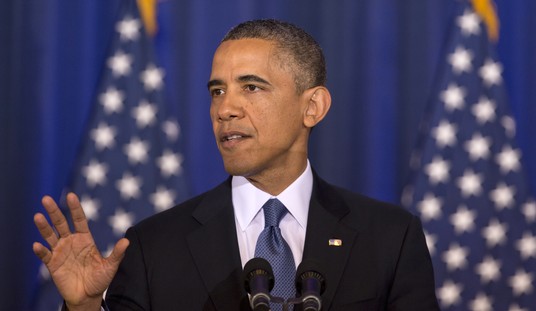
Conventional policymakers have this tendency as well. Barack Obama often boasted about how he got the "stakeholders" around the table to draft the Affordable Care Act. The lobbyists for big business explained at the time that if you're not at the table, you're on the menu. That proved to be prescient for all of the small business owners and purchasers of individual health plans who were chewed up because they were too small to get a seat. So-called public-private partnerships invariably reward big businesses and freeze out smaller businesses that want a shot at becoming big one day.
Ostensibly pro-market cheerleaders for the coming rule of businessmen should at least keep that in mind in the days ahead.
Should We Be Wary of a Looming Plutocracy?
Opinion
The opinions expressed by columnists are their own and do not necessarily represent the views of Townhall.com.
Advertisement
Advertisement

Join the Conversation
VIP members get the ability to comment on articles.