





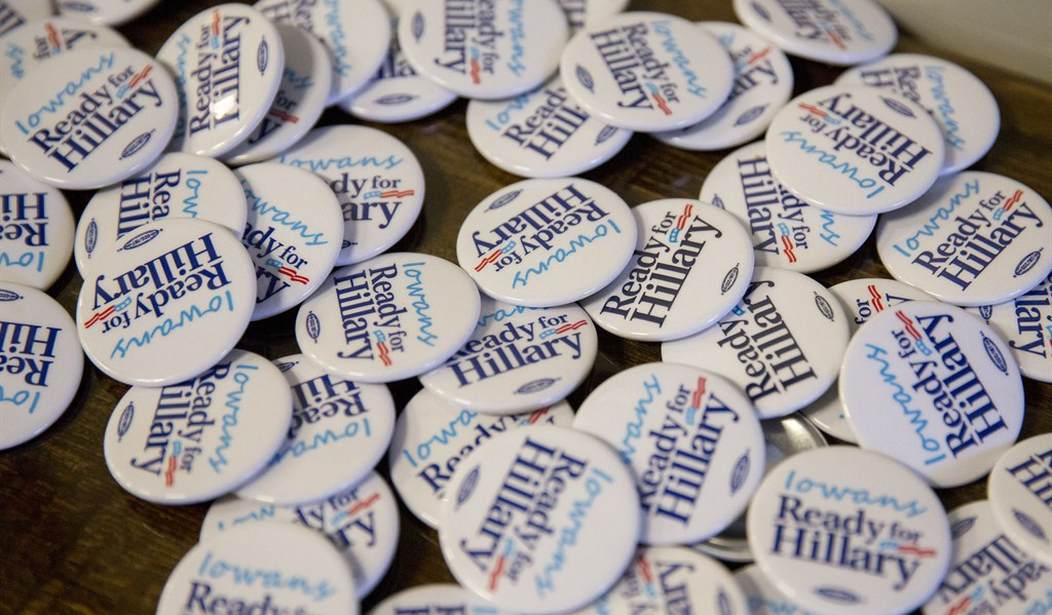
Of course it's too early to talk about 2016. Now that we've gotten that out of the way ...
The most interesting dynamic about the presidential race so far is that the Democrats are behaving like Republicans -- and vice versa.
Since 1940, with the arguable exception of Barry Goldwater, Republicans have nominated the guy next in line. Thomas Dewey almost beat Wendell Willkie for the nomination in 1940, so in 1944 -- and 1948 -- it was his turn. Dwight Eisenhower, whom both parties wanted as their nominee, was a special case, given that whole invading-Europe-and-defeating-Hitler thing.
But Richard Nixon had been Ike's vice president in 1960, and in 1968 Republicans believed he had been the victim of John F. Kennedy's stolen election, so they nominated him again. Gerald Ford was Nixon's VP and the sitting president in 1976. Still, Ronald Reagan almost beat him in the primaries, so the next time around the Gipper got a shot.
In 1988, Reagan's VP, George H.W. Bush, had his turn. Bob Dole (Ford's running mate in '76) had almost beaten Bush in '88, so he got the nod in '96. George W. Bush was nominated in 2000, in part because the rank and file felt nostalgic for his dad during the sordid Clinton years. In 2008, John McCain cashed in his runner-up coupon for the nomination. And in 2012, Mitt Romney did likewise.
Meanwhile, Democrats tend to favor outsiders: George McGovern in 1972, Jimmy Carter in 1976, Michael Dukakis in 1988, Bill Clinton in 1992 and Barack Obama in 2008. Two of the three exceptions were former or sitting vice presidents -- Walter Mondale in 1984 and Al Gore in 2000 -- who used their positions to consolidate power. The third was John Kerry, who won the nomination because of a combination of the mistaken belief that he was the Democrats' best shot at beating Bush -- whom Democrats hated more than they loved outsiders -- and Howard Dean's sudden implosion. (Exit polls showed primary voters didn't like Kerry so much as think he was the most electable.)
On the Democratic side for 2016, the two top-tier candidates are both next-in-liners, Hillary Clinton and Joe Biden (stop laughing). Clinton is the indisputable front-runner: She's more popular; she was the runner-up in 2008; she's the dashboard saint of elite feminist groups; and she and her husband have been working the party machinery nonstop while Biden has been, if you believe The Onion, waxing his vintage Trans Am in the White House driveway.
The contrast between the two parties is amazing.
To say that the GOP base has soured on this next-in-line thing is an understatement on par with "Dennis Rodman wouldn't make an ideal baby sitter." Talk to a conservative audience about the "next-in-line" habit and you'll likely hear the sorts of boos and hisses you'd expect at a sports bar when you change the channel to a C-SPAN hearing on rural electrification.
Republicans want an outsider, which is why the senators aiming for the nomination -- Ted Cruz, Rand Paul and Marco Rubio -- spend much of their time denouncing the city they work in. The governors -- Scott Walker of Wisconsin, Bobby Jindal of Louisiana, Chris Christie of New Jersey, Mike Huckabee, formerly of Arkansas -- have it easier, but they certainly never miss an opportunity to express their disappointment in Washington. Wisconsin Rep. Paul Ryan, Romney's running mate in 2012, is the one candidate who could claim next-in-line status without setting off a riot, but he's unlikely to run. Jeb Bush is beloved by the party establishment, but nothing short of a legal name change would appease the Tea Party.
Meanwhile, it's not clear what the Democrats actually want. They certainly expect Clinton to be the nominee. But should they? She's easily one of the most overrated political talents of the last quarter-century. Both McCain and Romney were hobbled by the fact that they couldn't distance themselves from an unpopular GOP president. Having served as Obama's secretary of state (never mind being the "grandmother" of Obamacare), Clinton would probably have a similar burden. Perhaps the possibility of a female president will substitute for the thrill of nominating an actual outsider.
But given where the country is -- and likely will be in 2016 -- I'd put my money on the real thing.


Join the Conversation
VIP members get the ability to comment on articles.