





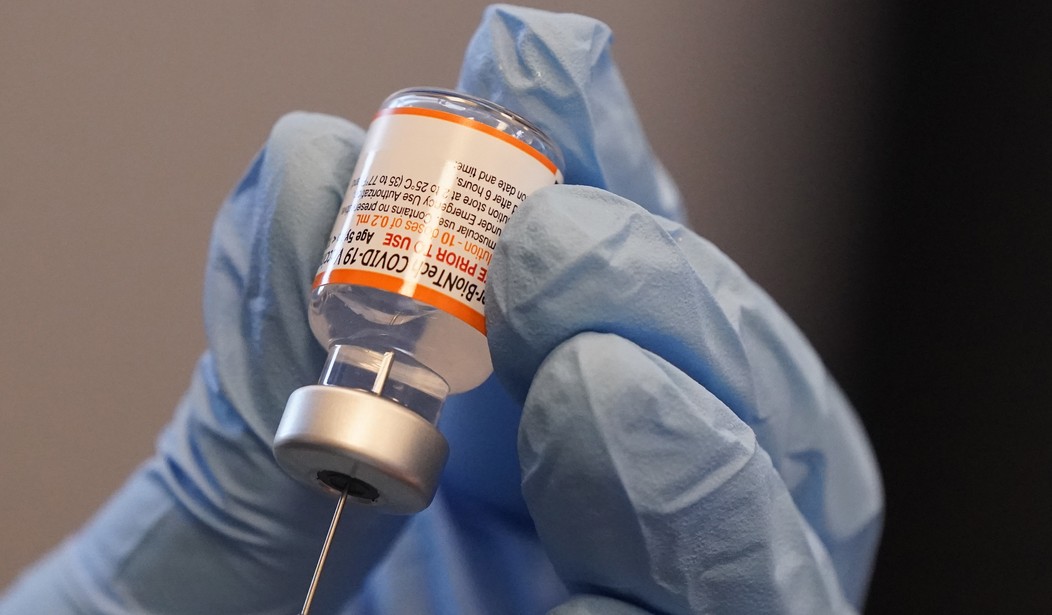
COVID-19 deaths are up. Politicians tell us to wear masks and get vaccinated.
Amid the fear, I'm surprised that we haven't heard more about two drugs that could make COVID-19 much less of a threat.
In blind tests, Pfizer's Paxlovid was found to reduce the risk of hospitalization and death by 89%! It was so effective that Pfizer was advised to stop the tests.
"They halted the clinical trials!" exclaims Michael Cannon, director of health policy at the Cato Institute in my new video.
"They decided it would be unethical (not to give the drug to people in the control group.) But if it's unethical to deny them the drug, it's unethical to deny the American public that drug!"
Excellent point. Yet that's what the Food and Drug Administration is doing. They force us to wait until they're sure all drugs "meet the agency's rigorous standards."
How long might they delay?
"If the FDA is following its current practice," says Cannon, "it'll be a matter of months."
Months is an improvement over the 10 years it usually takes the FDA. During the pandemic, the FDA loosened regulations to get some medicines to people faster.
"(But) we're still losing thousands of lives unnecessarily," complains Cannon.
At the beginning of the AIDS crisis, the FDA delayed approval of many AIDS drugs. Some Americans formed "buyers clubs" to purchase AIDS drugs from Mexico. That's what the movie "Dallas Buyers Club" was about.
But buying unapproved drugs from other countries is illegal.
Now the United Kingdom has approved molnupiravir, Merck's coronavirus antiviral pill. In tests, it cut hospitalization by 30%.
But we can't try it in America. "More input is needed," says the FDA.
More input is always helpful, but our FDA is just slow.
"The United Kingdom approved molnupiravir back at the beginning of November," Cannon points out. "The FDA didn't even meet to decide whether to approve it until the end of November. In the meantime, thousands of Americans died."
While people die, President Joe Biden praises the FDA for their "hard work."
"We shouldn't be praising them for doing a job that no one should be doing, which is violating your rights," says Cannon. "If we just gave patients the freedom to purchase drugs other countries had approved, we would go a long way toward restoring your right to make your own health decisions."
FDA regulators don't want to kill people, but they do have an incentive to work slowly. If they approve a drug that hurts someone, they'll get horrible publicity. They may get fired.
But when people die from delayed approval, no bureaucrat gets in trouble. We don't know which people might have been saved.
"That's why the FDA always tries to make sure that it never lets an unsafe drug on the market," says Cannon. "Even if the cost is years of delay and many, many lives lost."
His solution: Have no FDA.
I push back. "Some people would try drugs that would kill them."
"Yes, some people would have adverse drug events," he replies. "But the number of lives that we would save would absolutely swamp the number of lives that we lose to unsafe drugs."
The FDA was created 100 years ago because some people were harmed by quack medicines. But of course, some still are.
"The entire premise of an agency like the FDA is that you're not smart enough to make these decisions for yourself," says Cannon.
But maybe we're not smart enough, I tell him. "I'm not smart enough to judge whether a pill really works or I'm being sold snake oil."
"It's not true that you're not smart enough to make this decision yourself, John," he says. "You can consult experts, your physician, medical journals, Consumer Reports. You can consult government regulatory agencies in other countries. Every day the FDA delays costs lives."
He's right.
Once a regulatory agency is created, we tend to assume that only government can do the job. But that's not true.
"The FDA needs to get out of the way," concludes Cannon. "Let patients make decisions for themselves."



Join the Conversation
VIP members get the ability to comment on articles.