





Do physicians and counselors have the right to speak freely to their patients and clients? One would think that licensed professionals enjoy the First Amendment as much as anyone else, but 23 Democrat-controlled states and the District of Columbia have passed laws making it illegal for counselors to help young people go straight, in the face of confusions about sexual orientation or gender identity.
These state laws ban what is known as “conversion therapy,” a scary term that Wikipedia falsely contends is a form of child abuse. More than 100 cities and counties have also banned conversion therapy for minors, despite how local ordinances are not typically so political.
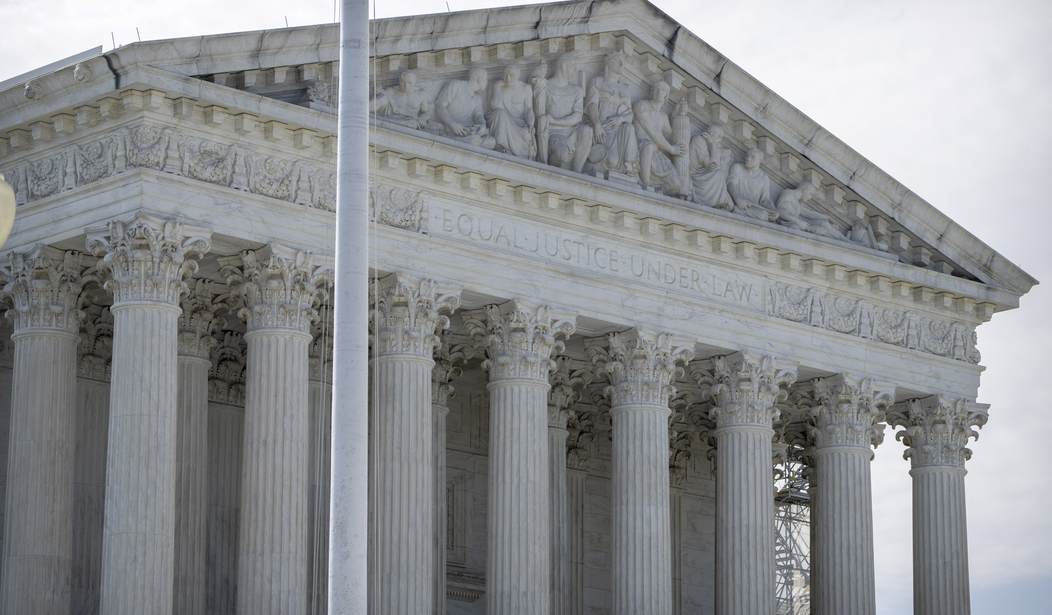
But today, the U.S. Supreme Court ruled that all such laws are almost certainly invalid, because the First Amendment protects the right of professional counselors to give advice without viewpoint discrimination, even on controversial topics like sexual orientation.
In his ringing opinion in favor of the Colorado Christian counselor who brought the case, Trump-appointed Justice Neil Gorsuch wrote: “The Constitution does not protect the right of some to speak freely; it protects the right of all. It safeguards not only popular ideas; it secures, even and especially, the right to voice dissenting views.”
It is not surprising that Gorsuch was assigned to write this decision, as he is from Colorado and presided on the Tenth Circuit in Denver before going to the Supreme Court. But the strength of his opinion is refreshing, particularly given how he had declined to support granting certiorari in similar prior appeals.
Kaley Chiles, the licensed mental health counselor who challenged Colorado’s ban on so-called conversion therapy, is indeed a committed Christian, but six Justices ruled in her favor in a strong endorsement of freedom of speech regardless of religion. By a 6-3 margin the Court held that “every American possesses an inalienable right to think and speak freely, and a faith in the free marketplace of ideas as the best means for discovering truth.”
Concurring with the Republican majority, Obama-appointed Justice Elena Kagan agreed that “because the State has suppressed one side of a debate, while aiding the other, the constitutional issue is straightforward.”
The single dissenting opinion was authored by Biden-appointed Justice Ketanji Brown Jackson who, during her memorable confirmation hearing, was unable to say what a woman is. In her overwrought, cliche-ridden opinion, Justice Jackson said “the majority plays with fire in this case,” “opens a dangerous can of worms” and “we could now be standing on the edge of a precipitous drop in the quality of healthcare services in America.”
In his response to Jackson’s heated dissent, Justice Gorsuch wrote that Justice Jackson “may believe that state-imposed orthodoxies in speech pose few dangers and many benefits in this field (and who knows what others). But their policy is not the First Amendment’s.”
Although the speech ban at issue in this case attracted only one vote on the Supreme Court, it is frightening that such an onerous restriction on free speech has been passed by legislatures of nearly half our states. The gist of those state laws, which Joe Biden’s appointee to the Court would have upheld, is that doctors and other licensed professionals have no right to give their own best advice, but must convey state-approved messages to their clients or patients.
The lobbyists for those laws argue that conversion therapy has a low success rate. However there is no evidence that the rate is any worse than for other common therapies, such as for losing weight or stopping addictions.
The decision in favor of free speech is now the law of the land in the United States, but the battle is not over, because many professional societies still oppose the use of talk therapy or counseling to guide young people struggling with issues of sexual orientation or gender identity. You can expect professional counselors like Kaley Chiles to be harassed by some state licensing boards if they dare to fully exercise their free speech.
Colorado, which has become one of the most liberal states despite formerly being conservative, may not give up in its attempt to censor conversion therapy. Justice Kagan invited it and other opponents of conversion therapy to try again with a content-based restriction, rather than a viewpoint-based limitation, although it is far from clear what Justice Kagan has in mind.
A viewpoint-neutral limitation on counseling would require liberals to cut back on their grooming campaigns. Most conversion therapy bans, including Colorado’s, allow therapy to encourage transitioning to become transgendered.
Speech bans similar to Colorado’s are still the law in countries that don’t have a First Amendment, such as Canada. Originally drafted in the 1980s to ban counseling about sexual orientation, most of these laws were subsequently expanded to ban counseling about gender identity, too.
John and Andy Schlafly are sons of Phyllis Schlafly (1924-2016) and lead the continuing Phyllis Schlafly Eagles organizations with writing and policy work.
Editor’s Note: Do you enjoy Townhall’s conservative reporting that takes on the radical Left and woke media? Support our work so that we can continue to bring you the truth.
Join Townhall VIP and use promo code FIGHT to receive 60% off your membership.


Join the Conversation
VIP members get the ability to comment on articles.