





President Trump’s record over the past two-and-a-half years he has been in office shows his commitment to lasting government reform.
Cutting outdated regulations? Check. Encouraging innovation so the free market to flourish? Check. Increasing transparency and improving accountability? Check and check.
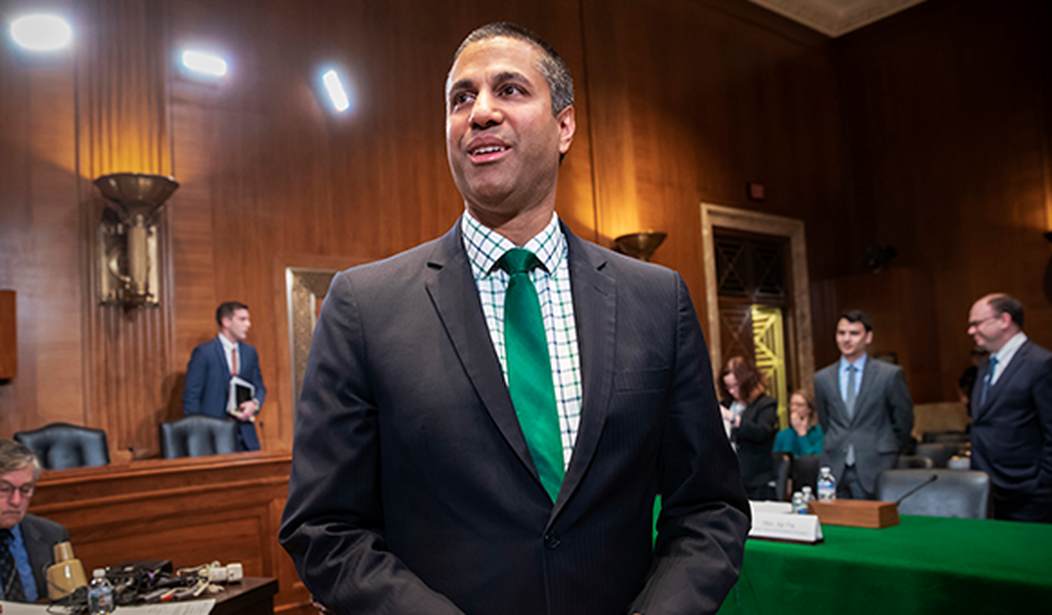
Perhaps nowhere are President Trump’s reform accomplishments more on display than at the Federal Communications Commission (FCC), now headed by Trump’s nominee Chairman Ajit Pai. The FCC has been leading the way in implementing reforms that protect consumers and lessen the burdens created by Obama’s heavy-handed government regulations.
Just over a year ago, Chairman Pai oversaw the FCC’s reversal of “net neutrality,” the Obama-era regulations of the Internet. Since that reversal, the Internet has become more affordable and faster, helping to bridge the so-called “digital divide.” The digital divide describes the disparity in Internet access between more affluent Americans and underserved populations, especially in rural areas. Bringing greater Internet access to those underserved Americans has been a special passion for Pai, and his work here has paid off.
The FCC recently produced a report on broadband usage around the country. The report shows broadband access in each state. The results of the report show that Internet speeds in the United States are up nearly 40%, reaching an all-time high. Repealing the Obama policy of net neutrality is the underlying reason for this positive development. Net neutrality was responsible for an astonishing decline in broadband Internet access in the United States from 2016 to 2017 (from 26.1 million with access in 2016 to only 21.3 million with access in 2017).
A stark contrast exists between Obama’s net neutrality results (fewer Americans with broadband access) and the success of Ajit Pai’s free market plan for the Internet (with rising numbers of Americans enjoying broadband). Pai’s repeal of net neutrality serves as a case study for the power for the free market and competition to lower prices and increase access to services and products. Americans should remember that the free market here has reversed the government’s embarrassing record of choking out access to broadband – especially in rural communities.
Another area where Chairman Pai has implemented positive reforms is in changing the culture at the FCC and making transparency of the agency’s work a mainstay. Just after assuming the position of chair, Pai initiated a pilot program to provide public access to the documents for discussion at the FCC’s open meetings at least 21 days ahead of the vote.
This effort was so popular, in fact, that Illinois Congressman Adam Kinzinger introduced a bill in 2018 to make the Pai transparency reforms permanent, so Americans going forward, even after President Trump is no longer in office, would be able to review FCC documents for the same 21-day period Pai has already instituted.
The Federal Communications Commission may seem an unlikely place to improve health care in our nation, but thanks to Pai’s leadership in telemedicine, that is exactly what has transpired.
Chairman Pai’s own father was a urologist serving in rural Kansas when Pai was growing up. He saw firsthand the need for medical specialists serving in rural parts of the country, and that need has only grown as it has become increasingly difficult to recruit doctors to serve in rural communities.
Influenced by his father’s example, Pai has begun working to make sure the FCC is addressing the broadband needs of telemedicine so Americans living in the most remote parts of the country will be able to enjoy the same high quality of health care as those in large cities.
With his emphasis on deregulation, transparency, and innovation, Ajit Pai has become a thought leader in government reform that will propel our economy in the 21st century.
A central component of President Trump’s Make America Great Again platform is that government must scale back its onerous regulations so innovation and enterprise can thrive. Chairman Pai’s reforms that have led to better and faster Internet and a more robust telemedicine sector are proof that the president’s approach is best. The FCC reforms can serve as an example for other agency heads who hope to usher in an era of better government.

Join the Conversation
VIP members get the ability to comment on articles.