





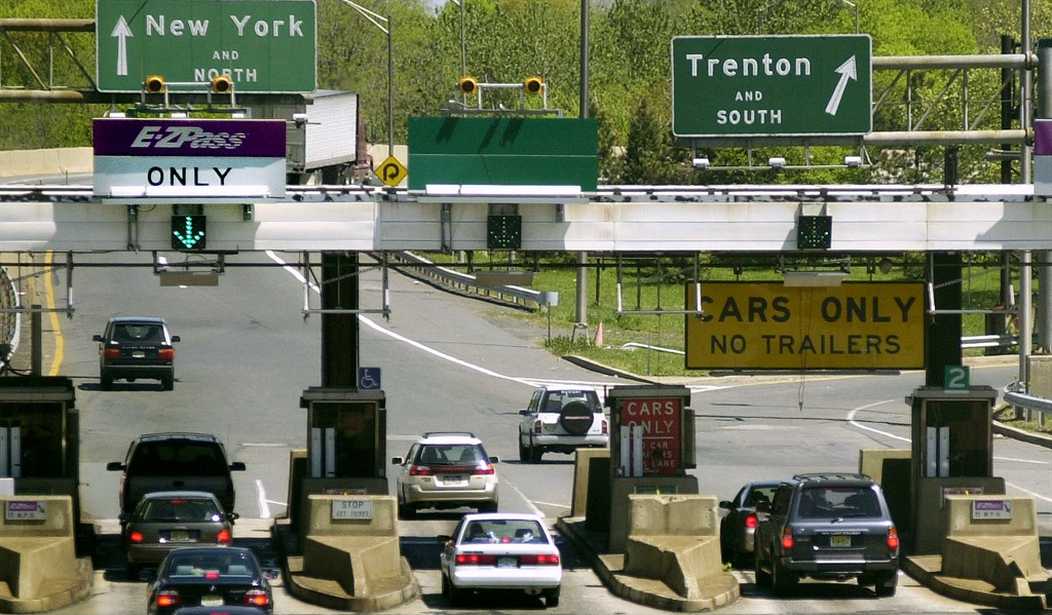
All-electronic tolling came to the Massachusetts Turnpike late last fall, liberating drivers at long last – at very long last – from the hassle of toll booths and collectors.
In a column 16 years ago, I explained what toll collection could be like if only Massachusetts would modernize its system. "As cars enter and exit the highway, they'll pass under a span that will communicate with the transponder on their windshield and automatically assess the applicable toll," I wrote. That wasn't far-seeing clairvoyance, much as I wish I could claim otherwise. It was merely description: Such a system was already in place on Ontario's Highway 407.
It may have taken an inordinately long time to switch the Turnpike to all-electronic tolling, but Democrats on Beacon Hill have been quick to realize that extending the system to the state's other highways — currently toll-free — could bring a gusher of funds to the state treasury. Hence S.1959, a measure introduced by state Senator Thomas McGee, cochairman of the Legislature's Transportation Committee, which would create a "comprehensive system of tolling" in eastern Massachusetts, turning large sections of I-93, I-95, Route 1, and Route 2 into toll roads.
Last week, in a MassLive interview, McGee argued that the Bay State's transportation needs are underfunded by at least $1 billion, and that expanding tolls to all the major highways surrounding Greater Boston would be a good way to close the gap. Besides, he says, it's not "fair and equitable" that only some highway use involves tolls. If commuters from the North Shore must pay to drive into Boston, why should those from the South Shore be exempt?
He has a point. It isn't equitable for Massachusetts to levy tolls on just one highway (plus two tunnels and a bridge). What's more, major highways ought to be tolled as a matter of practical transportation policy. Highway tolls are straightforward user fees, which are almost always preferable to indirect or hidden payment schemes. Highways should be paid for with funds that are plainly linked to the service they finance and plainly visible to those making the payments. And tolls provide another valuable benefit: They can reduce congestion. Higher tolls for peak-period trips encourage drivers to reduce the total miles they drive, or to shift some travel to off-peak hours.
But McGee isn't the only one who has a valid point. So does Citizens for Limited Taxation, which testified against McGee's bill at a recent hearing, and listed all the ways in which motorists are already forced to pay for the privilege of driving in Massachusetts.
First and foremost, there is the state's gasoline tax, which adds 26.5 cents to the price of each gallon of gasoline, for a total of $766 million in 2016. There is also the auto excise tax, the sales tax on cars, and the fees charged for automobile registration, driver's licenses, and annual inspections. On top of all that, the state collects some $400 million per year in Turnpike, tunnel, and Tobin Bridge tolls. And McGee now wants motorists to disgorge another billion dollars? Not a chance.
There might be a plausible case for raising toll revenue if Massachusetts were making prudent use of the revenues it already gets. But it isn't. As the Reason Foundation documents in a comprehensive analysis of the 50 state highway systems, Massachusetts has one of the nation's most wasteful highway operations.
For example, Massachusetts spends more than $78,000 on maintenance costs per mile of state highway — three times the national average. Even more egregious is the state's spending on administrative costs: nearly $75,000 per highway mile, more than seven times the US average. In terms of overall highway cost-effectiveness, only four states ranked lower than Massachusetts: Alaska, New Jersey, Hawaii, and Rhode Island.
In the abstract, there is much to be said for turning all of the state's major highways into toll roads. In the real world, that isn't the priority. Let Massachusetts first stop squandering the transportation funds it already collects, and enact a phase-out of the gasoline tax. Then the hour will be right to impose tolls on the other highways.
And maybe this time it won't take another 16 years.


Join the Conversation
VIP members get the ability to comment on articles.