





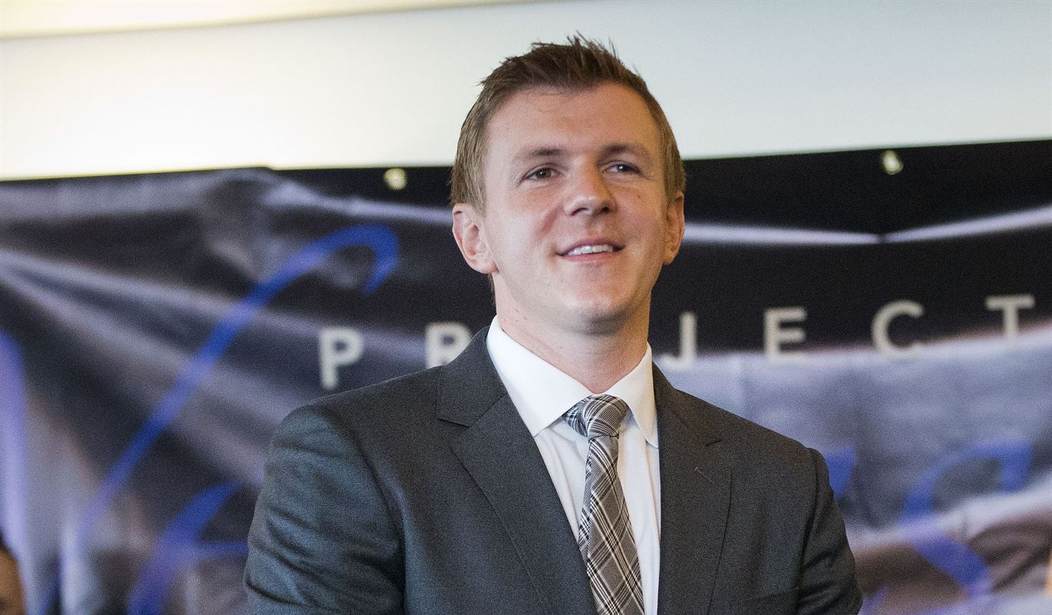
On August 21, 2026, the U.S. Court of Appeals for the D.C. Circuit threw out a 10-year-old lawsuit against James O'Keefe and Project Veritas, wiping out a $130,000 judgment that had hung over the outfit since 2022. The case started in a Milwaukee bar in 2016, when a Project Veritas reporter posing as a fake political consultant got a Democrat operative talking, and it ended with an unpaid intern's fake resume becoming the linchpin of a federal court's ruling on what makes someone a fiduciary. That is not a sentence I expected to write, but here we are.
The short version: Project Veritas sent an operative named Allison Maass into Robert Creamer's consulting firm, Democracy Partners, under a fake name and a resume padded with bartending and Applebee's experience. She lasted eight days, recorded what she saw on a hidden camera, and Project Veritas turned the footage into “Rigging the Election,” a video suggesting Creamer's operation was staging violence at Trump rallies. Creamer sued for fraud and illegal wiretapping. A jury sided with him in 2022 and awarded $130,000. Last week, the D.C. Circuit wiped the whole thing out.
I read the opinion the way I read a damages report in one of my own expert witness engagements, looking for what the plaintiff actually proved rather than what the video implied. And the court's reasoning holds up.
Start with the money. The jury handed Creamer $120,000 in damages and $10,000 for wiretapping, representing lost contracts with two organizations that dropped him after the video aired. The problem, as the court explained under the Supreme Court's 1982 ruling in NAACP v. Claiborne Hardware, is that most of “Rigging the Election” was built from lawfully recorded conversations with a different operative, Scott Foval, who talked freely in public settings to reporters he believed were real donors. That footage is protected speech. Only the sliver showing Maass inside Creamer's office came from unlawful conduct. When a damages award mixes protected speech with unprotected conduct, the plaintiff has to prove the unprotected part was the dominant cause of his losses, not just a contributing one. Creamer's own witness, an AFSCME government affairs director, testified under oath that the “major factor” in dropping Creamer was the scandal generated by the video's content, not the fact that a fake intern had gotten in the door. That testimony sank the damages award before the court ever got to the wiretapping claim.
Then there is the wiretapping claim, and this is where the case landed squarely in my professional lane. I have spent more than a decade testifying in federal and state courtrooms as an expert on fiduciary duty in the investment world, and the question of who owes what to whom is not academic to me. It is the whole ballgame. The wiretapping statutes here only bite if the secret recording was made to commit a separate crime or tort, and Creamer argued the tort was breach of fiduciary duty. The court said no. A fiduciary is someone with delegated power to bind a principal: a lawyer, a broker, a trustee, an agent who can sign contracts or move money on someone else's behalf. Maass made signs and clipped news footage. She had access to confidential conversations because Creamer let her sit in the room, not because anyone handed her authority to act for the firm. Access and authority get confused constantly in my line of work, where every registered rep with an iPad thinks proximity to client money makes him a fiduciary. It does not. Under the Investment Advisers Act and the case law that has grown up around it, fiduciary status turns on discretion and control, whether someone can actually make a decision that binds another party, not on whether he happened to be in the room when sensitive information changed hands. An unpaid intern filing signs is a lot closer to a temp who overhears a phone call than to an agent with signing authority. The court got that distinction right, and Judge Wilkins, dissenting in part, is not wrong to worry that plenty of businesses assumed their interns owed them more than they legally did.
If you run an organization and want confidentiality protected, put it in writing and get a signature. Creamer's own firm told Maass she would need to sign a non-disclosure agreement and then never handed her one. That is not a legal theory. That is a compliance error.
To be sure, this ruling is not a hunting license for deception. The court was explicit that the footage Maass obtained by lying her way into the building stayed unprotected, and if “Rigging the Election” had leaned on her hidden-camera material rather than Foval's public conversations, the outcome likely flips. As the opinion puts it, quoting the Supreme Court's decision in Cohen v. Cowles Media, a press badge is not a license to break the law. Reporters, undercover or otherwise, still answer for trespass, theft of confidential information, and recordings made without lawful consent. What changed is narrower and more useful: courts will not let a plaintiff collect for reputational damage caused by an accurate, lawfully sourced story just because a different part of the operation involved a fake resume.
That distinction matters beyond Project Veritas. I have written before about the rise of citizen journalists filling gaps the legacy press left open, and undercover reporting is the citizen journalist's oldest tool, going back to Nellie Bly faking her way into a New York asylum in 1887. ABC used hidden cameras on Food Lion employees in the 1990s and lost at trial on similar grounds before a federal appeals court reduced the award to two dollars. The tactic is not a conservative invention, and this ruling does not protect it selectively. Any outlet, of any political stripe, that builds a story primarily from lawfully obtained material now has a clearer First Amendment shield, even if a fake identity got a foot in the door along the way. That should matter to a mainstream press that spent a decade treating Project Veritas as a uniquely dishonest outfit while quietly relying on the same hidden-camera playbook whenever the target leaned right instead of left.
The lesson for the rest of us, whether you run a newsroom, a consulting shop, or a family office, is the same one I give clients every week: you do not protect your confidential information by trusting good manners. You protect it with a signed agreement, a defined scope of access, and a clear line of authority, before you hand anyone a badge. Democracy Partners skipped that step and paid for it in ways no jury verdict could fix after the fact. James O'Keefe is not off the hook because journalism is sacred. He is off the hook because the plaintiff could not prove his lies, rather than his reporting, caused the damage he suffered. That is not a loophole. That is how causation is supposed to work in a courtroom, and it would have applied the same way if the operative worked for MSNBC instead of Project Veritas.
Jay Rogers is a financial professional with more than 30 years of experience in private equity, private credit, hedge funds, and wealth management. He has a BS from Northeastern University and has completed postgraduate studies at UCLA, UPENN, and Harvard. He writes about issues in finance, constitutional law, national security, human nature, and public policy.
Editor’s Note: Do you enjoy Townhall’s conservative reporting that takes on the radical Left and woke media? Support our work so that we can continue to bring you the truth.
Join Townhall VIP and use promo code FIGHT to receive 60% off your membership.

Join the Conversation
VIP members get the ability to comment on articles.