





Author's Note: All previous volumes of this series are available here. The first 56 volumes are compiled in the book "Bible Study For Those Who Don't Read The Bible." "Part Two," featuring volumes 57-113, was published in December 2022.
Thanks for joining our interactive Bible study. Please join the lively discussion in the comments or email me.
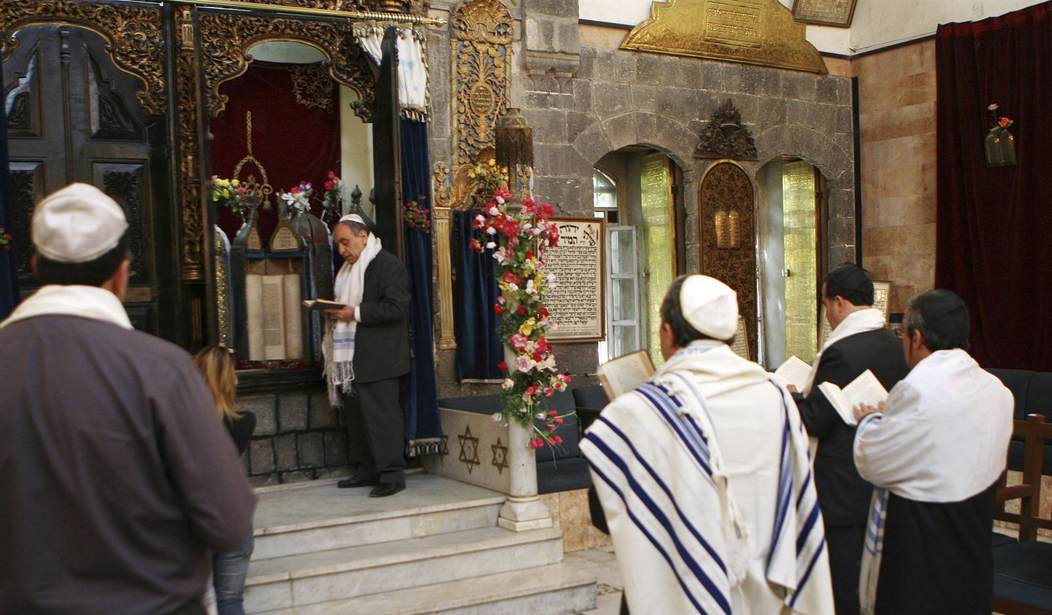
Today at sundown, the solemn Jewish Day of Atonement, known as Yom Kippur, begins, and one atones to God for their sins through prayer, fasting, and repentance.
Previously, I wrote two Yom Kippur studies, Vol. 28 and Vol. 287, on its origin in Leviticus, the third book of the Torah and Old Testament, from which the phrase “scapegoat” was derived. Leviticus describes the fate of two goats. The first was sacrificially slaughtered. The second was allowed to “escape” into the wilderness after Aaron, the high priest, transferred the collective sins of the ancient Jewish people led by Moses.
In 2025, Vol. 287 was titled “The Yom Kippur Scapegoat Was Crucified on the Cross,” which discusses how Jesus was the scapegoat who took away our sins. John the Baptist famously proclaimed upon first seeing Jesus: “Behold! The Lamb of God who takes away the sin of the world!” (John 1:29).
Given our study title, and the fact that Yom Kippur involves asking the Lord for forgiveness of sins followed by repentance, why don’t the New Testament gospels record Jesus observing this annual sacred Day of Atonement? After all, He was a devout Jewish teacher (rabbi) and famously celebrated Passover, first recorded in the Torah’s book of Exodus. (See Vol. 107). Leviticus follows Exodus.
Perhaps there are two reasons the gospels don’t mention Yom Kippur. First, during His earthly ministry, Jesus was fully divine and fully human, yet sinless, with no sins to atone for. Second, by His death on the cross, Jesus offered His life as a sacrifice for humankind's collective sins. Jesus was the ultimate scapegoat!
Therefore, those who follow Jesus don’t need an annual day dedicated to seeking God's forgiveness for sins against Him and forgiveness from others you have hurt, harmed, or offended. Why?
For Christians, every day is Yom Kippur! Every day, we can ask Jesus to forgive our sins. Every day, we can repent and express regret for our past actions. Every day, we can turn to Jesus for help in avoiding sin. Forgiveness and repentance are integral to our daily faith. A central message of the Bible is to repent of sin as soon as it happens, as Jesus said: “Go and sin no more” (John 8:11).
But of course, we sin again because we are flawed humans. By design, Jesus is always there for us to ask for forgiveness, and we can repent, but it must be sincere. (For Jesus knows our hearts and minds.) Hopefully, over time, we sin less and become more aware of how our sins harm not only ourselves but also others and, most importantly, offend God.
Let’s turn to God’s Word at the start of Mark’s gospel, where John the Baptist “prepares the way” for Jesus to preach repentance. We read:
“As it is written in Isaiah the prophet, ‘Behold, I send my messenger before your face, who will prepare your way. The voice of one crying in the wilderness’: “Prepare the way of the Lord, make his paths straight.” John appeared, baptizing in the wilderness and proclaiming a baptism of repentance for the forgiveness of sins. And all the country of Judea and all Jerusalem were going out to him and were being baptized by him in the river Jordan, confessing their sins” (Mark 1:1-5).
Skipping ahead, Jesus appears and is baptized by John. Then:
“Now after John was arrested, Jesus came into Galilee, proclaiming the gospel of God, and saying, ‘The time is fulfilled, and the kingdom of God is at hand; repent and believe in the gospel’” (Mark 1:14-15).
In Matthew’s gospel, John the Baptist said, “Repent, for the kingdom of heaven is at hand” (Matthew 3:2). And Jesus said what was written in the same circumstances as Mark 1:14-15, regarding John the Baptist’s arrest:
“From that time Jesus began to preach, saying, ‘Repent, for the kingdom of heaven is at hand’” (Matthew 4:17).
What does all this repetition of repentance mean to us?
Jesus teaches repentance because He loves us. Repentance is not merely feeling bad or guilty; it involves recognizing wrongdoing, confessing it to God, and being willing to change your heart. Jesus wants humankind to turn away from sin and toward God.
Forgiveness of sin is empty without sincere repentance — a lasting change in behavior. When Jesus and John said, “the kingdom of God” or the “kingdom of heaven is at hand,” they meant that God’s rule and salvation are near, and that we must get right with God and live according to His will. Of course, “near” can mean today or centuries from now. It can also mean that your earthly time is short and soon you may have to answer for your sins before His heavenly throne.
Meanwhile, the goal of every human should be to lead a life of obedience to the Ten Commandments, which Jesus simplified in the following passage:
“And one of them, a lawyer, asked him [Jesus] a question to test him. ‘Teacher, which is the great commandment in the Law?’ And he said to him, ‘You shall love the Lord your God with all your heart and with all your soul and with all your mind. This is the great and first commandment. And a second is like it: You shall love your neighbor as yourself. On these two commandments depend all the Law and the Prophets” (Matthew 22:35-40).
Finally, while researching today’s study, I discovered Brandon Robbins ministry in his September 15, 2021, Facebook post titled “Observing Yom Kippur as Christians to draw close to Jesus.” It read:
“Today marks the beginning of Yom Kippur. It is the day of atonement. A day of repentance. As Christians, we often overlook this holiday. We say, "it's a Jewish holiday." But in doing so, we forget that Jesus worshipped on this day every year of his life. It was one of his spiritual rhythms. And by entering into this rhythm with him, we can draw close to him in a way we have never experienced before.”
“Yom Kippur is a reminder to come before God in repentance, to surrender ourselves at the foot of the cross and lean on the grace of Jesus. It is an opportunity to remember that we no longer have to sacrifice in the temple, for Jesus' sacrifice covers us all for all eternity. It is a gift offered to us at all times. The question is: are we ready to receive it?”
Thank you, Brandon Robbins, for that meaningful message connecting Jesus with the holiest Jewish holiday. It was no coincidence that I stumbled upon it.
If you have Jewish friends or associates, tell them you observed Yom Kippur starting at sunset tonight, but explain why you observe it every day. Count on that being an interesting conversation.
Myra Kahn Adams is a conservative political and religious writer. Her book "Bible Study For Those Who Don't Read The Bible" reprints the first 56 volumes of this popular study. "Part 2" reprints Vols. 57-113. Order it here.
Myra is also the Executive Director of the National Shroud of Turin Exhibit. You can help support our popular exhibit at the Basilica in Orlando, Florida. Now extended until the end of 2026! Read more here. Contact: Myraadams01@gmail.com
Editor's Note: Do you enjoy Townhall's conservative reporting exposing the radical Left and woke media? Support our work so we can keep bringing you the truth.
Join Townhall VIP and use promo code FIGHT to receive 60% off your membership.

Join the Conversation
VIP members get the ability to comment on articles.